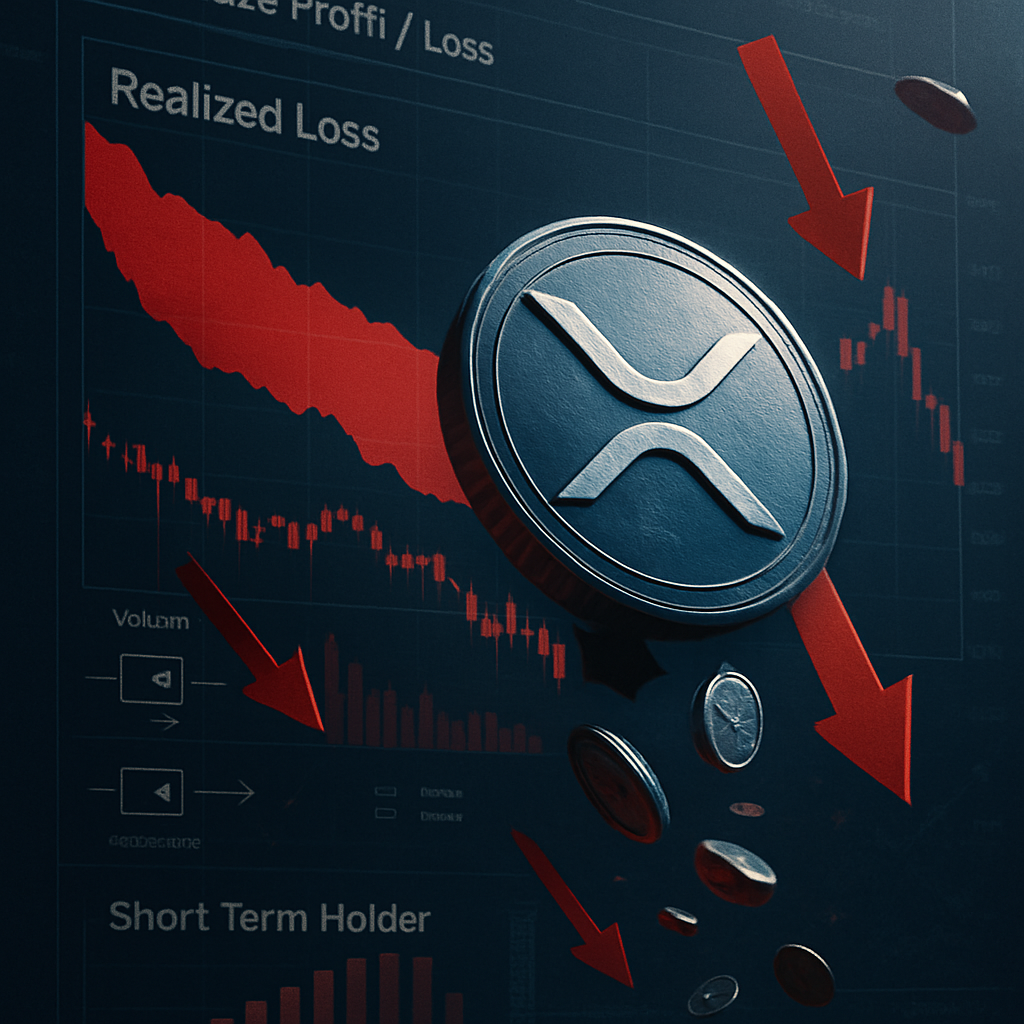
XRP holders are increasingly realizing losses as market sentiment cools following a recent price run-up, according to on-chain analytics from Glassnode. The firm described current investor behavior as “intense capitulation,” indicating that loss-taking now outweighs profit-taking across XRP holder activity.
Glassnode Flags Capitulation Among XRP Holders
Glassnode’s latest readout suggests a sharp shift in behavior among XRP participants, with a larger share of coins moving on-chain at a loss compared with those moving at a profit. The dynamic points to sellers accepting lower exit prices relative to their cost basis, a pattern the firm characterized as intense capitulation.
What the Realized Profit/Loss Trend Implies
Realized profit and loss metrics track whether coins were last moved on-chain at prices above or below their assumed acquisition levels. When realized losses dominate, it often reflects weakening conviction and short-term pressure, especially after failed rallies or momentum reversals. While such phases can coincide with market stress, they do not alone determine future price direction.
Context for XRP
XRP is the native asset of the XRP Ledger, a blockchain designed to facilitate fast, low-cost transfers and remittances. The token experienced a prior upswing before momentum faded, aligning with the rising share of loss-taking observed by Glassnode. Shifts in realized profit/loss can be influenced by broader market risk appetite, liquidity conditions, and asset-specific headlines.
Key Factors to Watch
- On-chain realized profit/loss balance to gauge whether loss-taking persists or stabilizes.
- Spot and derivatives volumes for signs of liquidity returning to the bid or continued risk reduction.
- Exchange flows and holder cohorts (short-term versus longer-term) to assess supply pressure.
- Network activity on the XRP Ledger, including transaction counts and active addresses, for signals of fundamental engagement.
Glassnode’s assessment underscores a period of stress for XRP holders as realized losses mount. Market participants will be watching whether capitulation eases or deepens as liquidity and sentiment evolve.