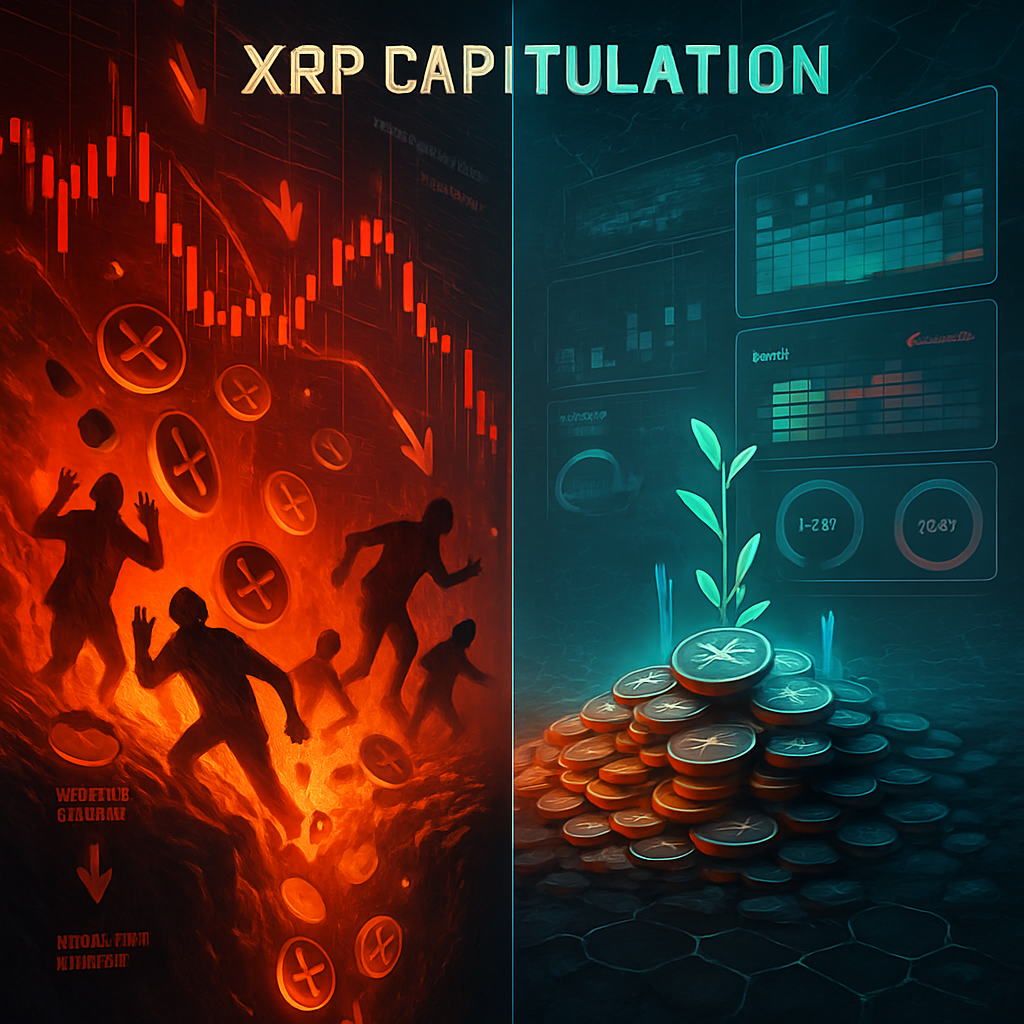
XRP holders are showing signs of capitulation, according to recent on-chain data from analytics firm Glassnode. Such late-stage selling is often interpreted by market participants as a potential precursor to price stabilization, though it does not guarantee a market bottom.
Glassnode Flags Signs of Capitulation
Glassnode, which tracks blockchain activity and investor behavior across digital assets, reports indicators consistent with capitulation among XRP holders. In market terms, capitulation refers to a period when investors exit positions en masse, frequently locking in losses and accelerating downside moves.
Historically, capitulation phases can mark the exhaustion of selling pressure. However, timing and outcomes vary across cycles and assets, and follow-through depends on subsequent demand and broader market conditions.
Why This Matters for XRP
Capitulation episodes can reset positioning and sentiment, sometimes creating conditions for base-building. After such phases, market observers typically watch for signs that selling pressure is easing and participation is normalizing, including:
- Stabilization in on-chain loss realization and spending behavior
- Reduced net inflows to exchanges and steadier liquidity
- Improving spot market depth and balanced derivatives positioning
Confirmation of a durable bottom generally requires sustained improvement across these indicators alongside supportive macro and crypto-specific catalysts.
What Is XRP?
XRP is the native digital asset of the XRP Ledger, a public blockchain designed to enable fast, low-cost value transfers. It is closely associated with Ripple, which leverages the technology in certain cross-border payment solutions. XRP is widely traded on major cryptocurrency exchanges and is used by some institutions and individuals for remittances and liquidity management.