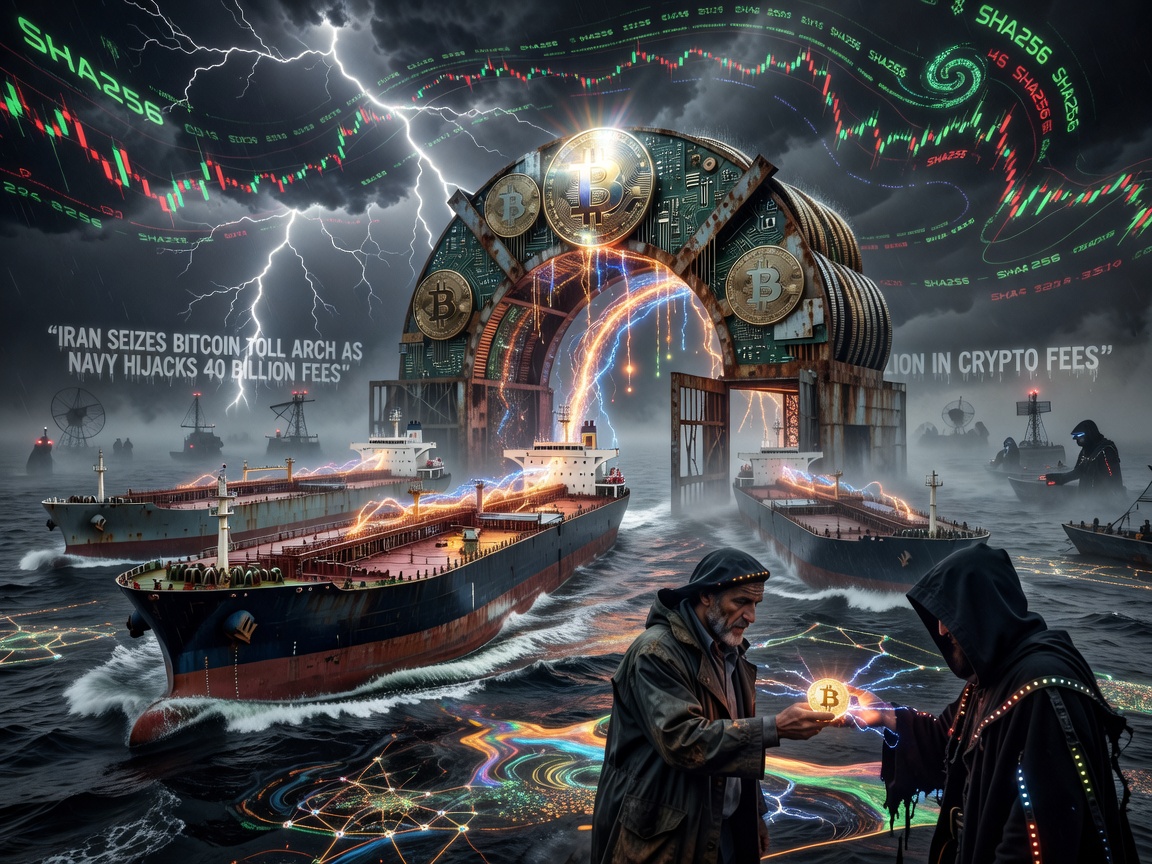
Iran Floats Bitcoin Tolls for Strait of Hormuz
Iran is reportedly preparing to charge certain oil tankers a crypto fee to transit the Strait of Hormuz, a narrow choke-point that carries roughly 20% of global oil trade. Under a rumored US-Iran arrangement, empty tankers could sail free while loaded vessels would pay one dollar per barrel in Bitcoin. The move would turn a centuries-old shipping lane into a live experiment in state-backed crypto revenue.
The plan emerged from leaks suggesting Tehran is exploring non-dollar income streams that bypass traditional banking rails and Western sanctions. Bitcoin’s borderless, settlement-final nature makes it attractive for a regime that has already dabbled in crypto mining to offset energy surpluses and sanctions pressure. If implemented, the toll would mark the first time a sovereign state explicitly prices critical maritime access in digital assets.
Oil importers in Asia and Europe would face new settlement friction, while traders could see wider spreads as charter contracts price in the extra Bitcoin leg. Iran gains a sanctions-resistant revenue tap; the US gets plausible deniability if the deal keeps Hormuz open without formally lifting sanctions. Everyone else absorbs a new layer of geopolitical and crypto-settlement risk.
What This Means for Crypto
Traders need to understand that the fee is denominated in Bitcoin but settled on-chain; volatility in BTC could therefore swing the effective cost of oil transit within minutes. Exchanges and OTC desks that offer instant fiat-to-Bitcoin conversion for energy firms may see a sudden spike in volume if the plan moves from rumor to rule.
Long-term, the episode accelerates the narrative that Bitcoin can serve as neutral settlement money between sanctioned and non-sanctioned parties. Builders of stablecoin or layer-two payment rails could pitch similar corridors to other governments seeking sanctions-resistant toll systems.
Market Impact and Next Moves
Short-term sentiment is likely mixed: headlines alone can push Bitcoin higher on renewed “nation-state adoption” chatter, yet any enforcement hiccup or US pushback could flip the trade fast. Liquidity in BTC/fiat pairs around Asian market hours will matter most, as charter payments cluster in that timezone.
The biggest risk is sudden regulatory whiplash—if Washington views the toll as sanctions evasion, exchanges facilitating the payments could face secondary sanctions. On the opportunity side, any sustained flow of sovereign Bitcoin transactions strengthens the case for holding the asset as geopolitical insurance rather than just a risk-on beta play.
Watch the Strait: one dollar of Bitcoin per barrel could turn into the most expensive shipping lane on earth if oil prices spike or enforcement tightens.