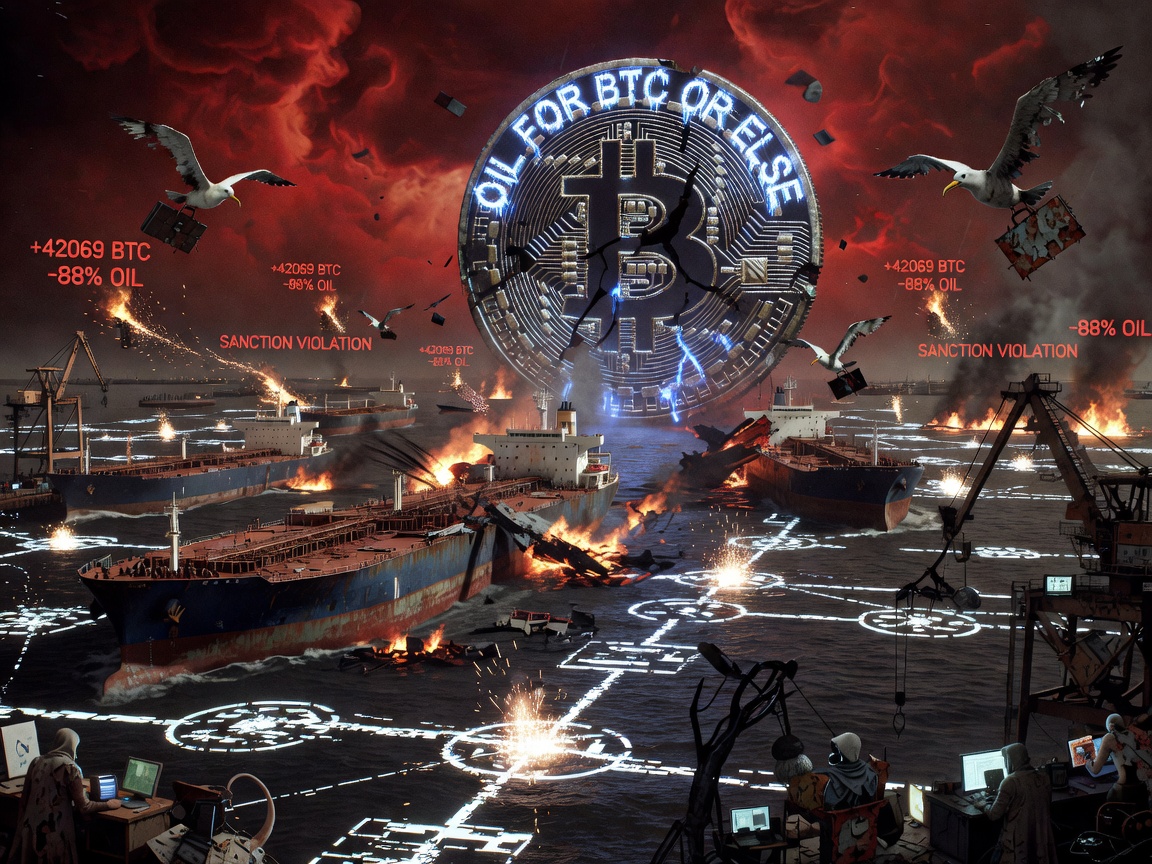
Iran Mulls Bitcoin Tolls for Ships in Hormuz
Iran is reportedly considering a plan to charge certain oil tankers a $1-per-barrel Bitcoin toll for crossing the Strait of Hormuz, the world’s most critical oil choke point. The move comes as Tehran eyes new revenue streams amid sanctions pressure and hints of a potential US-Iran deal that would let empty tankers sail free while loaded vessels pay the crypto fee. Markets are watching closely because any disruption or monetization of this route hits global oil prices and crypto liquidity at once.
The proposal surfaced in recent negotiations tied to easing some sanctions in exchange for limited shipping access. Under the reported terms, empty tankers would transit without cost, but ships carrying oil would face the Bitcoin tariff, effectively turning the strait into a crypto toll booth. No official confirmation has emerged from either side, yet the mere discussion has already sparked chatter among traders who track both energy flows and digital-asset adoption.
If implemented, the scheme would create a direct on-ramp between oil revenue and Bitcoin, giving Iran a way to collect hard currency while bypassing traditional banking rails. Shipping companies would need reliable BTC liquidity at ports, and exchanges or OTC desks near the Gulf could see sudden volume spikes. Oil importers, meanwhile, would face higher effective costs unless they hedge the crypto leg of the transaction.
What This Means for Crypto
The plan links a physical commodity choke point to a decentralized asset, showing how Bitcoin can serve as neutral settlement money even between sanctioned states and global shipping firms. For traders it introduces a fresh narrative: energy-backed crypto demand that could tighten supply if volumes rise. Builders may start eyeing wallet solutions or compliance tools tailored for maritime payments, while long-term holders gain another fundamental use case beyond pure speculation.
Still, execution risk is real. Volatility in Bitcoin could make budgeting unpredictable for charterers, and any sudden regulatory pushback from the US or allies might kill the experiment before it scales. Liquidity pockets in the Gulf would need to deepen fast to absorb daily toll flows without massive slippage.
Market Impact and Next Moves
Sentiment is cautiously bullish for Bitcoin’s utility story, yet the headline alone is unlikely to shift prices dramatically until concrete details or pilot transactions appear. Key risks include abrupt policy reversals, sanctions enforcement that labels the tolls illicit, or a liquidity crunch if exchanges freeze Gulf-related accounts. On the opportunity side, any sustained flow would validate Bitcoin as a settlement asset for real-world trade, potentially lifting related narratives around stablecoins and cross-border payments.
Watch volume at regional OTC desks and any sudden correlation between Brent crude moves and BTC order books. If the plan advances, the first sign will likely be a spike in Gulf-based wallet activity rather than immediate price action.
Energy meets crypto at the strait—position sizing now beats chasing headlines later.