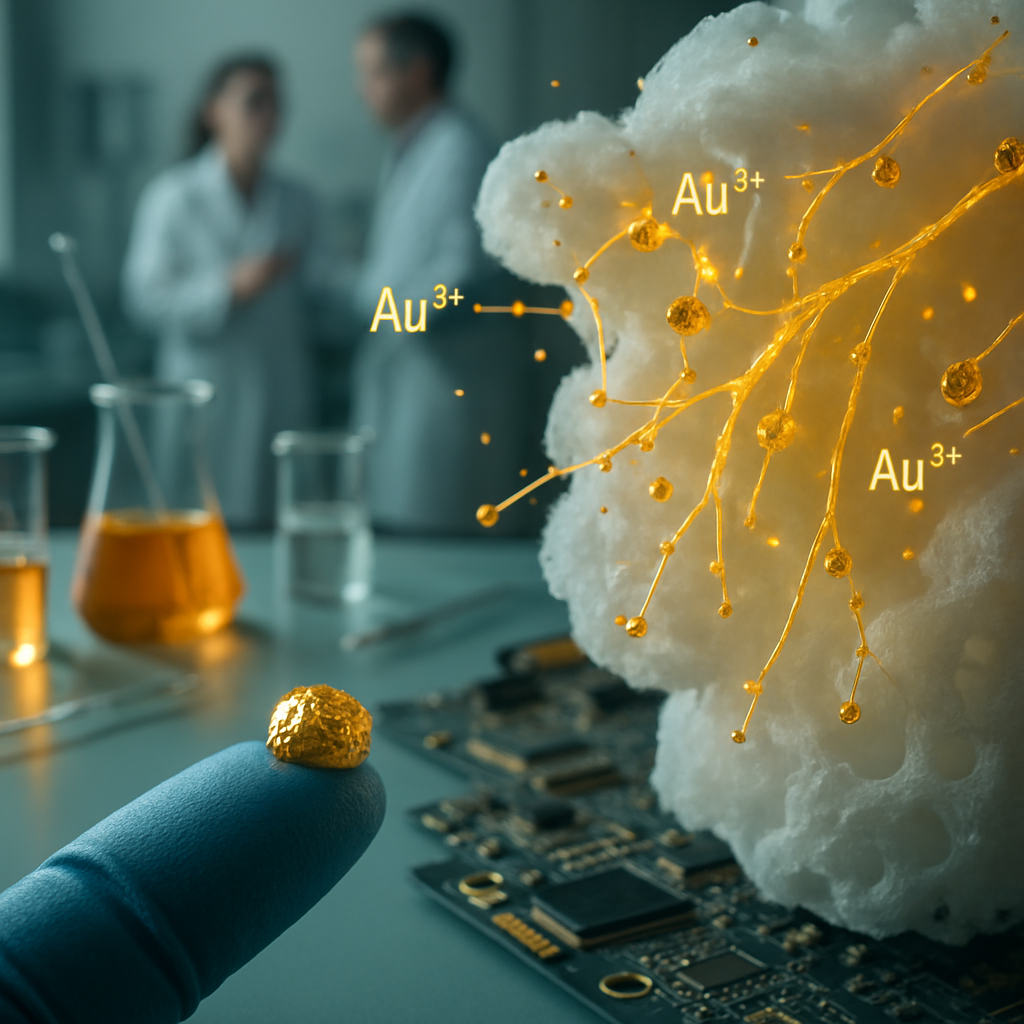
Researchers at ETH Zurich say they have developed a protein-based material that can selectively extract gold from electronic waste, offering a potential low-cost and lower-impact approach to recovering precious metals used across the digital economy, including in data centers and crypto-mining hardware.
Protein Aerogel Targets Gold in E-Waste
A team led by ETH Zurich professor Raffaele Mezzenga created an amyloid aerogel derived from whey protein that binds gold ions from acid-dissolved electronic components. In laboratory tests, the material captured gold with high selectivity from a mixture of metals typically found in circuit boards.
Lab Test Recovers 22-Carat Gold from Motherboards
In a proof-of-concept experiment, the researchers processed metal parts from 20 discarded computer motherboards. Using the protein-based aerogel, they recovered a 450-milligram nugget of 22-carat gold. The work was published in 2024 in the journal Advanced Materials.
Why It Matters for Crypto and Computing
- Electronics contain small amounts of gold in connectors and contacts; large-scale device turnover creates a growing e-waste stream.
- Data centers, AI infrastructure, and crypto-mining equipment rely on high-performance electronics that use precious metals.
- More efficient, selective recovery methods could improve the economics and sustainability of recycling, potentially easing pressure on primary mining and supply chains.
Next Steps
The ETH Zurich team’s results are early-stage and based on controlled lab conditions. Further research, scaling studies, and lifecycle assessments will be needed to determine viability for commercial e-waste processing and broader adoption across recycling operations.