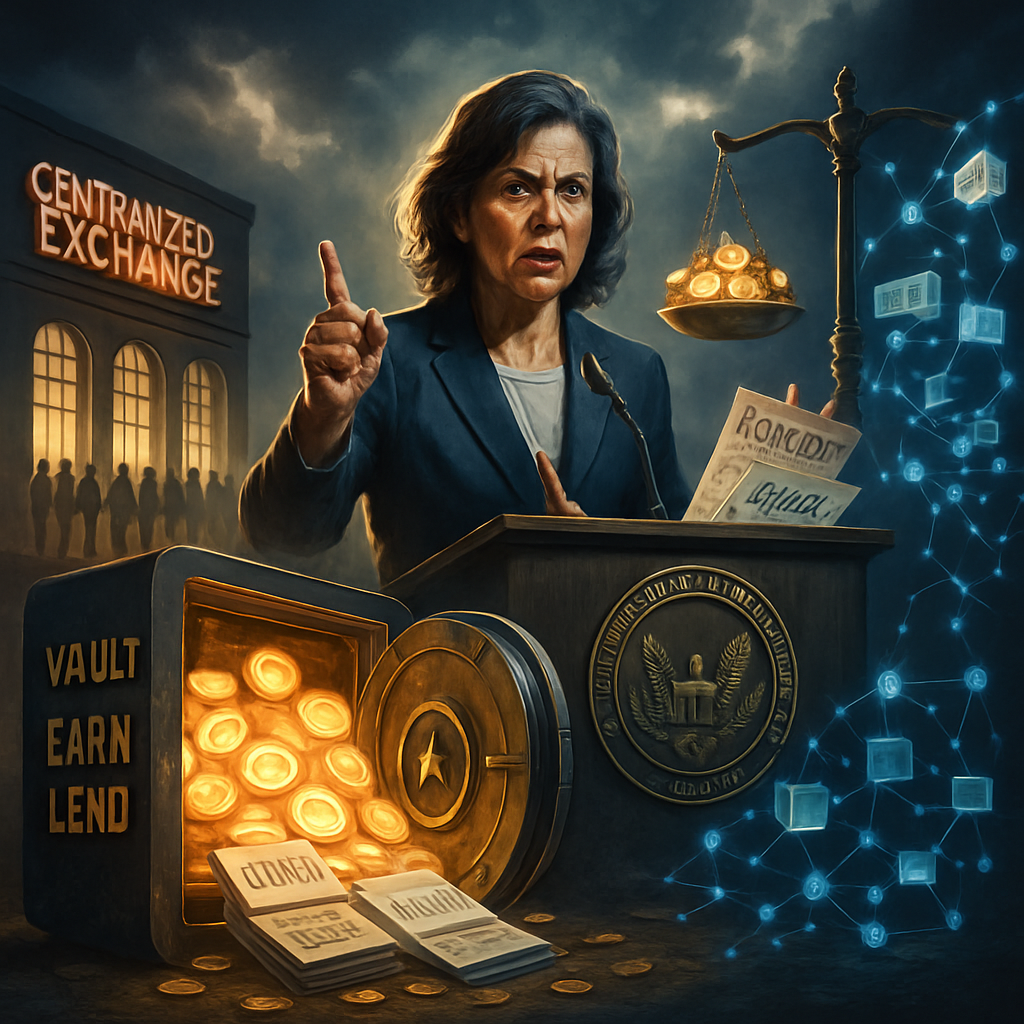
U.S. Securities and Exchange Commission (SEC) Commissioner Hester Peirce cautioned that crypto “vault” products and yield-generating lending strategies could still fall under federal securities laws, depending on how they are structured and marketed. The warning highlights ongoing regulatory risk for products that promise returns on digital assets, whether offered by centralized platforms or decentralized finance (DeFi) protocols.
Regulatory context
Under U.S. law, financial products can be deemed securities if they meet established legal tests, including the Howey test for “investment contracts” and, in some cases, the Reves test for “notes.” Generally, an offering may be a security if there is an investment of money in a common enterprise with a reasonable expectation of profits derived from the efforts of others, or if it functions like a note without a strong non-securities rationale.
These frameworks can apply to crypto offerings that pool user assets, promise yield, or depend on managerial or protocol-level efforts to generate returns. Labels such as “vault,” “earn,” or “lend” do not determine legal status; substance and economic reality control the analysis.
What this means for vaults and lending products
In crypto, “vaults” typically refer to automated strategies that deploy user deposits across liquidity pools, lending markets, or other on-chain opportunities to seek yield. Lending products pool user assets to extend loans or facilitate margin and leverage. Depending on design and disclosures, the following features may raise securities considerations:
- Marketing that emphasizes passive income or fixed/variable returns generated by others’ efforts.
- Centralized discretion over how deposits are deployed or reallocated.
- Pooling of funds where investor fortunes rise and fall together.
- Use of notes or promises to repay principal plus interest.
- Opaque risk management, collateral practices, or counterparty exposures.
- Custody arrangements where users rely on an intermediary’s safeguards and controls.
Enforcement backdrop
The SEC has previously brought cases involving interest-bearing crypto accounts and lending products. In 2022, BlockFi agreed to a $100 million settlement with federal and state regulators and ceased offering interest accounts to U.S. customers, after the SEC alleged the product constituted an unregistered securities offering. Other platforms have modified or halted yield programs amid similar scrutiny.
Outlook
Peirce’s warning underscores that return-focused crypto products remain squarely within the SEC’s purview. Product design, governance, and transparency will be central to how regulators evaluate whether a given arrangement involves a securities offering. Industry participants continue to seek clearer rules tailored to digital assets, but for now, U.S. securities laws and precedents guide how vaults and lending strategies are likely to be assessed.