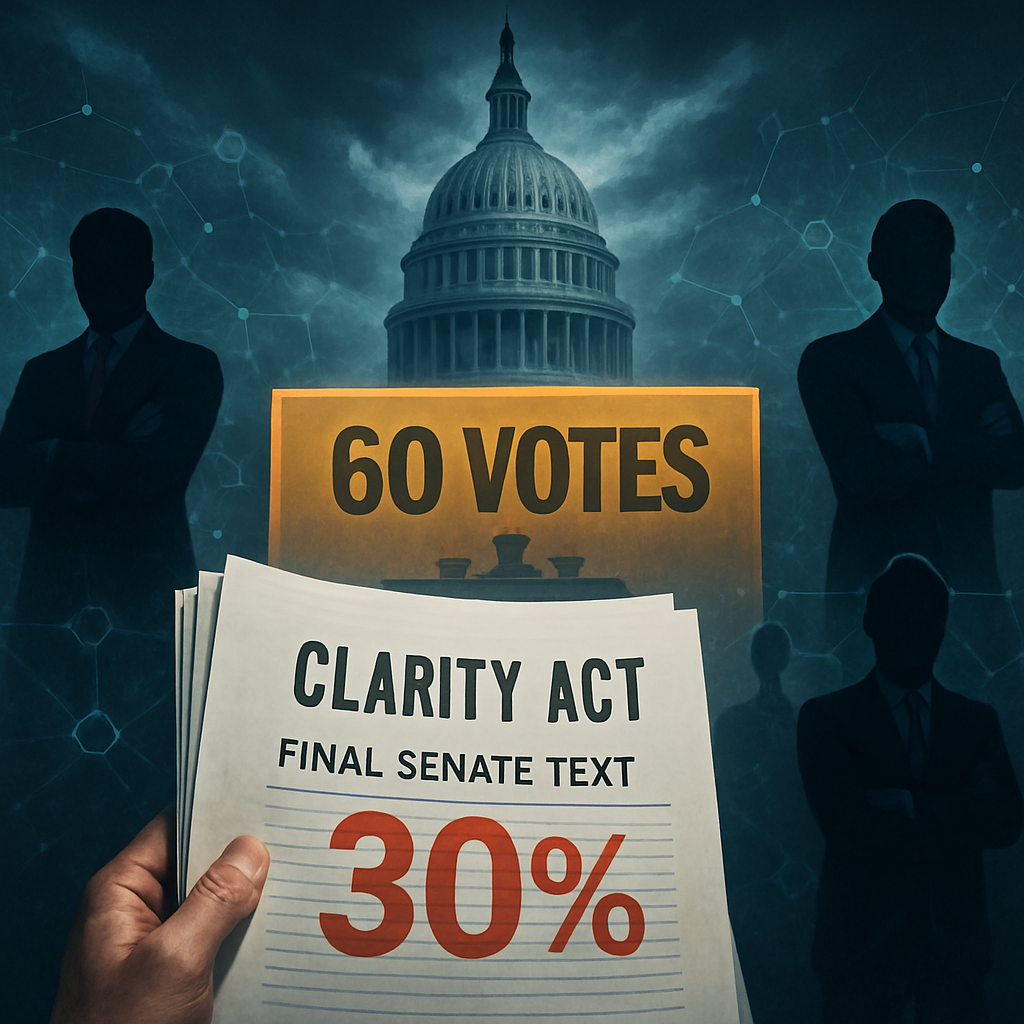
Galaxy Research has cut its probability that the CLARITY Act will become law in 2026 to 30%, citing a narrowing path to a successful Senate vote after lawmakers released the final text of a comprehensive crypto market structure bill. The research unit said unresolved policy disputes continue to threaten the bipartisan support needed for passage.
Odds Trimmed After Final Senate Text Released
In its latest assessment, Galaxy Research lowered its outlook to 30% following publication of the bill’s final Senate text. The firm noted that, despite progress on drafting, key disagreements among lawmakers remain and could limit the coalition required to move the legislation through the chamber.
Galaxy Research is the research arm of Galaxy Digital, a digital asset and blockchain-focused financial services firm. The group regularly publishes policy and market analyses on crypto sector developments.
Senate Math and Bipartisan Dynamics
Advancing major legislation in the U.S. Senate typically requires 60 votes to clear procedural hurdles. With divisions persisting over elements of crypto oversight, backers of the CLARITY Act are expected to need votes from both parties to secure passage. Galaxy Research’s downgrade reflects a tighter vote count and lingering disagreements that could impede the formation of a broad bipartisan bloc.
What the CLARITY Act Seeks to Do
The CLARITY Act is positioned as a federal market structure framework for digital assets. The measure aims to establish clearer rules for how crypto assets are issued, traded, and custodied, and to delineate oversight among federal market regulators. Supporters argue that a comprehensive framework could reduce regulatory uncertainty for token issuers, trading platforms, and intermediaries, while enhancing investor protections.
Next Steps
With final Senate text in hand, the bill’s prospects hinge on floor scheduling, potential amendments, and the ability of sponsors to resolve outstanding differences and marshal 60 votes. Any Senate-passed version would still need to be reconciled with House priorities before being sent to the president. Galaxy Research’s latest call indicates that, as of now, the coalition-building required for enactment in 2026 remains uncertain.