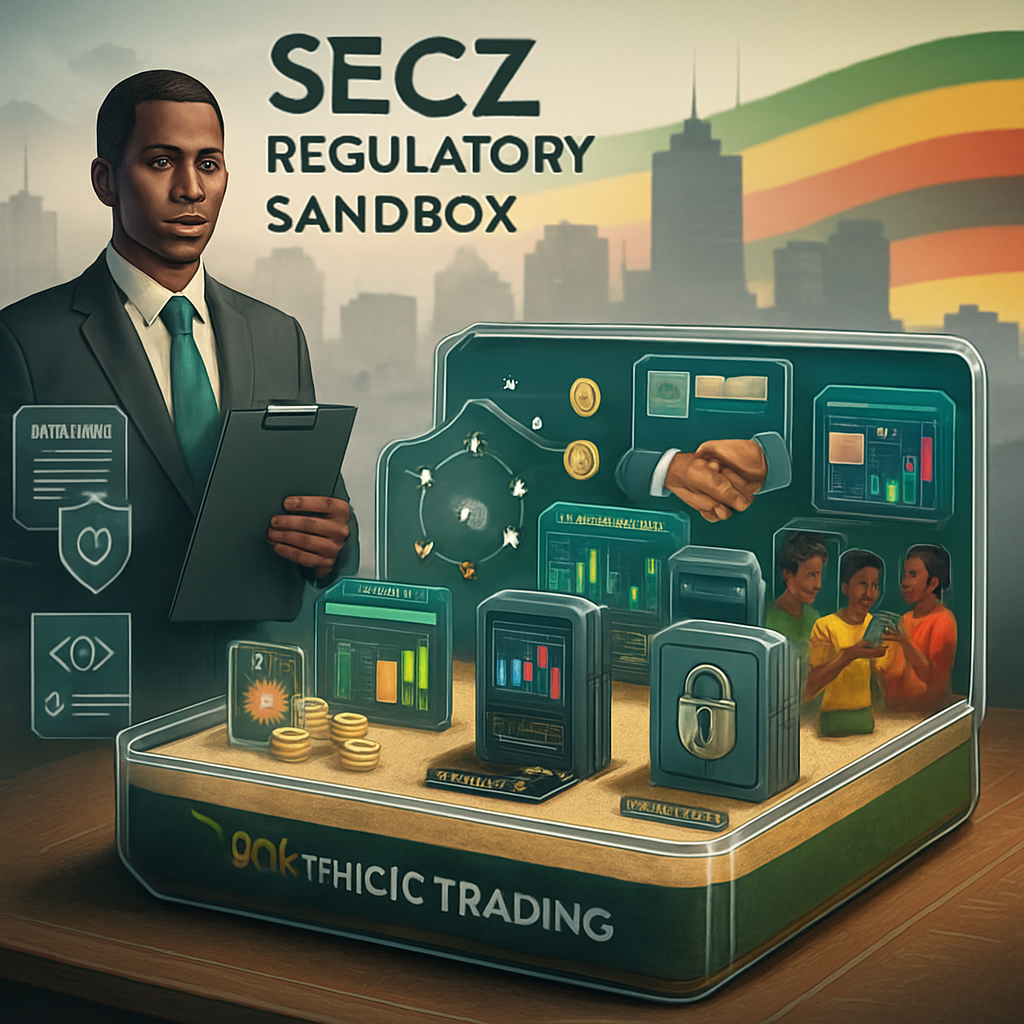
Zimbabwe’s Securities and Exchange Commission (SECZ) has approved seven financial technology firms to test their products in a supervised regulatory sandbox, opening the door for limited-market trials of blockchain platforms, synthetic trading tools, crowdfunding models, and tokenization services.
SECZ Opens Regulatory Sandbox to Seven Fintechs
The regulator said the cohort will operate under a controlled framework designed to evaluate innovative financial services while monitoring risks to investors and market integrity. The sandbox approach allows the commission to observe real-world performance and gather data that can inform future policy and licensing decisions.
Focus Areas in the New Cohort
The selected firms span several areas of digital finance and capital market innovation, including:
- Blockchain platforms – infrastructure and applications leveraging distributed ledger technology for financial services.
- Tokenization services – tools that represent assets as digital tokens, potentially improving settlement and fractional ownership.
- Crowdfunding – platforms aimed at facilitating capital formation for startups and small businesses.
- Synthetic trading – products that emulate exposure to underlying assets through derivatives or models, typically subject to strict risk controls.
How the Sandbox Works
Participants are allowed to offer services to a limited number of users and within defined parameters. The SECZ oversees testing periods, consumer safeguards, disclosure standards, and reporting requirements. This structure is intended to encourage responsible experimentation while protecting users and maintaining market stability.
Why It Matters
Regulatory sandboxes have become a common tool for capital markets authorities seeking to balance innovation with oversight. For Zimbabwe, the initiative could help broaden access to digital financial services, support new funding avenues for businesses, and clarify regulatory pathways for emerging technologies such as blockchain and tokenization. Admission to the sandbox does not constitute full authorization; firms may seek broader licensing after successful trials and regulatory review.