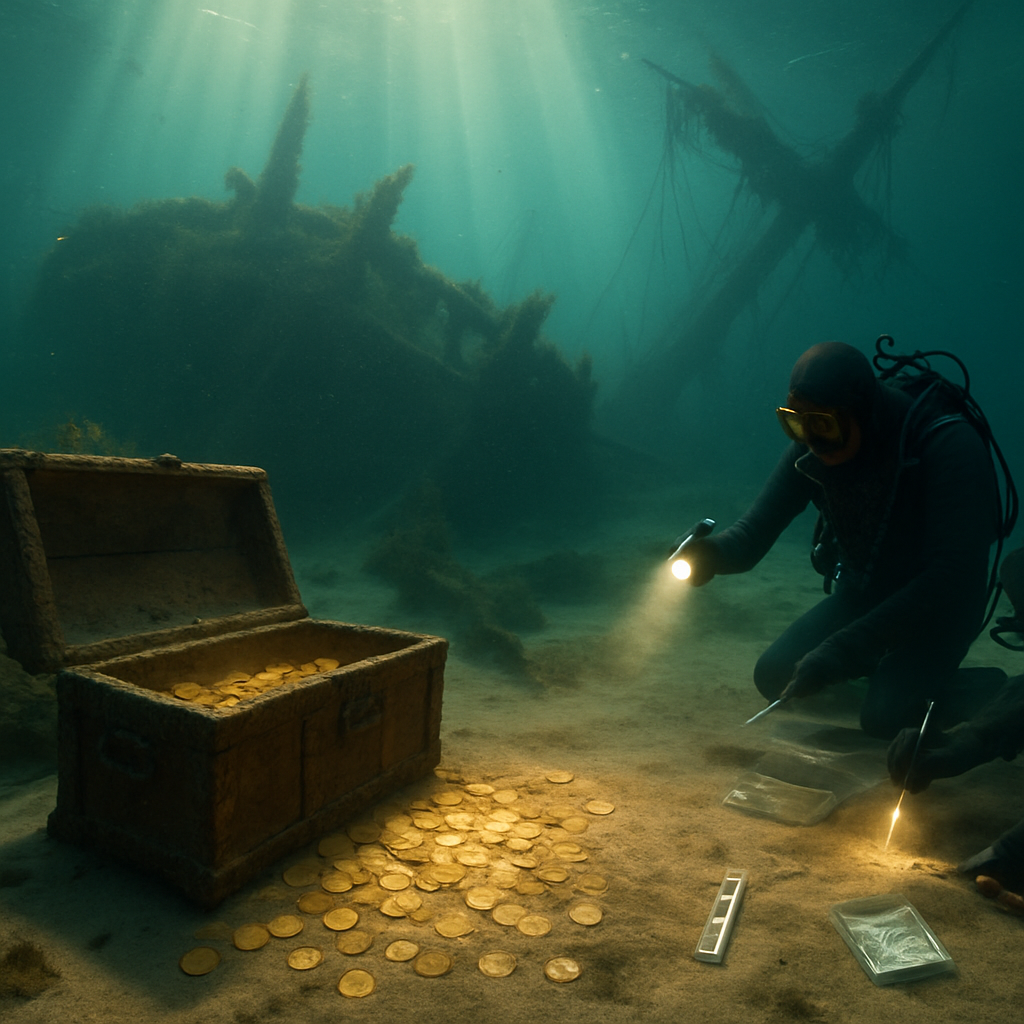
A 17th-century shipwreck discovered in 1995 in Salcombe Bay on England’s south coast, long noted for yielding more than 400 gold coins, has been formally identified after nearly three decades of research. In June 2026, a collaborative effort by the British Museum, Bournemouth University, and the South West Maritime Archaeology Group concluded the wreck was a Dutch trading vessel.
Decades-Long Mystery Resolved
Divers first located the wreck in 1995, uncovering a significant cache of gold coins. Despite years of study, the ship’s identity remained unconfirmed, leaving a notable gap in the archaeological record. The recent identification closes a chapter that has intrigued researchers and maritime historians for almost 30 years.
Collaborative Research Effort
The identification was the result of sustained work by the British Museum, Bournemouth University, and the South West Maritime Archaeology Group. Drawing on comparative research, artifact analysis, and archival study, the team determined the vessel was a Dutch trader operating in the 17th century. Specific naming details were not disclosed.
Historical Significance
The finding offers new clarity on early modern European trade and bullion movement. The gold coin assemblage and the vessel’s Dutch origin provide material evidence that can inform scholarship on commercial routes, monetary circulation, and maritime activity in the period.
What Comes Next
The identification sets the stage for further cataloging and scholarly analysis of the recovered material. Insights gleaned from the coins and associated artifacts are expected to enhance understanding of trade dynamics and economic history in the 1600s.