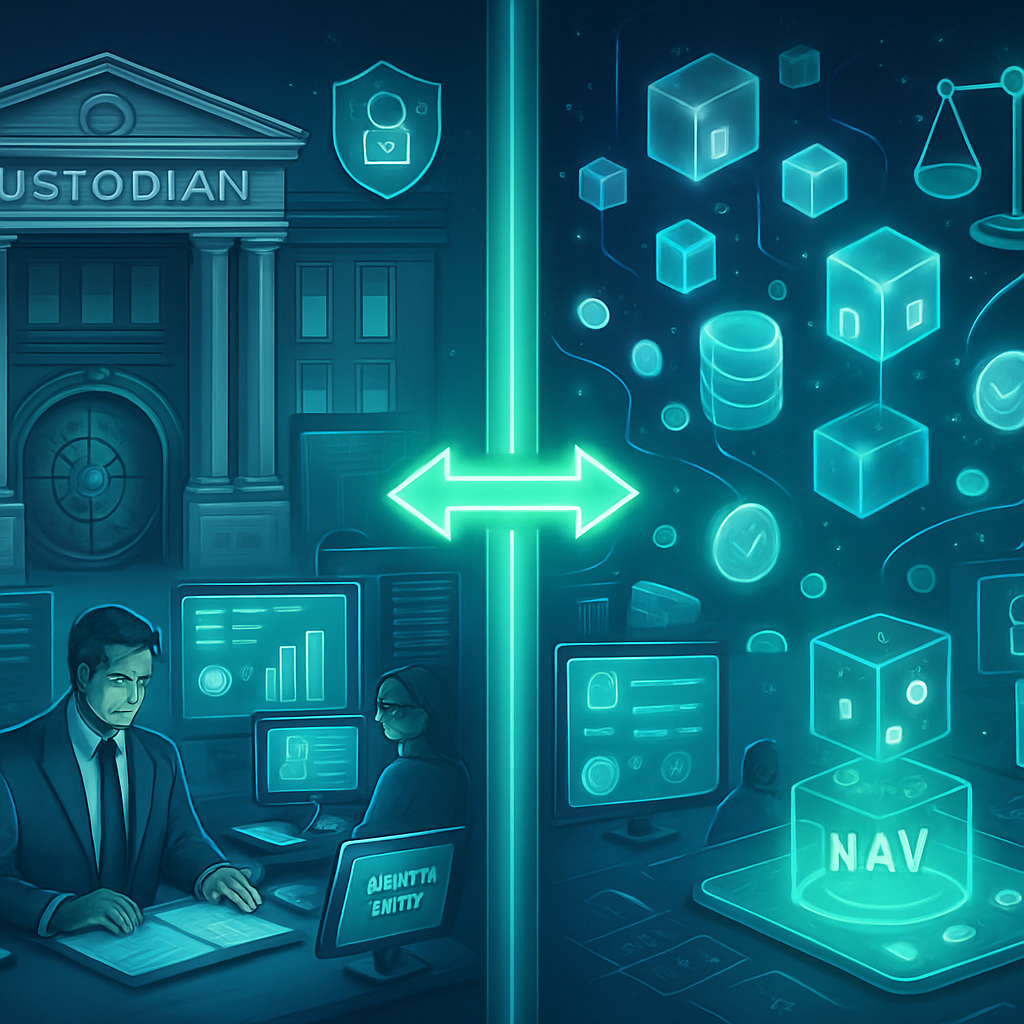
The world’s largest global custodian plans to maintain its existing books-and-records infrastructure while introducing a digital ownership record for tokenized funds, signaling a hybrid approach to integrating blockchain technology into regulated investment products.
Hybrid model for tokenized funds
Under the plan, the custodian will continue operating its traditional custody, fund administration, and transfer agency systems. In parallel, it will create a synchronized digital record that reflects investor ownership of tokenized fund shares. This structure preserves the legal and operational framework of conventional funds while enabling a token-based representation of interests.
The approach is designed to support interoperability with existing market rails—such as established settlement cycles and compliance checks—while allowing tokenized shares to be recorded on a distributed ledger. Depending on product design, the digital record could operate on permissioned or public blockchains, with access controlled through regulated channels.
Why tokenized funds matter
Tokenized funds use blockchain technology to represent shares in traditional investment vehicles, such as money market or fixed income strategies. Proponents say tokenization can improve transparency, enable near real-time transfer and settlement, and expand distribution by allowing smaller, fractional ownership. For institutions, a digitally native record may streamline reconciliation and lower operational friction.
Several asset managers and service providers have been testing or launching tokenized versions of conventional products, citing demand from both retail and institutional clients for faster, more programmable market infrastructure.
Regulatory and operational considerations
Maintaining the legacy record-keeping framework alongside a digital ledger helps ensure compliance with existing regulations governing funds, custody, and investor protections. The hybrid setup also allows established processes—such as net asset value calculation, reporting, and audit—to continue without disruption as tokenized products scale.
Key considerations include governance of the on-chain record, data synchronization across systems, and adherence to KYC/AML and distribution rules. As regulators clarify guidance on tokenized assets, custodians and asset managers are positioning to meet client demand while preserving the safeguards of traditional market infrastructure.