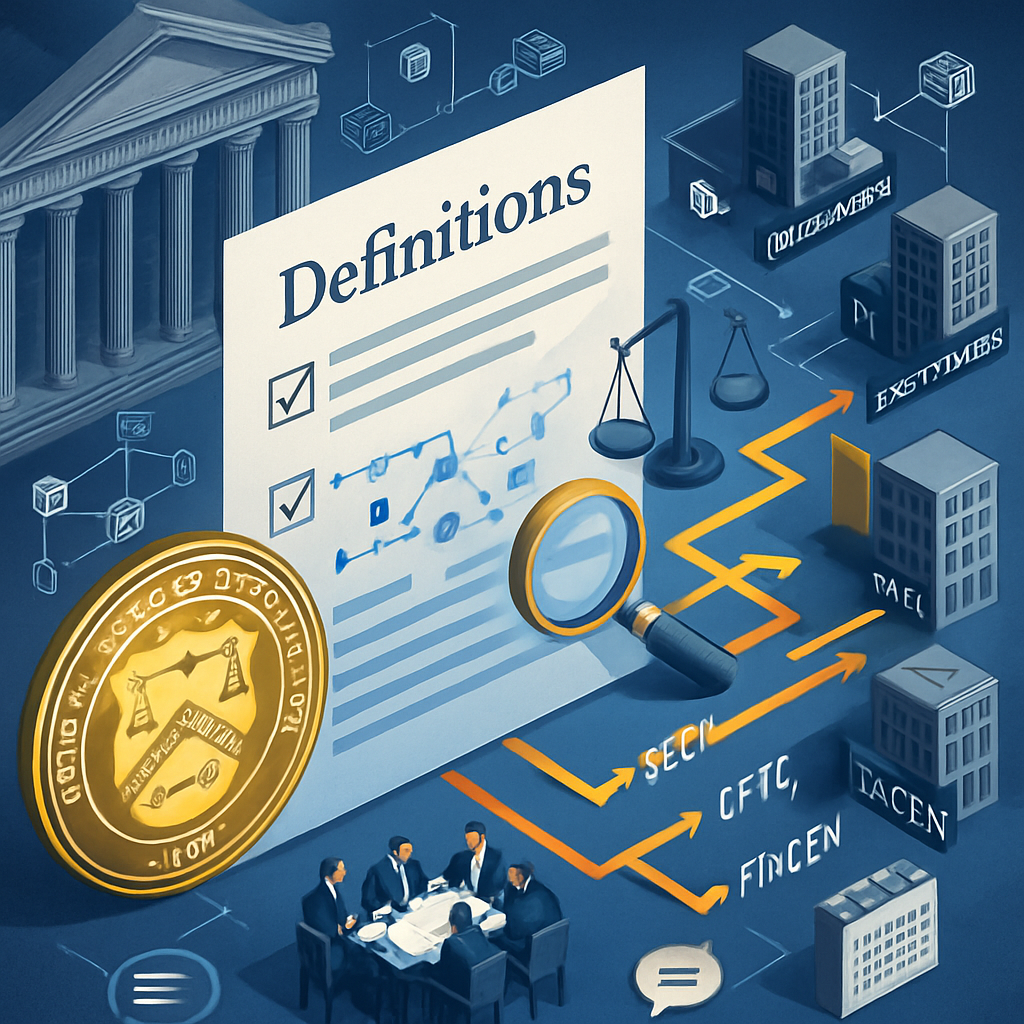
The U.S. Treasury Department has introduced a proposal that would establish core definitions and clarify jurisdictional boundaries within a statute completed by Congress last year, a move that could shape how digital asset activities are overseen across the federal government.
Key provisions in the Treasury proposal
The proposal would set out foundational definitions and delineate areas of regulatory responsibility within the law, aiming to create a consistent framework for implementation. By standardizing terms and identifying which agencies oversee specific activities, the initiative is designed to reduce ambiguity in how the statute is applied.
Implications for digital asset firms and markets
Clearer definitions and jurisdictional lines are critical for companies operating in and around digital assets. Improved clarity could affect registration obligations, reporting standards, compliance expectations, and supervisory approaches for entities such as exchanges, custodians, payment providers, and other intermediaries. It may also help align oversight across securities, commodities, and financial-crime enforcement mandates, areas that have historically overlapped in digital asset regulation.
What to watch next
Proposals of this nature typically proceed through a public comment process before finalization. Industry participants, policy advocates, and legal experts are expected to weigh in on the scope of the definitions and the contours of jurisdiction outlined by Treasury. The final rules, once adopted, could be phased in to allow firms time to adjust compliance programs and operational practices.