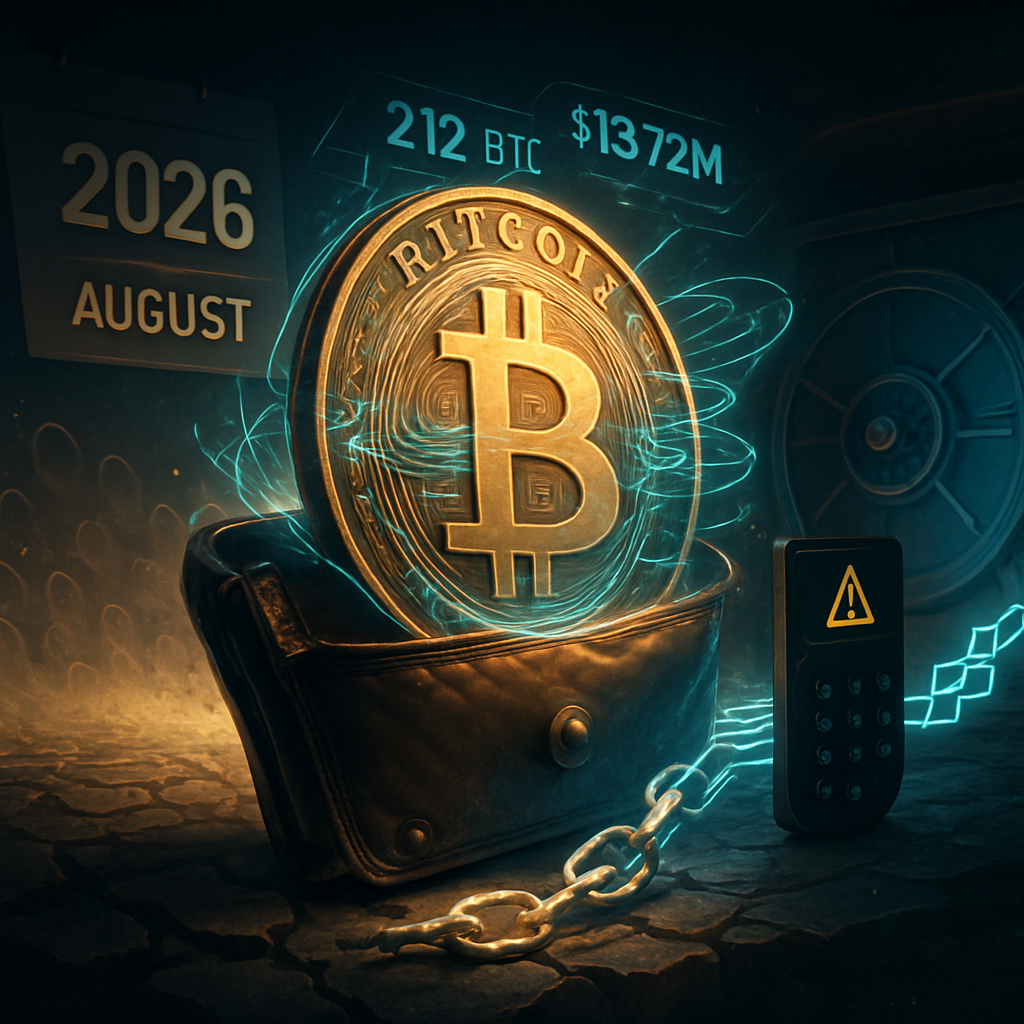
A long-dormant bitcoin address first active in 2012 moved 212 BTC in August, transferring funds worth approximately $13.72 million after more than 14 years of inactivity. The transaction occurred amid a broader wave of “awakening” coins this month, following reports of a Coldcard-related exploit that has prompted some veteran holders to relocate funds.
2012-Era Address Moves 212 BTC
Blockchain records show the 2012 cohort address moved 212 BTC in a single transaction, marking its first on-chain activity since the early years of Bitcoin. At prevailing market prices during the transfer, the coins were valued at roughly $13.72 million. Based on historical pricing from 2012, the stash reflects gains on the order of hundreds of thousands of percent—around 584,725%—if compared with purchase-era valuations. It is not clear whether the funds were sold or simply reorganized to new wallets.
Wave of Dormant Coins Reawakens in August
August has seen an uptick in activity from long-inactive bitcoin addresses. The trend follows reports of a security incident connected to Coldcard hardware wallets, which has led some long-time holders to move funds as a precaution. While not all movements are linked to the incident, the clustering of awakenings suggests heightened security awareness among early adopters and custodians of legacy wallets.
Why It Matters
- Supply dynamics: Movements from early-era wallets can temporarily increase exchange inflows if coins are sent to trading venues, though many awakenings involve internal reorganizations or enhanced security setups.
- Market sentiment: Transfers by “vintage” holders often draw attention due to the size of latent gains and the potential for distribution, even when no sale occurs.
- Security posture: Periodic shifts by dormant wallets frequently coincide with broader industry security events, prompting holders to rotate keys, consolidate UTXOs, or migrate to updated custody arrangements.
Context: Dormant Supply and Early-Holder Behavior
Bitcoin’s dormant supply—coins that have not moved for years—represents a significant portion of the total circulating supply. Historically, awakenings from 2010–2013-era addresses occur sporadically and can reflect a range of motivations, from estate planning and wallet upgrades to opportunistic profit-taking during periods of elevated prices. Without direct evidence of exchange deposits, on-chain moves alone do not confirm selling.
As with prior episodes, this month’s reactivation of a 2012 address underscores the long-term appreciation of early-mined or early-purchased BTC and highlights how security events can ripple across holder behavior, even many years after initial acquisition.