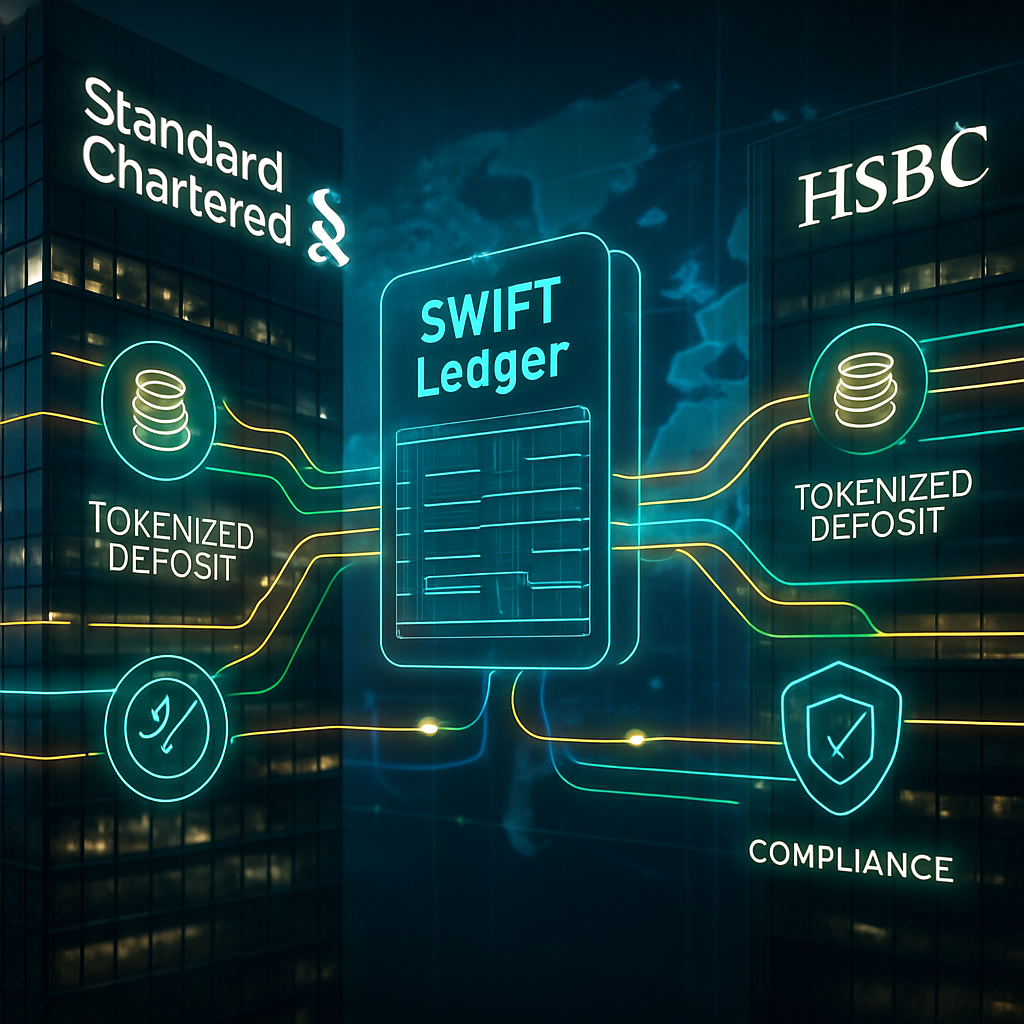
Standard Chartered and HSBC have executed the first live transaction linking their separate tokenized deposit platforms through Swift’s blockchain-based ledger, a step toward interoperable, always-on cross-border payments between major financial institutions.
Live connection between tokenized deposit systems
The banks conducted a live transfer by connecting their tokenized deposit systems via Swift’s ledger infrastructure. The milestone demonstrates how bank-issued digital liabilities can interoperate across institutions using a shared network, without relying on a single proprietary platform.
Tokenized deposits are digital representations of commercial bank money recorded on distributed ledger technology (DLT). Unlike public stablecoins, they remain within the regulated banking system and are redeemable 1:1 against deposits at the issuing bank.
Why it matters
Cross-border payments have historically been limited by fragmented systems, operating hours, and correspondent banking processes. Interoperable tokenized deposits could enable:
- 24/7/365 settlement across jurisdictions
- Reduced operational friction and reconciliation needs
- Improved transparency and programmability for cash movements
For Swift, the live transaction supports its strategy to provide a neutral interoperability layer for digital assets and digital forms of money, allowing institutions to connect existing infrastructures to emerging DLT-based rails.
Broader industry context
Banks and market infrastructures globally are testing tokenized deposits, central bank digital currency (CBDC) models, and tokenized assets to modernize settlement. Interoperability across different DLT platforms and traditional systems is seen as essential to scale these innovations safely and within regulatory frameworks.
What’s next
Further trials are expected to focus on throughput, resiliency, compliance workflows, and multi-currency corridors. Successive pilots could pave the way for production-grade, cross-border tokenized money movements that coexist with current payment rails while extending service hours and functionality.