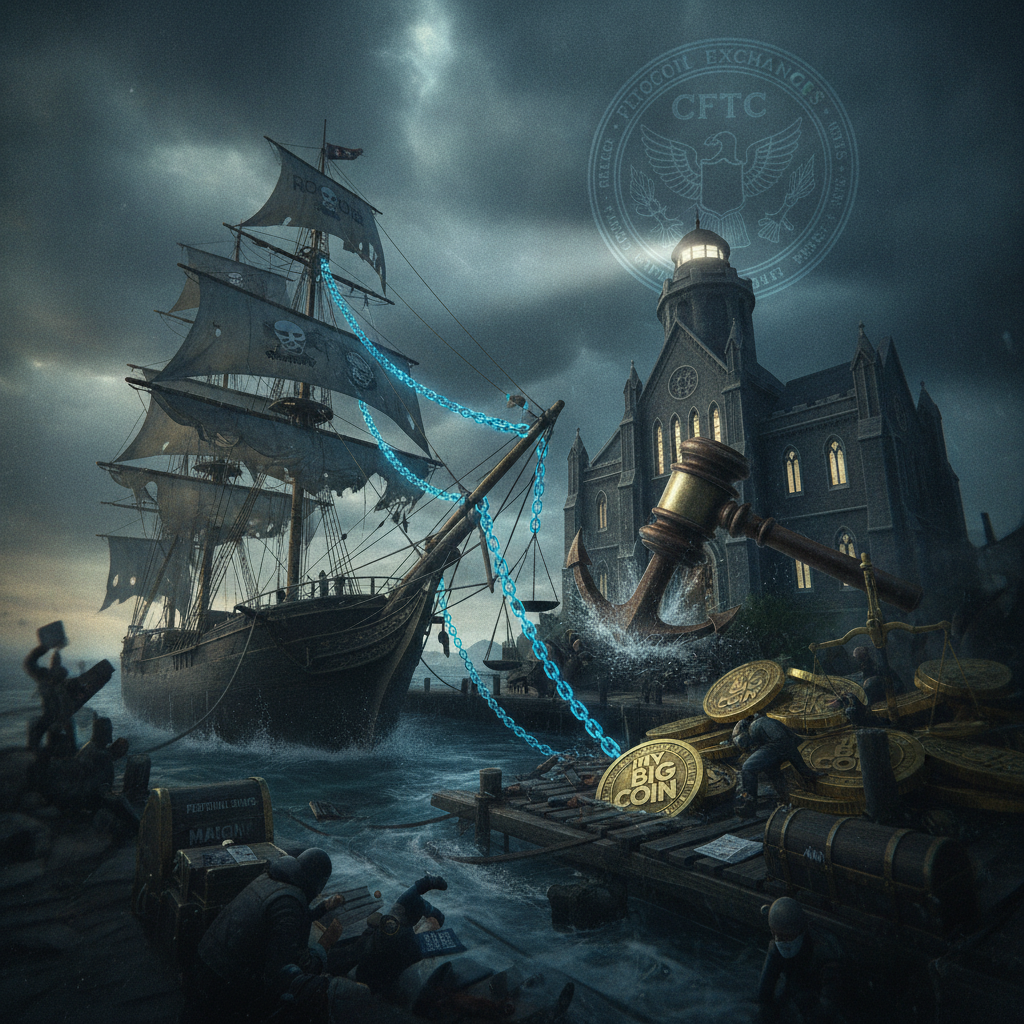
 JUDGES RULE BITCOIN SWAPS ARE FUTURES, DONELSON LOSES
The Seventh Circuit just handed the CFTC a clean win in a case that quietly redraws the line between retail crypto trading and regulated futures. By calling Donelson’s bitcoin-for-dollar contracts “futures,” the court handed federal watchdogs new authority over any platform offering leveraged crypto trades that look like bets on tomorrow’s price. The decision matters because it expands the CFTC’s turf without waiting for Congress.
The trouble began in 2017 when Donelson’s company, My Big Coin, sold digital tokens promising investors they could trade them for cash at a later date. The CFTC sued, arguing the scheme was an unregistered futures contract. Donelson countered that his tokens were just digital assets, not futures, and that the agency lacked jurisdiction. The district court sided with the regulator; Donelson appealed to Chicago.
Writing for the three-judge panel, Chief Judge Sykes held that any contract whose value rests on an underlying asset and is meant to be settled later is a futures contract under the Commodity Exchange Act. Because Donelson’s tokens derived their worth from bitcoin prices and were designed for future cash settlement, they fell squarely inside the statute. The court rejected his claim that only contracts tied to traditional commodities qualify, saying Congress never wrote that limit into the law.
The ruling hands the CFTC clear statutory cover to police leveraged crypto products that mimic futures, while leaving spot bitcoin sales largely untouched. Exchanges offering perpetual swaps or margin trading now operate under a brighter regulatory spotlight; unregistered platforms risk enforcement even if their tokens have no formal derivatives wrapper. Stablecoin issuers that promise redemption at a fixed future value could also face fresh scrutiny.
For traders, the decision tilts the landscape toward platforms willing to register or partner with registered entities. DeFi protocols that replicate futures exposure without licenses now carry added legal tail risk, though purely peer-to-peer spot markets remain in a gray zone. Expect louder calls for legislation that draws sharper boundaries before the next enforcement wave.
Watchdogs just got judicial permission to treat tomorrow’s price as their jurisdiction.