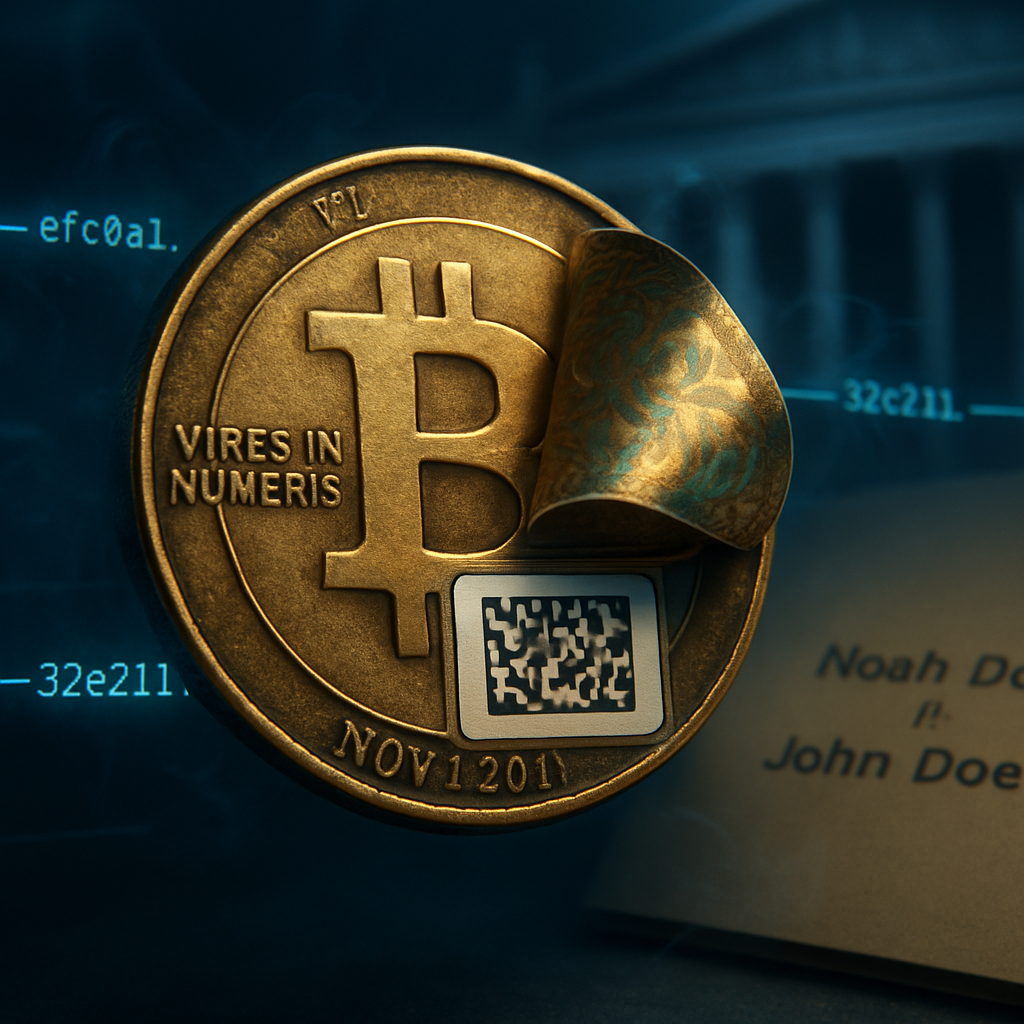
Onchain records indicate that another Casascius physical bitcoin has been redeemed, this time from an address first created on November 1, 2011. The spend appears to connect, via transaction history, to a previously dormant wallet referenced in the New York Supreme Court case Noah Doe v. John Does 1–39,069, adding a new development to ongoing scrutiny of early-era bitcoin movements.
Another Casascius Coin Redeemed
Blockchain data shows the redemption of a bitcoin associated with a Casascius physical coin minted in the early 2010s. Redeeming, often called “peeling,” occurs when the private key hidden beneath a coin’s tamper-evident hologram is used to move the onchain funds, rendering the physical token no longer loaded.
The source address tied to this redemption was originally created on November 1, 2011, placing it squarely in bitcoin’s formative years. While the exact denomination of the redeemed Casascius coin was not disclosed, the onchain movement underscores the ongoing trend of long-dormant coins awakening.
Background: What Are Casascius Bitcoins?
Casascius coins are physical bitcoins created between 2011 and 2013 by Mike Caldwell. Each coin was loaded with a specific amount of BTC secured by a private key embedded under a hologram. When the hologram is removed and the BTC is spent onchain, the coin is considered redeemed. Production ceased in 2013 following regulatory pressure, and remaining unredeemed coins are tracked closely by collectors and blockchain observers.
Connection to the ‘Noah Doe’ Case
The redemption’s transaction history appears to trace back to a dormant wallet cited in the New York Supreme Court matter Noah Doe v. John Does 1–39,069. That case, which names a large number of unknown defendants, has referenced multiple cryptocurrency addresses in its filings. The observed onchain link does not by itself establish ownership or control, but it places the newly active funds within a network of addresses previously noted in court records.
Why It Matters
Movements from early-era wallets are closely watched for their historical and market significance. Each redemption reduces the count of still-loaded Casascius coins while adding to the circulating pool of BTC originating from the 2011–2013 period. The apparent tie-in to a wallet cited in a major court case further highlights how legacy addresses can intersect with ongoing legal and investigative efforts in the cryptocurrency space.