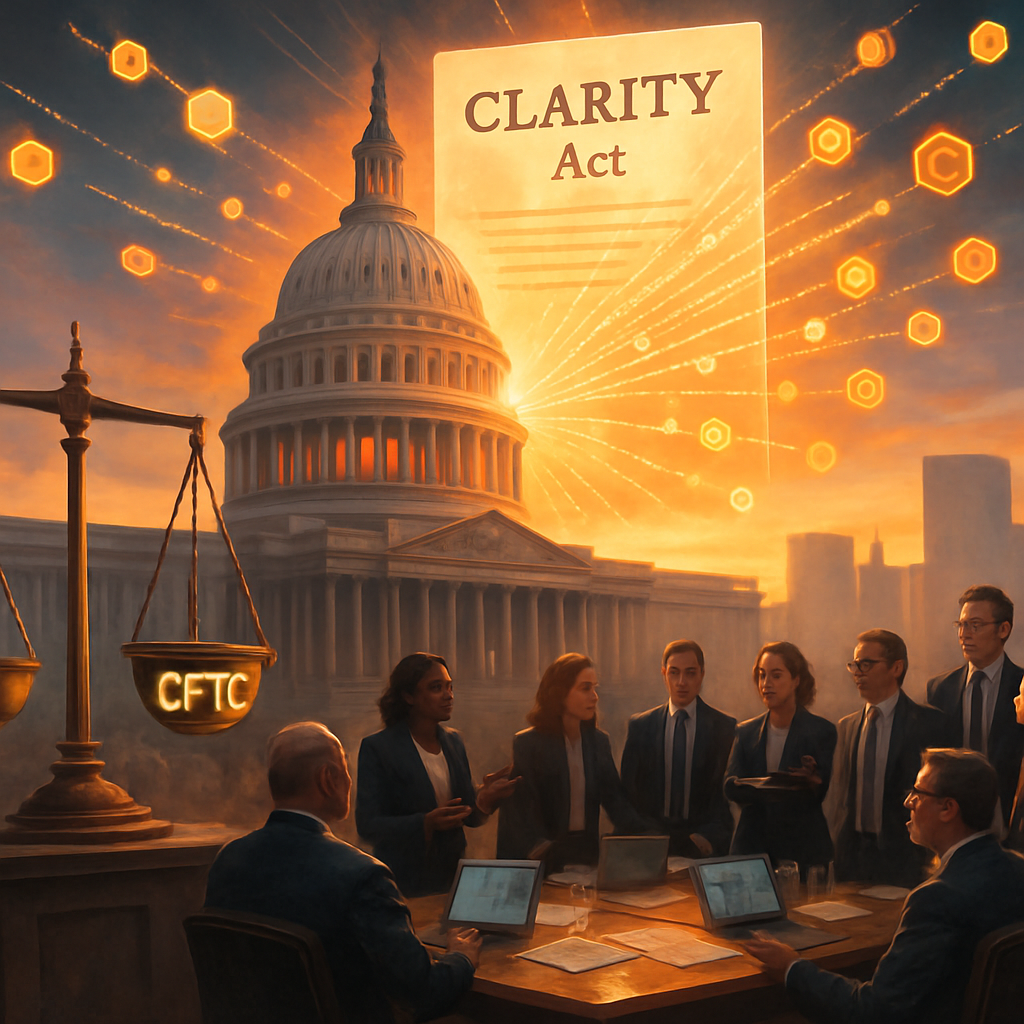
Seventh Circuit Grants CFTC Mandamus, Forcing Kraft and Mondelez to Comply with Subpoena

Wellermen Image CFTC WINS MANDAMUS FIGHT AGAINST KRAFT, MONDELĒZ

The Seventh Circuit delivered a sharp procedural victory to the CFTC this week, granting its petition for a writ of mandamus that forces Kraft Foods Group and Mondelēz Global to comply with a subpoena in an ongoing enforcement action. The decision signals that regulators will not be hamstrung by endless procedural delays when chasing potential market manipulation in commodities. It also hints at a broader crackdown on behavior that regulators view as distorting prices in futures markets, whether driven by physical commodities or crypto tokens.

The lawsuit began when the CFTC accused Kraft and Mondelēz of scheming to inflate wheat futures prices through strategic wheat purchases and position building. The defendants fought back with heavy discovery requests, seeking internal CFTC communications that they claimed would expose bias or improper conduct. When the district court allowed broad discovery, the CFTC appealed to the Seventh Circuit through mandamus, arguing that letting companies dig into an agency’s internal files would chill enforcement and paralyze regulators across futures markets. The judges agreed, ruling that the CFTC had no adequate alternative remedy and that the discovery order represented a clear error of law.

The judges ruled that agencies like the CFTC are entitled to some protection from fishing expeditions into their internal communications, especially when those requests threaten to derail ongoing enforcement investigations. Kraft and Mondelēz lose ground here, they can still defend themselves in the original manipulation case, but they cannot turn it into a trial of the CFTC itself. The decision limits what defendants can do when facing CFTC action, especially in cases involving suspected cornering or squeezing of futures positions.

The legal impact is straightforward: regulators gain stronger footing to push forward without getting bogged down in collateral attacks. This is not a win on the substance of the manipulation claim itself, but a tactical win for the CFTC that set a precedent for how companies can — or cannot — counterattack through discovery. Companies facing CFTC scrutiny will now have to weigh the risk of being limited in their defense tactics.

The CFTC’s authority gets a small but important boost over commodities futures markets, decentralization advocates may see this als

New York Court Refuses to Classify Digital Tokens as Commodities, Tauber Wins Appeal

Wellermen Image Regal Commodities Loses Appeal as Court Shields Digital Token Trader

Judges in New York just handed a significant victory to crypto trader Adam Tauber, reversing a lower court’s finding that his sale of 12 million digital tokens qualified as a commodities transaction under New York law. The ruling matters because it narrows the state’s ability to police token sales as traditional commodity deals, potentially giving platforms and traders breathing room while complicating the SEC’s broader push to treat many digital assets as securities or commodities.

The lawsuit started when Regal Commodities, a futures commission merchant, sued Tauber after he allegedly defaulted on a margin call tied to his purchase of 12 million tokens described as “commodities” in the trading agreement. Regal claimed Tauber’s position collapsed under market volatility, leaving an unpaid balance of roughly $2.8 million. Tauber fought back saying the tokens weren’t traditional commodities at all, but modern digital assets whose nature and legal classification remained unsettled. The lower court initially sided with Regal, treating the deal like a standard commodities futures contract and forcing Tauber to pay. However, the Appellate Division’s March 27 decision reversed that judgment, holding that the agreement’s use of the word “commodities” did not automatically transform the sale into a regulated futures deal.

The judges ruled that the legal question wasn’t simply what parties called the assets in their contract but whether the tokens truly behaved like commodities under existing state law. They found evidence in the case record suggesting the tokens were more akin to securities or hybrid products rather than traditional agricultural or financial commodities. The second department decided that klassification ambiguity around digital tokens meant the lower court had prematurely applied commodities law to a market still under construction. The decision means Tauber wins his appeal and escapes liability under the commodities contract theory, while Regal loses its shortcut to recovery. It also means future similar cases may require courts to examine the specific characteristics of tokens before applying legacy commodities rules.

In plain English, the New York court refused to stretch old commodities definitions to cover new digital products simply because parties agreed to call them “commodities.” This creates a legal hole: contracts that attempt to retroactively classify tokens as traditional commodities may fail unless the assets themselves exhibit classic commodity traits. Regal’s attempt to piggyback on established futures regulation failed because the court refused to assume the tokens were covered by those rules.

The decision tilts authority slightly away from regulators looking to apply legacy commodity rules to tokens, increasing the decentralization versus regulation tension as platforms may use this ruling to argue that many digital products fall outside strict CFTC oversight. Stablecoin and token classification risk remains high because courts will still need to scrutinize each token’s purpose and function before deciding what rules apply. For exchanges and traders, this creates both opportunity and risk—traders may feel emboldened to enter contracts without worrying immediate commodities liability, but solid contract drafting and token economics will still matter to avoid future disputes.

This case underscores how courts are still wrestling with classifying digital tokens, giving traders a temporary shield but requiring careful attention to contract language and asset characteristics.

5/20 Crypto Price Predictions: BTC, ETH, BNB, XRP, SOL, DOGE, ADA

Bitcoin is showing momentum toward the $80,000 mark, while HYPE, ZEC and several other altcoins are pressing against their recent range highs as risk appetite improves across parts of the crypto market.

Bitcoin eyes key resistance near $80K

Market participants are watching whether Bitcoin can extend its advance toward the psychologically important $80,000 level. A decisive move and sustained acceptance above major resistance would signal continuation for the broader uptrend, while rejection could keep price action contained within an established trading range.

Tests of round-number thresholds often coincide with higher volatility as liquidity concentrates around key levels. Traders typically monitor momentum, spot demand versus derivatives positioning, and depth on major exchanges to gauge the strength of any attempted breakout.

Altcoins test range highs

Alongside Bitcoin’s push, HYPE and ZEC are among altcoins approaching the upper bounds of their recent ranges. Moves into range highs can precede either breakouts to new local peaks or swift pullbacks if buyers fail to absorb supply. Liquidity is often thinner on smaller-cap tokens, amplifying both upside and downside during these tests.

Market breadth and tokens to watch

Attention remains on large-cap and high-liquidity names that tend to track Bitcoin’s direction, as well as select mid-cap movers. Tokens on watch include:

  • BTC, ETH, BNB, XRP, SOL
  • DOGE, HYPE, ADA, ZEC, BCH

Correlation with Bitcoin, funding dynamics in derivatives markets, and order book activity may influence follow-through across these assets as the week progresses.

Zcash Jumps 30% on Ceasefire Hopes — Is a Bull Trap Ahead?

Wellermen Image

Zcash Jumps 30% on Ceasefire Hopes, But Trap May Lie Ahead

Zcash surged as much as 30% after reports of a US–Iran ceasefire sparked a short-lived risk-on wave across crypto. The move looks familiar to traders who watched similar bounces during the 2021 bear market, and early signs suggest this rally could be another bull trap rather than the start of a sustained recovery.

The spike came as geopolitical tension eased and traders rotated into higher-beta privacy coins. ZEC quickly climbed from recent lows near $20 to briefly touch the $26–27 zone, drawing in momentum traders and short-covering flows. On-chain data showed a jump in active addresses and volume, but funding rates flipped positive fast, hinting at overcrowded long positions.

Privacy coins often act as the first sector to move when sentiment improves, yet they rarely lead durable rallies. Zcash’s privacy tech remains strong on paper, but adoption stays low outside illicit use cases, leaving the token exposed to regulatory pressure. If macro risk appetite fades again, ZEC stands to give back gains faster than broader market leaders like Bitcoin.

What This Means for Crypto

Privacy coins sit at the intersection of real utility and regulatory risk. Zcash’s shielded transactions offer strong anonymity, but governments continue to view these features with suspicion, making long-term exchange listings and institutional adoption difficult.

For traders, the lesson is simple: a geopolitical headline can trigger sharp moves in low-liquidity names, but these bounces rarely survive once the news cycle cools. Long-term investors should weigh whether ZEC’s privacy narrative still justifies holding through repeated 40% drawdowns.

Builders and developers behind privacy tools need to focus on legitimate use cases in finance and data protection if they want to escape the stigma that keeps capital on the sidelines.

Market Impact and Next Moves

Sentiment around ZEC turned sharply bullish in the first 24 hours of the ceasefire news, but the move already shows signs of exhaustion. High funding rates and rapid profit-taking suggest this could<|eos|>

Crypto Token Lawsuits Consolidated in Chicago, Creating Nationwide Securities Precedent

Wellermen Image JUDGES CENTRALIZE CRYPTO EXCHANGE SUITS IN ILLINOIS

A federal judicial panel ordered three investor lawsuits against a major crypto exchange to be consolidated in Chicago’s federal court. The move signals that courts are willing to treat scattered token-sales disputes as one national problem rather than isolated retail claims. Investors now have a single forum to test whether unregistered token offerings broke securities laws, and that precedent could ripple across every exchange still listing similar assets.

The suits began when buyers claimed they lost money after the exchange continued selling tokens later ruled securities. Two of the cases sat in California and Pennsylvania; Anthony Motto asked the Judicial Panel on Multidistrict Litigation to gather them with his own suit in Illinois. Judges weighed arguments about convenience, overlapping evidence, and the need for uniform rulings on whether tokens qualify as investment contracts. They ultimately picked the Northern District of Illinois, where the largest number of related claims had already landed and where experienced judges could handle the mass of discovery and class-certification fights.

The exchange loses the chance to fight each suit separately in friendly districts, while investors gain a single front line. Judge Sarah S. Vance’s order ends forum-shopping and creates one discovery record that both sides must use. Any ruling on whether tokens count as securities will bind the three cases and likely guide future complaints filed anywhere in the country.

This centralization order lets the court treat token sales as a single national practice rather than piecemeal retail trades. It does not decide the securities question yet, but it removes the exchange’s ability to exploit differing district-court attitudes toward decentralization. With one judge steering pre-trial motions, the risk that a token will be reclassified as a security rises because the same evidence will be tested only once.

The order increases pressure on centralized exchanges to revisit their token-listing policies before facing a unified judicial bench. Stablecoin issuers and DeFi protocols that rely on secondary-market liquidity now watch closely, because any broad definition of “investment contract” could force re-registration or even delisting. Traders should expect tighter compliance costs, possible volume dips, and early signs of regulatory arbitrage toward offshore venues.

Exchanges that ignore the consolidation trend may find themselves cornered by unified investor classes and sharper judicial scrutiny.

Bitcoin Has 3–5 Years to Prepare for Quantum Risk, Bernstein Says

Wellermen Image

Bitcoin Has 3–5 Years to Prepare for Quantum Risk, Bernstein Says

Quantum computing could eventually break the cryptography that protects Bitcoin, yet Bernstein analysts believe the threat is far more contained than headlines suggest. The real danger sits in old wallets and exposed keys rather than the core protocol itself, giving the network time to adapt. Markets are watching closely because any credible timeline around quantum risk tends to move sentiment faster than the technology itself.

The warning comes from Bernstein’s latest research note, which argues that Bitcoin needs 3–5 years to prepare for a future where quantum computers become powerful enough to threaten exposed private keys. Most modern wallets already use stronger practices, but early-era coins sitting in addresses with publicly visible public keys remain the clearest targets. Bernstein stresses that a full-scale attack capable of breaking the entire network remains years away, so developers still have breathing room to roll out post-quantum upgrades.

Who benefits and who loses depends on how quickly the ecosystem moves. Projects and exchanges that start integrating quantum-resistant signatures now will hold an advantage if panic hits later. Older holders with dormant wallets face the greatest exposure, while newer users benefit from lessons learned and safer default practices. Regulators may eventually demand proof of quantum readiness as a compliance metric, turning what feels like a technical footnote into a regulatory talking point.

What This Means for Crypto

Post-quantum cryptography refers to new signature schemes designed to withstand attacks from future quantum computers. These upgrades would require soft forks or protocol changes, but they do not rewrite Bitcoin’s monetary policy or supply cap. The shift is less about replacing Bitcoin and more about future-proofing the cryptography that keeps coins secure.

Traders should treat this as a long-term tail-risk story rather than an immediate sell signal. Long-term investors gain comfort knowing the timeline stretches across years, allowing gradual upgrades without emergency measures. Builders and developers now have a clear mandate to test and benchmark quantum-resistant solutions before any forced scramble occurs.

Market Impact and Next Moves

Sentiment around this headline leans mixed because the 3–5 year window feels distant enough to avoid panic yet real enough to spark debate. Short-term price action is unlikely to move on this news alone, but any major breakthrough in quantum hardware could quickly change that.

The biggest risk lies in overblown headlines that exaggerate the threat and trigger unnecessary selling pressure. Liquidity and leverage remain bigger day-to-day dangers than quantum risk itself, since most active trading happens on newer, safer wallets. Scam artists may also exploit the topic to push dubious “quantum-proof” tokens or services.

Opportunities exist for projects that specialize in post-quantum security research and infrastructure, especially if they can demonstrate early solutions. On-chain metrics showing increased activity in quantum-resistant address types or soft-fork discussions would be positive signals for long-term adoption.

Quantum risk is real but manageable — the winners will be those who prepare years ahead rather than react in panic.

Fifth Circuit Dodges Ethereum Security Ruling; SEC Keeps Enforcement Power Intact

Wellermen Image SEC PUNTS ON ETHEREUM, AVOIDS CRYPTO CRACKDOWN

The Fifth Circuit just handed the SEC a narrow win while dodging the real question every crypto investor wants answered: Is Ethereum a security? The court’s decision leaves the agency bruised but still breathing, avoiding a ruling that could have crippled enforcement across the entire digital asset space. This decision matters because it keeps the SEC’s regulatory reach intact without forcing a head-on clash over token classification that had Wall Street and Silicon Valley watching closely.

The case began when a group of crypto advocates filed suit against the SEC, seeking to force the agency to clarify its position on Ethereum specifically, and token sales more broadly. They argued that the SEC had dragged its heels on official guidance, leaving markets in regulatory limbo and giving the agency too much power to retroactively declare tokens securities after the fact. The Fifth Circuit heard the appeal following a lower court’s dismissal, focusing on whether the SEC had a clear duty to issue rules or respond to the petitioners’ demands for clarification.

In a per curiam opinion issued November 26, the Fifth Circuit affirmed the unteren court dismissal, dismissing the lawsuit against the SEC without addressing the substance of whether Ethereum qualifies as a security or whether the agency had any obligation to provide industry-wide guidance. The judges ruled that the petitioners lacked standing to erzwingen a regulatory response, essentially saying the SEC had no duty to klarify its rules on digital assets. This means the SEC escapes this round unscathed on the legal front, but the decision does not broaden its authority over previously issued tokens.

The judges essentially told petitioners to go back to the agency or seek congressional action rather than use courts to force regulatory clarity. This plain-English translation means the SEC keeps its current approach intact, allowing it to pursue enforcement actions against projects and projects without having forced a broad classification of tokens as securities. The court avoided deciding what constitutes a security in the crypto space, which could have either tightened or widened the agency’s power.

The decision leaves SEC authority intact without broadening it into new areas. It keeps the decentralization vs regulation tension alive, where projects seeking to fully decentralize may still escape future enforcement but未未未未未未未未未未未未un

Bitcoin Demand Surges as Bulls Target $72K Support

Wellermen Image

Bitcoin Demand Surges as Bulls Eye $72K Support

Bitcoin buy-side activity is picking up across both spot and derivatives markets, signaling renewed strength after weeks of hesitation. Reduced selling pressure from short-term holders is giving bulls a clearer path to defend the $72,000 level and push higher. For investors watching the tape, this shift from weak hands to fresh demand marks a meaningful change in market tone.

Spot market inflows have turned positive while futures funding rates are showing signs of stabilization, suggesting traders are willing to pay for exposure again. Short-term holders, who typically sell into strength and create resistance, are now holding their coins rather than flooding the market with supply. This drop in distribution pressure removes a key headwind that kept Bitcoin range-bound near current levels.

Longer-term holders and institutional desks appear to be the primary source of this demand, absorbing coins that would have otherwise hit the market. The combination of steady spot buying and controlled leverage in derivatives reduces the risk of another sharp flush lower. If this pattern holds, $72,000 could quickly flip from resistance to support.

What This Means for Crypto

Buy-side activity in both spot and derivatives reflects real capital entering the market rather than just leveraged speculation. When short-term holders stop selling, it tightens supply and gives price room to breathe. This matters because sustained demand from longer-term participants tends to create more durable moves than momentum-driven rallies built on high leverage.

Traders should watch funding rates and exchange inflows closely. Positive funding with moderate leverage usually signals healthy interest, rather than the explosive setups that end in cascades. Investors with longer horizons can view any dip toward $72,000 as a potential accumulation zone if spot demand remains firm.

Market Impact and Next Moves

Short-term sentiment looks bullish as fresh demand meets reduced supply, but the move remains fragile. A sudden spike in leverage or aggressive short-term holder selling could still trigger a pullback before the next leg higher. Liquidity remains concentrated near current levels, so any break above or below could move quickly.

Traders may look for dips as buying opportunities while watching for signs of overheating in funding rates. Long-term investors can continue accumulating on weakness, especially if on-chain metrics show continued holding behavior from short-term participants. The key risk is a reversal in spot demand before $72,000 can be reclaimed as support.

Bitcoin bulls now have the fuel to test higher, but only if demand stays consistent and supply pressure stays low.

Ninth Circuit Upholds CFTC Authority Over Bitcoin Futures

Wellermen Image CFTC WINS KEY NINTH CIRCUIT RULING ON CRYPTO COMMODITIES

The Ninth Circuit upheld the CFTC’s enforcement win against James Devlin Crombie, confirming the agency’s power to police unregistered commodity futures. The decision strengthens federal oversight of digital-asset derivatives while leaving room for legitimate spot trading and true decentralization. It signals that regulators can reach platforms and individuals who structure deals as futures without a license.

James Devlin Crombie ran an unregistered online platform that offered leveraged bitcoin trading. The CFTC sued, arguing his contracts qualified as commodity futures because they allowed customers to speculate on price movements without taking delivery. Crombie claimed the CFTC lacked authority over bitcoin because it had not been formally classified as a commodity. The district court sided with regulators, imposed a permanent injunction, and ordered him to pay $1.7 million in restitution plus penalties. Crombie appealed, hoping the Ninth Circuit would strip the CFTC of jurisdiction by declaring bitcoin outside commodity law.

The appeals court affirmed. Judges held that bitcoin clearly meets the Commodity Exchange Act definition of a commodity, so the CFTC could regulate contracts tied to its future price. They rejected Crombie’s technical arguments and kept the injunction and monetary judgment intact. Regulators won on every major point; Crombie lost his bid to carve out a bitcoin exception. The ruling stands as precedent for any trader or platform offering leveraged crypto products that resemble futures.

This Ninth Circuit opinion removes one more layer of uncertainty about who watches crypto derivatives. The CFTC gains explicit judicial backing to treat bitcoin and similar tokens as commodities when they appear in futures-style contracts, tightening control over unregistered platforms. Spot bitcoin purchases and genuine decentralized exchanges remain outside this reach, yet any design that promises leveraged exposure without delivery now faces higher regulatory risk. Exchanges and protocol developers must weigh whether their products trigger CFTC licensing or invite enforcement.

The decision tilts authority toward centralized oversight while preserving some space for decentralized models. SEC jurisdiction stays intact for securities-like tokens, but CFTC authority over commodities is now firmer, giving regulators two strong books to press against hybrid crypto projects. Stablecoin issuers and yield-bearing products will feel secondary pressure because the ruling makes it easier to argue that any price-based speculation contract belongs to the CFTC. Traders and operators on or near leveraged crypto venues should expect more enforcement attention and stricter compliance demands.

Operators who still rely on unregistered leveraged bitcoin contracts should expect more scrutiny and enforcement letters, not new exemptions.

Bitcoin, Ethereum News: Congress Spurs IRS De Minimis Review

U.S. lawmakers have introduced a new version of the Parity Act that revises how “payment stablecoins” are addressed and instructs the Internal Revenue Service (IRS) to report on the feasibility of a de minimis tax exemption for small cryptocurrency transactions.

Key Updates in the Latest Draft

The updated Parity Act refines language related to payment stablecoins—digital assets designed to maintain a stable value relative to a reference asset such as the U.S. dollar and commonly used for payments and transfers. The changes aim to clarify how such tokens are treated within the broader digital asset framework, an area that remains a central focus for policymakers working to balance innovation with consumer protection and financial stability.

IRS Report on De Minimis Tax Exemption

The draft directs the IRS to study and report to Congress on how a de minimis tax exemption could be structured for everyday crypto transactions. A de minimis exemption would potentially exclude small purchases made with digital assets from capital gains tax reporting, reducing friction for routine payments. As context, U.S. tax law includes a de minimis rule for certain foreign currency transactions; the IRS review is expected to evaluate whether a similar approach could apply to digital assets, including potential thresholds, guardrails, and anti-abuse measures.

Why It Matters

Clarifying the treatment of payment stablecoins and exploring a de minimis exemption are seen as important steps toward enabling practical, compliant crypto payments in the United States. If enacted, these measures could streamline consumer use of digital assets for low-value transactions and provide clearer guidance to issuers, payment providers, and merchants.

Next Steps

The latest draft signals continued momentum on digital asset policy, but further committee consideration and potential revisions are likely. The timeline for any IRS report and subsequent legislative action has not been specified.

CFTC Wins Appeal: Monex Must Face Trial Over Leveraged Metal Trades

Wellermen Image CFTC WINS APPEAL OVER MONEX TRADING PRACTICES

A federal appeals court handed the Commodity Futures Trading Commission a major victory Thursday, ruling that Monex Credit Company and its affiliates must face trial on charges that their leveraged precious-metals contracts amounted to illegal off-exchange retail commodity transactions. The decision reverses a lower-court dismissal and restores the CFTC’s power to police platforms that let individual investors trade metals on margin without clearing through a regulated exchange. For crypto markets still sorting out whether tokens and derivatives fall under commodities law, the ruling signals that regulators can reach deep into platforms that blend spot and leveraged exposure.

The lawsuit began when the CFTC sued Monex in 2017, alleging that the California precious-metals dealer offered customers the chance to buy gold, silver, and platinum on 3-to-1 leverage without taking physical delivery. Monex countered that their contracts were actual sales of metal rather than futures, exempting them from CFTC oversight under the so-called Treasury Amendment. After the district court agreed with Monex and dismissed the case, the CFTC appealed, claiming the judge had misread both the statute and the risk customers actually faced. Judges on the Ninth Circuit heard oral arguments in 2018 and issued their opinion this week.

In a unanimous ruling written by Circuit Judge M. Margaret McKeown, the court held that Monex’s contracts met the statutory definition of a “leveraged” or “margin” commodity transaction offered to retail customers. Because Monex did not require full payment and gave customers only rights to metal rather than actual bars in hand, the judges ruled that the transactions qualified as subject to CFTC regulation. The court rejected Monex’s Treasury Amendment defense, saying it only protects genuine spot sales, not financing arrangements that leave investors exposed to price swings. Monex loses its bid to avoid federal oversight, the CFTC wins standing to press forward, and every platform offering leveraged exposure to any commodity—including crypto—now faces renewed scrutiny.

The plain-English impact is that whenever a firm lets retail customers put down only a fraction of a trade’s value and finances the rest, regulators will view that als leverage, not a true spot purchase. Customers get protection under CFTC anti-fraud rules, but platforms must either register or redesign their products so they require full upfront payment and actual delivery. This distinction is far more than technical; it<|eos|>

Crypto Wallets Are Property: Court Clears Path for Forfeiture

Wellermen Image U.S. Court Clears Path for Crypto Seizures

Federal agents just won a decisive legal edge in the war over digital assets. A federal judge in Washington allowed the government to seize twenty-four cryptocurrency wallets tied to an IRS probe, ruling that civil forfeiture can reach virtual currency the same way it reaches cash or cars. This decision strengthens federal power to target suspected tax evasion and money laundering through blockchain, raising the stakes for anyone holding crypto.

The case began when IRS investigators traced suspicious cryptocurrency flows to twenty-four separate accounts. The government filed a civil forfeiture action claiming the wallets contained proceeds of illegal activity. Defense arguments centered on whether virtual currency even qualifies as property the government can seize under existing forfeiture statutes. Judges had to decide if blockchain-based assets fall under traditional civil forfeiture rules or if their digital nature creates a legal loophole.

The court rejected the defense position and granted the government’s motion. Judges ruled that cryptocurrency constitutes “property” under federal forfeiture law, so authorities can seize it through standard civil procedures. This ruling gives the IRS and DOJ a green light to continue targeting wallets without needing new legislation or special warrants. Individuals connected to the accounts now face permanent loss of those assets unless they successfully appeal or prove clean source of funds.

In plain English, the government just proved it can treat crypto like any other asset when chasing criminals. This removes a major legal uncertainty that had let some holders believe digital tokens sat outside traditional enforcement reach. Going forward, investigators will likely expand their use of blockchain analytics to link wallets to suspected crimes and pursue forfeitures with greater confidence.

For markets, this decision tilts power toward regulators at the expense of decentralization. The SEC and CFTC gain indirect leverage because easier forfeiture lowers the risk-reward ratio for tax cheats and launderers who use exchanges and DeFi protocols. Traders may start avoiding centralized platforms where KYC data can lead to wallet tracing and seizures, potentially accelerating migration toward non-custodial wallets and privacy coins. Stablecoin issuers and large holders now face higher compliance burdens as the government demonstrates willingness to freeze and take assets.

The ruling signals that Germany’s ignored.

Bitcoin’s Quantum Clock Ticks: Early Movers Win, Late Migrators Risk

Wellermen Image

Bitcoin’s Quantum Clock Is Ticking — But Not for Everyone

Bernstein analysts have warned that Bitcoin must begin preparing for quantum computing threats within the next three to five years, yet they stress the risk is far narrower than headline-grabbing doomsday scenarios suggest. The real danger sits in older wallets holding exposed public keys, not the broader network. For most holders, the threat remains distant but real enough to demand early upgrades.

The warning comes as quantum computing advances faster than many in crypto expected. Bernstein’s research highlights how current Bitcoin cryptography could eventually be cracked by sufficiently powerful machines, allowing attackers to derive private keys from exposed public keys. Older addresses that have already revealed their public keys through past transactions face the highest exposure, while newer wallets using modern address types stay relatively shielded.

Who benefits and who loses depends on preparation speed. Exchanges and custodians that move funds to quantum-resistant addresses will likely retain user trust and regulatory favor. Long-term holders sitting on untouched early Bitcoin face the greatest individual risk if they delay migration. Developers and infrastructure providers who ship quantum-safe solutions first will capture the next wave of security spending.

What This Means for Crypto

Quantum risk is not immediate code-breaking magic. It requires both advanced hardware and exposed public keys to become dangerous. Most users can reduce exposure by moving coins to newer address formats that hide public keys by default. The jargon around “post-quantum cryptography” simply means new signature schemes designed to resist future quantum attacks.

Traders should watch for protocol upgrades or soft forks that introduce quantum-resistant signatures. Long-term investors need to audit their own wallets and plan migration paths before quantum machines reach critical capability. Builders who integrate these upgrades early will gain a compliance and trust advantage as regulators begin asking harder questions about custody standards.

Market Impact and Next Moves

Sentiment around quantum risk remains mixed. Short-term price impact is likely minimal because the threat feels years away, but any headline linking quantum breakthroughs to Bitcoin could spark brief volatility. Liquidity in older coins may tighten as sophisticated holders quietly shift holdings to safer addresses.

Key risks include rushed or poorly tested quantum-resistant upgrades that introduce new bugs, plus the possibility that large holders delay action until a real incident forces panic moves. Opportunities lie in projects building post-quantum tooling and in early-mover custodians who advertise quantum-safe storage as a premium service.

Bitcoin has time, but not forever — start migrating exposed keys now before quantum noise turns into real market panic.

Partial SEC Victory as Court Keeps Core Binance Case Alive

Wellermen Image SEC Stuns Binance with Partial Win in Landmark Case

The U.S. District Court for the District of Columbia dealt Binance a measured blow this week when it refused to dismiss several of the SEC’s claims that Binance’s unregistered token sales and platform operations violated federal securities laws. The decision keeps the agency’s core enforcement theory alive and signals that courts are still willing to treat many crypto assets as securities, preserving the SEC’s regulatory reach over centralized exchanges that serve U.S. users. This early ruling sets the stage for protracted litigation that could redefine how digital-asset platforms structure their products and reach domestic customers.

The lawsuit opened in June 2023 when the SEC filed a sweeping complaint against Binance Holdings, Binance.US, and founder Changpeng Zhao. The agency accused the exchange of offering unregistered securities through BNB, BUSD, and dozens of other tokens, while also charging that the platform’s staking and simple-earn programs constituted unregistered investment contracts. Binance immediately sought to dismiss most claims, arguing that none of the tokens met the Howey test and that the agency lacked authority over secondary-market sales. After months of briefing and oral argument, Judge Amy Berman Jackson issued a 76-page opinion that largely rejected Binance’s motion, letting the SEC proceed on the majority of its allegations.

In her ruling, Judge Jackson held that the SEC plausibly pleaded that BNB, BUSD, and several listed tokens qualified as securities at the time of sale, largely because the tokens’ utility was tied to Binance’s commercial success and marketing promises. She also accepted the agency’s view that the exchange’s staking program could be reinterpreted as an investment contract under Howey, even if technical staking was handled by third-party validators. However, she dismissed claims tied to secondary-market trading of non-security tokens and narrowed the scope of the agency’s allegations about the BUSD stablecoin. The court stopped short of declaring any token a security outright, leaving that final determination for summary judgment or trial.

This decision keeps the SEC’s authority intact over broad categories of digital-asset sales and staking services offered by U<|eos|>

Bitcoin Rebounds as Bulls Target $72K Support

Wellermen Image

Bitcoin Demand Rebounds as Bulls Eye $72K Support

Bitcoin is showing fresh signs of buyer strength after weeks of sideways trading, with spot and derivatives markets both flashing positive activity. The drop in selling pressure from short-term holders is giving bulls a clearer path to defend the $72,000 level and push higher.

The shift comes as renewed buying interest hits both the spot market and futures platforms, suggesting that investors who sat on the sidelines are now stepping back in. At the same time, short-term holders who usually sell into strength appear less eager to offload coins, reducing the downward pressure that has kept price action contained near recent highs.

Traders watching order flow see this combination as more than noise. Spot market demand signals real capital entering the market rather than leveraged bets, while quieter selling from short-term holders removes a key source of supply that previously capped rallies.

This matters because it changes the risk profile for the next move. With less immediate selling pressure, any positive catalyst could quickly translate into a sustained push above $72,000 instead of another rejection at resistance.

What This Means for Crypto

Spot buying is the cleaner signal investors prefer to watch, because it reflects actual ownership rather than temporary leverage plays. When this pairs with reduced selling from short-term holders, it often marks a shift from distribution to accumulation.

For traders, this setup lowers the odds of a sharp pullback below $72,000 in the near term. Long-term investors see confirmation that the broader uptrend remains intact, while builders benefit from steadier capital flows that keep the network healthy.

Market Impact and Next Moves

Sentiment is turning constructive as market participants price in a higher chance of holding support and extending gains. The read on immediate risk is low, but any sudden regulatory surprise or macro shock could still test the level.

Opportunity lies in the current accumulation pattern. Projects and tokens tied to Bitcoin narratives stand to benefit if the price holds and momentum carries through to broader altcoin rotation.

Traders should watch volume and funding rates closely for confirmation that this demand is sticking around rather than fading at the next resistance.

Bitcoin’s latest buying wave may be the spark that finally turns $72,000 from resistance into support — watch closely, because the next few sessions will decide whether this is noise or the start of the next leg up.

×