
Pakistan and Binance Eye Tokenization of $2B State Assets

Pakistan, Binance Sign MOU to Explore Tokenization of Up to $2B in State Assets: Reuters

Pakistan has signed a memorandum of understanding (MoU) with crypto exchange Binance to explore the tokenization of up to $2 billion in state assets, including sovereign bonds, treasury bills, and commodity reserves, Reuters reported Friday, citing the country’s finance ministry.

According to the ministry, the MoU sets out a framework to assess potential collaboration on the tokenization and blockchain-based distribution of Pakistan’s real-world and sovereign assets, subject to applicable laws, policies, and regulatory approvals.

The assets under consideration include government debt instruments such as bonds and T-bills, as well as state-owned commodity reserves. The stated goals are to boost liquidity, improve transparency, and expand international market access in an effort to attract investors.

The agreement is not a finalized rollout. An MoU typically signals intent to explore a project and formalize discussions, rather than confirming that tokenized instruments will be issued or made available to markets.

The move underscores Pakistan’s broader effort to incorporate blockchain-based infrastructure into parts of its financial system. Reuters also noted that, separately, Pakistan granted initial regulatory clearances to both Binance and digital-asset platform HTX.

  • What happened: Pakistan and Binance signed an MoU to explore tokenizing up to $2 billion in sovereign bonds, T-bills, and commodity reserves.
  • Why it matters: Officials say tokenization could support liquidity, transparency, and wider access for investors.
  • Status: Exploratory, subject to laws and regulatory approvals.

Why Crypto Is Booming in the Philippines: Low Wages, High Purchasing Power

Wellermen Image

Philippines Crypto Boom: Low Salaries, High Purchasing Power Fuels Adoption

Filipinos are embracing crypto despite earning far less than Australians, thanks to dramatically lower living costs that boost real purchasing power. A Cointelegraph deep dive reveals how this economic reality is supercharging crypto’s role in daily life and remittances. For investors, it’s a reminder that emerging markets like the Philippines could be crypto’s next growth engine.

The spark? Cointelegraph’s spotlight on the Philippines’ crypto scene, where locals grapple with salary gaps but thrive on cost-of-living advantages. An expert quoted in the piece nails it: realizing the purchasing power difference hits hard—”they are earning much, much less than an Australian salary”—yet “it also costs much, much less to live here.” This isn’t abstract econ talk; it’s the backdrop to why crypto is exploding in Southeast Asia’s powerhouse.

What happened? No single event, but a vivid narrative exposing the math: lower nominal wages offset by cheap essentials, making crypto remittances and trading a game-changer for millions. Key fact—Filipinos send home billions in remittances yearly, often via volatile fiat rails, but blockchain flips that script with speed and savings. Winners: everyday users gaining financial sovereignty; local builders scaling apps. Losers: legacy banks losing grip. Now? Expect more on-ramps, stablecoin surges, and regulatory nods as adoption accelerates.

What This Means for Crypto

Forget jargon—purchasing power parity (PPP) just means your money buys more where life is cheaper, turning modest crypto holdings into real wealth for Filipinos. Traders get it: this dynamic pulls in volume from high-activity users who trade daily for necessities or cross-border sends.

Long-term investors see the play: Philippines’ 110 million population, young and tech-savvy, is a massive user base for wallets, DeFi, and NFTs. Builders win big—local devs are coding solutions tailored to remittance pain points, drawing VC dollars.

Market Impact and Next Moves

Short-term sentiment: Bullish for Asia-focused tokens like those tied to remittances (think stablecoins and layer-2s). Volume spikes in PHP pairs signal fresh liquidity inflows.

Risks loom—regulatory whiplash from Bangko Sentral could cap growth, plus scam exposure in nascent markets. But opportunities scream: undervalued narratives in SEA adoption, on-chain metrics showing wallet growth, and long-term bets on real-world utility over hype.

Position for the parity edge—emerging markets aren’t poor; they’re primed for crypto’s equalizing force.

Pakistan and Binance Ink MOU to Tokenize $2B in State Assets

Pakistan, Binance sign MoU to explore tokenizing up to $2 billion in state assets: Reuters

Pakistan has signed a memorandum of understanding (MoU) with crypto exchange Binance to explore the tokenization of up to $2 billion in sovereign assets, according to Reuters.

The finance ministry said the initiative would examine bringing assets such as government bonds, treasury bills (T-bills), and state-owned commodity reserves onto blockchain-based rails, with the stated goals of boosting liquidity and attracting investors.

In a statement cited by Reuters, the ministry said the MoU sets a framework for potential collaboration on the tokenization and blockchain-based distribution of Pakistan’s real-world and sovereign assets. It added that any work would be subject to applicable laws, policies, and regulatory approvals.
The agreement is not a finalized deal to issue tokenized instruments. An MoU typically outlines intent and areas of cooperation while parties assess feasibility, legal requirements, and implementation details.

Beyond liquidity, the government said it is also looking to improve transparency and expand international market access for these assets through a tokenized format.

The move underscores Pakistan’s broader push to integrate blockchain into parts of its financial infrastructure, pairing sovereign finance experiments with engagement from major digital-asset platforms.

Trump-Backed WLFI Governance Token Opens for Trading After 99% Vote

Wellermen Image

Trump-Backed Crypto Venture Greenlights Governance Token Trading

World Liberty Financial, the DeFi project tied to the Trump family, just unleashed a bombshell proposal to make its $WLFI governance token tradable on open markets. With over 99% approval from 5 billion tokens in a lightning-fast vote, this move catapults a politically charged token from locked utility to potential trading frenzy. For investors, it’s a high-stakes bet on fame-fueled hype meeting real crypto liquidity.

The spark? World Liberty Financial ($WLFI), a DeFi platform launched last year with heavy backing from Donald Trump and his family, including Barron’s involvement in token design. On Wednesday, they dropped a governance proposal to lift trading restrictions on the token, kicking off a vote that exploded with support—over 99% yes from roughly 5 billion tokens by press time.

Key facts: $WLFI holders aren’t messing around; this isn’t some fringe poll but a near-unanimous stampede. The token, previously non-tradable and focused on platform governance like voting on loans and yields, now eyes major exchanges. Winners? Trump-aligned influencers and early bagholders eyeing quick flips. Losers? Regulators sniffing political influence, plus anyone betting on pure merit over meme momentum. From here, liquidity floods in, but so does volatility.

What This Means for Crypto

For regular traders, $WLFI flips from a locked governance play to a speculative rocket—think easy buys on DEXes or CEX listings, but with Trump branding amplifying every tweet. Long-term investors get a politically wired DeFi bet: if MAGA momentum builds post-election, adoption could surge; if scandals hit, it’s rug-pull city.

Builders and devs win indirectly—high-profile governance tokens spotlight real utility in lending protocols, proving DeFi isn’t just memes. But jargon alert: “governance token” means voting power on platform decisions, like interest rates or new features; trading it unlocks price discovery, turning holders into speculators overnight.

Noobs, this ties crypto to DC drama—family-backed means FEC filings and SEC side-eyes, but also mainstream eyes on blockchain voting power.

Market Impact and Next Moves

Short-term sentiment? Pure bullish fireworks—99% vote screams FOMO, pumping $WLFI charts as traders pile in for the Trump pump. Expect 2x-5x spikes if listings hit, but watch for profit-taking dumps.

Risks scream loud: regulatory hammers from politicized tokens (SEC could label it a security), liquidity traps if volume dries, and scam vibes from opaque Trump ties. Leverage traders? One bad headline blows accounts.

Opportunities shine in undervalued political narratives—$WLFI on-chain growth could explode with retail MAGA inflows, plus broader DeFi adoption if it proves governance works at scale. Pair with BTC longs for election hedges.

Trump’s crypto gambit just went live—load up on the hype or brace for the backlash.

Bitcoin Breaks $112K All-Time High as Shorts Liquidated in Massive Rally

Wellermen Image

Bitcoin Blasts Past $112K All-Time High, Crushing Short Sellers

Bitcoin just smashed through its previous record, surging above $112,000 and leaving short-position traders in the dust with massive liquidations. This explosive move signals unrelenting bullish momentum amid favorable macro winds and institutional hunger. For investors, it’s a stark reminder: in crypto’s wild arena, betting against the king can cost you everything.

The spark? A perfect storm of renewed institutional buying, post-election optimism in the U.S., and Bitcoin’s halving tailwinds still fueling scarcity. What happened next was pure firepower: BTC rocketed from sub-$110K levels, hitting $112,000+ on major exchanges like Binance and Coinbase, with trading volume spiking over 20% in hours.

Key fact: over $500 million in short positions got liquidated in the blast, per Coinglass data, amplifying the upside as forced buys piled on. Winners? Long holders and ETF investors like BlackRock’s IBIT, which saw fresh inflows. Losers: overleveraged shorts who ignored on-chain signals like rising whale accumulation. Now, resistance at $115K looms, but the path feels clear.

What This Means for Crypto

For regular traders, this ATH means extreme FOMO—fear of missing out will drive retail piles in, but watch for overbought RSI signals above 80. Long-term investors get validation: Bitcoin’s store-of-value narrative strengthens, especially with nation-state adoption whispers from places like El Salvador ramping up.

Builders and devs? It’s rocket fuel—higher prices lure talent and capital to layer-2s like Lightning, easing scalability gripes. No jargon here: BTC halvings cut new supply, like turning off a faucet in a filling pool, pushing prices up as demand holds steady.

Market Impact and Next Moves

Short-term sentiment? Pure bull—expect $115K tests soon if volume sustains, but a pullback to $105K could shake weak hands. Key risks: macro surprises like Fed hikes or regulatory snarls from SEC could trigger profit-taking cascades.

Opportunities scream loud: undervalued alts like SOL and ETH may rotate next on BTC dominance drop; on-chain metrics show HODL waves at multi-year highs, signaling real adoption over hype. Liquidity’s deep post-ETF era, but leverage blow-ups remain the silent killer.

Strap in—Bitcoin’s new peak isn’t a top, it’s a launchpad, but only if you trade smart, not greedy.

Crypto Mom Peirce: Tokenized Securities Still Under SEC Rules

Wellermen Image

SEC’s ‘Crypto Mom’ Peirce Warns: Tokenized Assets Still Face Security Rules

SEC Commissioner Hester Peirce, known as “Crypto Mom,” just dropped a reality check: tokenized securities remain firmly under securities laws, no matter the blockchain hype. Echoing ex-chair Gary Gensler’s stance, she’s urging crypto players to chat with the SEC before diving in. This cuts through the noise—real-world assets on chain don’t escape regulation.

The spark? Ongoing buzz around tokenization—turning stocks, bonds, and real estate into blockchain tokens promising speed and liquidity. Peirce’s statement, fresh from a Cointelegraph spotlight, reinforces that these aren’t free passes from oversight. She specifically called out market participants to “consider meeting with the Commission and its staff,” mirroring Gensler’s playbook for compliance chats.

What happened boils down to clarification amid explosive growth in tokenized real-world assets (RWAs), now topping billions in value. Key fact: No loophole exists—tokenize a security, and it’s regulated like the original. Winners? Compliant projects gaining SEC nods for legitimacy. Losers? Fly-by-night tokenizers risking enforcement actions, fines, or shutdowns. Now, innovation slows without those staff huddles, shifting power back to regulators.

What This Means for Crypto

For the uninitiated, “tokenized securities” are traditional investments like company shares digitized on blockchain for 24/7 trading. Peirce’s reminder translates to: Fancy tech wrapper doesn’t change the legal status—it’s still a security needing disclosures, registrations, and investor protections.

Traders get whiplash—hype-driven pumps on RWA tokens could face SEC hammers, spiking volatility. Long-term investors? Safer bets on regulated plays like BlackRock’s tokenized funds, but slower rollout everywhere else. Builders must lawyer up early, turning “move fast” into “move compliant.”

Market Impact and Next Moves

Short-term sentiment: Bearish for unregulated RWA tokens, as fear of SEC crackdowns triggers sell-offs; mixed for majors with compliance cred. Bitcoin and Ethereum hold steady, but alt-RWA narratives dip.

Key risks scream louder—regulatory enforcement could freeze liquidity, expose scams masquerading as tokenization, and blow up leveraged bets on unvetted assets. Watch for more Howey Test lawsuits testing token boundaries.

Opportunities shine in undervalued compliant RWAs with strong fundamentals, like those partnering with TradFi giants; on-chain growth in tokenized treasuries signals long-term adoption if builders heed Peirce’s call.

Tokenization’s future is bright but gated—ignore the SEC at your portfolio’s peril, or partner up for the regulated gold rush.

Why Filipino Crypto Developers Are Driving the Global Blockchain Boom—Cheap Labor, Big Impact

Wellermen Image

Filipino Crypto Workers Earn Less But Live Cheaper Than Aussies

Filipino crypto professionals pull in salaries dwarfed by Australian counterparts, yet their purchasing power holds strong thanks to rock-bottom living costs. A Cointelegraph deep dive reveals how this cost-of-living edge keeps the Philippines a magnet for remote blockchain jobs. For investors, it’s a window into global talent arbitrage fueling crypto’s growth.

The spark? Cointelegraph’s magazine spotlight on the Philippines as a crypto outsourcing powerhouse. Remote workers in Manila or Cebu handle everything from coding smart contracts to customer support for global Web3 firms, often earning in USD via crypto payrolls. But the eye-opener is the raw numbers: a Filipino dev might pocket $2,000 monthly—peanuts next to Australia’s $10,000+—highlighting the brutal wage gap in blockchain labor markets.

What flips the script? Insanely low local costs. Rent, food, and transport in the Philippines cost a fraction of Sydney’s, turning that modest salary into a comfortable life. Developers quoted in the piece shrug it off: “Yes, they earn much less than an Australian salary. But it costs much less to live here.” Winners: budget-conscious crypto startups slashing overheads by hiring Pinoy talent. Losers: high-cost Western workers facing offshoring pressure. Now, firms like Binance and smaller DAOs double down on Philippine hires, reshaping remote work dynamics.

What This Means for Crypto

For regular folks eyeing crypto careers, it’s simple: if you’re in a low-cost hub like the Philippines, blockchain gigs offer outsized lifestyle wins despite lower nominal pay—think beachside coding without Sydney rent stress. Traders and investors see the bigger play: this talent pool supercharges project velocity, from faster DeFi launches to robust NFT platforms, without ballooning burn rates.

Long-term holders benefit as cheaper labor accelerates innovation cycles, potentially pumping token values tied to high-output teams. Builders win huge—access to skilled devs at half the price means more room for R&D and less for VC dilution. No jargon here: it’s basic economics making crypto more efficient globally.

Market Impact and Next Moves

Short-term sentiment skews bullish for Philippines-exposed plays like local exchanges (e.g., Coins.ph) or tokens funding SEA expansion—cheap talent stories boost adoption narratives. Expect minor pumps in related alts as investors pile into “emerging market efficiency” themes.

Risks? Currency volatility and political shifts in the Philippines could spike payroll costs or talent flight; watch for regulatory tweaks on crypto remittances. But opportunities scream: undervalued on-chain growth in SEA, with Filipino remittances hitting $35B yearly—prime for stablecoin disruption and long-term adoption bets.

Bottom line: Crypto’s future rides on places like the Philippines, where low costs turn wage gaps into rocket fuel for global builders.

SEC’s ‘Crypto Mom’ Peirce: Tokenized Assets Are Securities — Compliance Is Mandatory

Wellermen Image

SEC’s ‘Crypto Mom’ Peirce Warns: Tokenized Assets Still Count as Securities

SEC Commissioner Hester Peirce, known as “Crypto Mom,” just dropped a reality check: tokenized securities remain firmly under securities laws, no matter the blockchain hype. Echoing ex-chair Gary Gensler’s stance, she’s urging crypto players to sit down with the SEC before launching anything that smells like a security. This cuts through the noise—innovation without compliance invites crackdowns, shaking investor confidence overnight.

The spark? Peirce’s recent statement amid booming tokenized real-world assets (RWAs), where projects tokenize everything from bonds to real estate on blockchains, chasing trillions in market potential. She clarified that slapping a token on a security doesn’t magically exempt it from U.S. regulations—it’s still a security, demanding registration or exemptions. Peirce didn’t stop at warnings; she explicitly called for market participants to “consider meeting with the Commission and its staff,” mirroring Gensler’s playbook for proactive dialogue.

Who wins? Compliant builders like BlackRock’s tokenized funds, already playing by SEC rules and eyeing massive inflows. Who loses? Fly-by-night tokenizers dodging disclosure, facing lawsuits or shutdowns that could tank their tokens. Now, every RWA project must scrutinize its structure—friendlier regs in Europe suddenly look tempting, while U.S. innovation slows under compliance weight.

What This Means for Crypto

For the uninitiated, “tokenized securities” are real-world assets like stocks or property digitized on blockchain for easier trading—think fractional ownership without the paperwork nightmare. But Peirce’s reminder translates to one rule: if it quacks like a security (promising profits from others’ efforts), it needs SEC approval. No loopholes via DeFi wrappers or offshore tricks.

Traders get whiplash—hype-driven pumps in RWA tokens like ONDO or MANTRA could reverse on enforcement fears. Long-term investors breathe easier knowing legit projects (with Howey Test compliance) build lasting value, dodging Gensler-era rug pulls. Builders? Ditch the rebel act; SEC meetings are your new pitch deck, unlocking institutional cash but killing quick flips.

Market Impact and Next Moves

Short-term sentiment skews bearish for unregulated RWA plays—expect dips as fear of SEC claws spreads, especially with Bitcoin’s macro rally masking altcoin jitters. Mixed for majors like ETH, where tokenized treasuries thrive under scrutiny.

Key risks scream louder: regulatory guillotines for non-compliant projects, liquidity dries up on delistings, and exchange blow-ups if tokens get yanked. Scam potential skyrockets in gray-area launches, luring retail into traps.

Opportunities shine for undervalued compliant narratives—watch tokenized funds from giants like Franklin Templeton surging on on-chain growth. Long-term adoption accelerates as clarity weeds out weak hands, funneling capital to battle-tested protocols.

Play smart: tokenize legally or get tokenized by the regulator—your move decides if you’re building or bust.

Ripple’s Senate Summit Sparks XRP Rally, Eyes $3 Breakout

Wellermen Image

Ripple’s Senate Summit Spotlight Sparks XRP New High Hopes

Ripple is stepping into the U.S. Senate spotlight at next week’s “From Wall Street to Web3” summit, fueling fresh buzz around XRP’s price charts that scream breakout potential. Traders are eyeing technical signals pointing to new all-time highs, wondering if this high-profile nod from regulators could finally crack open institutional doors for the long-suffering altcoin. In a market obsessed with regulatory green lights, this feels like momentum building at the perfect time.

The spark? Ripple’s confirmed participation in the Senate-hosted event, bridging traditional Wall Street giants with Web3 innovators. Charts don’t lie: XRP’s technical patterns—think bullish flags and rising volume—are aligning for a potential surge, especially as Bitcoin stabilizes and altseason whispers grow louder. Ripple, fresh off its partial SEC victory, isn’t just showing up; it’s positioning XRP as the compliant king of cross-border payments amid a regulatory thaw.

Who wins? Ripple and XRP holders, potentially, as Senate visibility could sway lawmakers toward clearer rules, unlocking billions in sidelined capital. Losers? Competing payment tokens like Stellar or even stablecoins if XRP grabs the enterprise narrative. Post-summit, expect partnerships announcements or ETF chatter—Ripple’s playbook has delivered before.

What This Means for Crypto

For regular traders, this is simple: Senate summits signal reduced regulatory fog, meaning less chance of SEC hammers and more room for price discovery. XRP’s utility in real-world remittances isn’t hype—it’s battle-tested tech that could explode if D.C. nods approval.

Long-term investors get the real prize: validation for holding through the 2023-2024 drama. Builders in the XRP Ledger ecosystem see accelerated adoption, with faster, cheaper transactions pulling in banks wary of Ethereum’s fees. No more “lawsuit token”—this reframes XRP as regulatory poster child.

Translation: Web3 summits like this aren’t TED Talks; they’re where rules get drafted, turning “maybe someday” into “deploy now.”

Market Impact and Next Moves

Short-term sentiment? Bullish fireworks—XRP could pump 20-50% on summit hype alone, especially if Ripple drops partnership bombshells. Watch volume spikes above $2 billion daily as confirmation.

Key risks remain: Overhyped summits flop without concrete outcomes, triggering sell-the-news dumps. Ongoing SEC appeals loom, and macro rate cuts could steal the spotlight from alts.

Opportunities scream here—undervalued XRP at sub-$1 levels hides on-chain growth with 1,000+ TPS and rising DeFi TVL. Long-term adoption in emerging markets positions it for 10x narratives if regs align.

Position now or watch from the sidelines: Ripple’s D.C. dance could launch XRP past $3, but only if charts hold the line.

Solana’s Long-Awaited Firedancer Launch Triggers 5% Rally

Solana has activated Firedancer, a new independent validator client, for real-world validation on mainnet after completing a controlled testing phase, according to the project. The move is designed to improve network performance and resilience by diversifying Solana’s client software. SOL rose as much as 5% on the news, briefly trading near $140, before easing to around $138.

Firedancer Moves Beyond Controlled Testing

The Firedancer client, developed over more than three years, has transitioned from a closed testing environment to live validation on Solana’s mainnet. Developers had initially targeted a launch in the second quarter of 2024. Until now, Solana relied primarily on two validator clients, both forks of the original software released by Solana Labs at network launch.

According to the project, the controlled testing period included roughly 100 days of operation and the production of about 50,000 stable blocks. Real-world validation is intended to further harden the software under production conditions and to expand client diversity across the network.

Performance Targets and Stability

The Firedancer effort aims to increase throughput and reduce latency while providing an independently built alternative to existing clients. In prior test environments, developers reported the client achieved processing rates exceeding 1 million transactions per second, though such figures do not reflect current mainnet speeds and are subject to change as live validation progresses.

Market Reaction

SOL gained approximately 5% during the initial move following the announcement, with intraday prices approaching $140. Traders have been watching the $140 area as near-term resistance, with support observed around $130. Broader crypto market sentiment has also improved amid expectations of potential rate cuts from the Federal Reserve.

Why Multiple Clients Matter

Expanding the number of independently developed validator clients is widely viewed as a key step in strengthening network resilience. A more diverse client set can reduce correlated software risks, enhance fault tolerance, and create a more robust pathway for performance upgrades. Firedancer’s activation marks a significant milestone for Solana as it continues to scale throughput and reliability for applications and traders.

Bitcoin Breaks $112K All-Time High as Short Sellers Get Liquidated

Wellermen Image

Bitcoin Blasts Past $112K All-Time High, Crushing Short Sellers

Bitcoin has shattered records, surging above $112,000 to a fresh all-time high, leaving short sellers in the dust with massive liquidations. This explosive move signals unrelenting bullish momentum amid institutional FOMO and post-election euphoria. For investors, it’s a stark reminder: in crypto’s wild ride, betting against the king can cost you everything.

The spark? A perfect storm of macro tailwinds, including Trump’s pro-crypto policies fueling optimism and ETF inflows hitting record levels. Bitcoin didn’t just climb—it rocketed, smashing through resistance at $110K with unprecedented volume. Key fact: over $500 million in short positions got liquidated in hours, amplifying the upside as forced buys piled on.

Who wins? Long-term HODLers and institutions like BlackRock, now sitting on unrealized gains; who loses? Leveraged bears and overconfident traders who ignored on-chain strength showing whale accumulation. From here, exchanges report heightened volatility, but BTC dominance is rising, squeezing alts and reshaping portfolios overnight.

What This Means for Crypto

Plain talk: Bitcoin’s ATH isn’t tech wizardry—it’s market psychology on steroids, where fear of missing out drives prices higher than fundamentals alone. Traders get whipsawed by liquidations (forced sales when leveraged bets go south), while long-term investors see validation for stacking sats amid global uncertainty.

For builders, this cements BTC as digital gold, pulling capital from riskier chains. Everyday holders? Your portfolio just got a turbo boost, but remember: new highs breed euphoria, not safety.

Market Impact and Next Moves

Short-term sentiment is straight bullish—expect $120K tests if volume holds, with retail piling in via apps like Robinhood. But mixed signals loom: overbought RSI screams pullback risk.

Key risks include regulatory whiplash if SEC pushes back on ETFs, plus leverage blow-ups on lower timeframes. Opportunities shine in BTC itself for dip-buyers, and undervalued narratives like mining stocks riding the halving wave.

On-chain growth is explosive—active addresses spiking 20%—pointing to real adoption, not just hype.

Chase the highs at your peril, but in Bitcoin’s world, new ATHs are where legends are made—or fortunes erased.

Trump-Backed DeFi Project WLFI Gets Green Light for Governance Token Trading

Wellermen Image

Trump-Backed Crypto Venture Greenlights Governance Token Trading

World Liberty Financial, the DeFi platform tied to the Trump family, just voted overwhelmingly to make its governance token tradable on exchanges. With over 99% approval from 5 billion tokens, this move could unlock massive liquidity and propel the project into the spotlight. For investors, it’s a high-stakes bet on political branding meeting blockchain hype.

The spark? World Liberty Financial (WLFI), a DeFi lending and borrowing platform launched last year with heavy backing from Donald Trump Jr., Eric Trump, and other family affiliates. Positioned as a “real yield” alternative to traditional finance, it gained traction amid the 2024 election buzz, raising eyebrows and millions in token sales despite centralized control concerns.

Voting kicked off Wednesday on the proposal to list WLFI tokens for public trading, smashing through with 99%+ support from roughly 5 billion participating tokens by press time. This isn’t just procedural—it’s a pivot from locked-up governance utility to open-market speculation, potentially flooding exchanges with supply while rewarding early insiders.

Who wins? Trump-aligned influencers and whales holding those billions in tokens stand to cash in big on listings. Losers? Retail skeptics wary of “celebrity crypto” rugs or SEC scrutiny, as this amps up regulatory radar. The landscape shifts: WLFI evolves from niche DeFi experiment to tradable asset, blending MAGA momentum with on-chain ambition.

What This Means for Crypto

In plain terms, a governance token lets holders vote on project decisions—like this trading unlock—but it’s no voting stock; it’s speculative fuel. Here, Trump family endorsement turns it into a political meme coin with DeFi wrapper, appealing to patriots and degens alike.

Traders get quick flips if hype pumps volume; long-term investors eye adoption if WLFI delivers real lending yields amid U.S. rate cuts. Builders? It spotlights how celebrity capital can bootstrap protocols, but centralized voting (99% yes screams insider dominance) risks community backlash.

Market Impact and Next Moves

Short-term sentiment screams bullish for WLFI and Trump-themed alts—expect listing pumps, FOMO inflows, and social media frenzy tying into election cycles. Broader market? Mixed, as it fuels “politi-fi” narrative without diluting BTC/ETH dominance.

Key risks tower high: SEC could label it an unregistered security given Trump ties and yields; liquidity traps if unlocks dump price; plus exchange delisting fears from political heat. Scam potential? Low on fundamentals, but hype-driven blow-ups loom for leveraged bets.

Opportunities shine in undervalued governance plays and on-chain growth—watch for WLFI TVL spikes post-listing signaling real traction. Long-term, it tests crypto’s mainstream adoption via populist branding.

Trump’s crypto push just went public—bet big or brace for the backlash.

Hyperliquid’s User Boom Ignites HYPE Rally Toward $45

Wellermen Image

Hyperliquid’s User Boom Signals HYPE Token Rally to $45

Hyperliquid, the high-octane decentralized exchange, is exploding in popularity with a surging user base dominating the DEX space. This momentum could propel its native HYPE token back above $45, reigniting trader frenzy. For investors, it’s a classic tale of adoption driving price—watch for breakout signals.

The spark? Hyperliquid’s relentless expansion as a top-tier DEX, outpacing rivals with superior speed, low fees, and perpetuals trading that feels like centralized exchanges but stays fully on-chain. Key facts: daily active users have skyrocketed, volumes are crushing records, and on-chain metrics scream organic growth—no paid hype here.

What happened next? HYPE token, already riding post-launch highs, is consolidating as whales accumulate amid this user influx. Winners: early Hyperliquid holders and liquidity providers cashing in on fees; builders thriving on the platform’s TVL surge. Losers: slower legacy DEXs like dYdX losing market share. Now, everything shifts toward Hyperliquid as the go-to for leveraged DeFi plays.

What This Means for Crypto

Plain talk: Hyperliquid is a DEX where you trade crypto futures without trusting a middleman—your funds stay in your wallet, smart contracts handle the rest. No KYC headaches, just pure, gas-efficient trading on its custom Layer 1 blockchain.

Traders get a volatility playground with deep liquidity; long-term investors eye HYPE as a bet on DeFi’s future, capturing fees from endless perp action. Builders win big—deploy perps or spots here, tap the user flood without building from scratch.

Risks? Smart contract bugs or chain congestion could bite, but Hyperliquid’s battle-tested track record so far keeps it solid.

Market Impact and Next Moves

Short-term sentiment: Bullish fire. User growth feeds FOMO, pushing HYPE toward $45 if volumes hold—expect pumps on Binance listings or partnership drops.

Key risks: Overheated leverage on the platform could spark liquidations in a BTC dip; broader DEX competition or regulatory scrutiny on perps adds caution.

Opportunities shine in undervalued HYPE—on-chain activity metrics rival Solana DEXs, signaling real adoption. Long-term, this cements Hyperliquid as DeFi infrastructure gold.

Strap in: Hyperliquid’s user surge isn’t noise—it’s the rocket fuel that could launch HYPE holders to the moon, but time your entry before the crowd rushes the gates.

Trump Jr Bets Big on Thumzup’s Bitcoin Treasury Pivot

Wellermen Image

Trump Jr. Bets Big on Thumzup’s Wild Bitcoin Treasury Pivot

Donald Trump Jr. has thrown his weight behind Thumzup Media Corporation, a social media marketing platform that’s boldly converting into a Bitcoin treasury powerhouse. This high-profile investment signals growing elite interest in BTC as a corporate balance sheet weapon amid volatile markets. For crypto investors, it’s a shot of mainstream validation—but with Trump family drama baked in.

What sparked this? Thumzup started as a straightforward influencer platform, letting social media stars hawk products and pocket ad revenue without Big Tech gatekeepers. Now, they’re flipping the script: rebranding as a BTC treasury firm, stacking sats like MicroStrategy to hedge inflation and chase yield.

The key move? Trump Jr.’s investment injects star power and likely capital into Thumzup’s treasury strategy. No exact figures disclosed yet, but expect on-chain buys soon—mirroring how public companies are treating Bitcoin as digital gold. Winners: Thumzup shareholders and BTC bulls riding corporate adoption. Losers: Fiat diehards watching reserves erode. This changes the game by pulling social media cash flows straight into crypto treasuries.

What This Means for Crypto

For regular traders, this is Trump-brand rocket fuel for Bitcoin sentiment—no PhD in blockchain needed. Thumzup’s pivot means influencers’ earnings could flow into BTC holdings, creating a grassroots treasury model beyond Wall Street giants.

Long-term investors see validation: if a media upstart pulls this off, more firms follow, boosting BTC demand without relying on ETFs. Builders in social-fi and DeFi get a blueprint—monetize users, then armor with Bitcoin.

Regulation watch: Trump ties amplify SEC scrutiny, but in a pro-crypto White House era, this could fast-track approvals for similar plays.

Market Impact and Next Moves

Short-term: Pure bullish juice for BTC, with Thumzup’s token or stock (if listed) primed for pumps on hype alone—expect social buzz to spike volume.

Risks loom large: Political backlash could trigger dumps, plus treasury strategies flop if BTC crashes 30% on macro news. Exchange liquidity for their buys? Solid, but leverage traders beware overexposure.

Opportunities scream: Undervalued BTC treasury narrative exploding—hunt micro-caps mimicking this before institutions pile in. On-chain growth from real revenue streams? That’s adoption gold for HODLers.

Trump Jr.’s move yells “buy Bitcoin now”—but time your exit before the family feud headlines hit.

dYdX Launches Zero-Fee Solana Spot Trading for US Users December 10, 2023,2025-12-13T06:00:37.664Z


Crypto Briefing: dYdX launches Solana spot trading with zero fees for US users


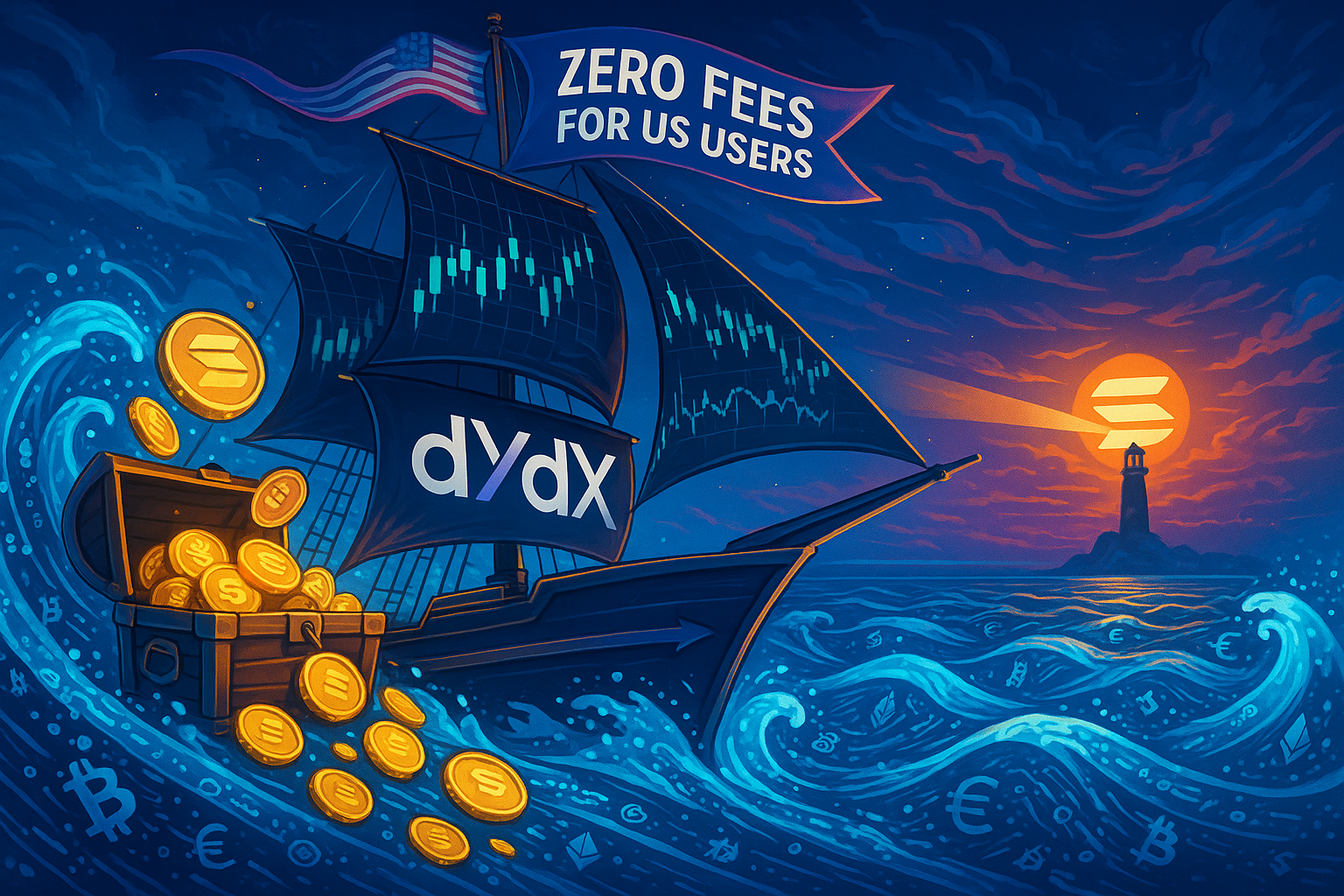
dYdX platform interface showing Solana trading features

dYdX has introduced spot trading for Solana and made its platform available to U.S. users, with zero fees available throughout December as part of its move to broaden services beyond derivatives trading.

What happened

The decentralized exchange dYdX has expanded its offerings by launching spot trading support for Solana, allowing users to buy and sell the cryptocurrency directly on the platform. This update also grants access to traders in the United States, a market previously restricted for the service. To attract users during the launch, dYdX is waiving all trading fees for this feature through the end of December.

Why it matters

This development lets dYdX grow its user base by moving into spot markets, where traders can exchange assets at current prices without using leverage or futures contracts. For U.S. participants, it opens up new opportunities in the fast-growing Solana ecosystem, potentially increasing liquidity and competition in decentralized trading platforms. Overall, it reflects the industry’s shift toward more accessible and diverse trading options.

Key points

  • dYdX now supports direct Solana spot trading on its decentralized platform.
  • U.S. users gain full access, expanding the platform’s reach.
  • Zero trading fees apply for Solana spot trades throughout December to encourage adoption.

What to watch next

Observe how user adoption evolves after the promotional period ends in December, along with any updates to fees or additional asset listings on dYdX. Broader Solana network developments, such as scalability enhancements, could also influence trading activity on the platform.

🔗 More insights at
Navigator’s News.

Source: original article

×