Drivers Behind Bitcoin, Ethereum, XRP Price Recovery

Digital-asset investment products saw heavy outflows last week, led by Bitcoin, Ethereum and Solana, even as spot prices rebounded on rising expectations of a U.S. Federal Reserve rate cut in December. XRP-linked products were a notable exception, recording net inflows amid broader risk aversion.

Fund Flows: BTC, ETH and SOL Lead Outflows as XRP Attracts Inflows

According to a weekly report from CoinShares, crypto investment funds posted total net outflows of $1.94 billion last week. The breakdown shows pronounced de-risking from the largest vehicles:

  • Bitcoin: $1.27 billion in outflows
  • Ethereum: $589 million in outflows
  • Solana: $156 million in outflows
  • XRP: $89.3 million in inflows

XRP was among the few major altcoins to register net inflows, contrasting with broad withdrawals across digital-asset products. CoinShares tracks flows into exchange-traded products and other institutional vehicles, which can reflect shifting sentiment among professional and retail investors.

Prices Rebound on Rate-Cut Bets

Crypto prices recovered into Friday alongside a broader risk-on move driven by growing confidence in a December Fed rate cut. Odds for a cut rose from roughly 40% last week to about 82%, according to prediction markets and interest-rate futures data cited from Polymarket and CME FedWatch.

Bitcoin reclaimed key levels after last week’s sharp sell-off, trading back above $87,700 and briefly pushing above $90,000 nearly a week after dipping to around $81,000. Ethereum rebounded from support near $2,749, while XRP recovered above $2.08 after defending the $1.96 area. Over the past 24 hours, Ethereum rose about 0.70%, XRP added 0.40%, and Solana gained 0.80%, with USDC little changed around 0.03%.

Large-cap altcoins often respond quickly to improving liquidity conditions and a softer U.S. dollar. While narratives around potential future ETF developments and policy clarity continue to shape medium-term expectations for XRP, near-term moves appear closely tied to macro signals and overall risk sentiment.

Technical Picture and Key Levels

On a technical basis, Ethereum’s relative strength index (RSI) is rebounding from oversold territory, indicating early signs of seller exhaustion and the potential for stabilization. For ETH, a failure to hold recent gains could invite another test of nearby support zones, while sustained momentum would improve the short-term bias.

Bitcoin, Ethereum and XRP are attempting to base around recently reclaimed levels after recovering roughly 5%, 7% and 6% so far this week, respectively. Analysts also note Bitcoin is holding key Fibonacci support areas following last week’s decline, a development that could help underpin broader market tone if maintained.

What to Watch

  • Macro catalysts: Evolving Fed rate expectations and upcoming U.S. inflation prints remain central to risk appetite across crypto.
  • Flows and liquidity: Whether outflows from Bitcoin and Ethereum products abate—and if XRP’s inflow trend persists—will help gauge institutional positioning.
  • Derivatives and volatility: Monthly options expiry and changes in leverage may influence short-term price swings.

With sentiment still fragile after the recent drawdown, the continuation of this week’s recovery likely hinges on a combination of institutional and retail demand, improving liquidity, and steadier macro conditions.

CleanSpark Stock Surges 14% on 102% Revenue Growth October 10, 2024,2025-11-29T18:43:26.605Z


CleanSpark’s Stock Surges 14% Amid 102% Year-Over-Year Revenue Boom


Illustration of CleanSpark's revenue growth and stock performance in the crypto and AI sectors

CleanSpark’s impressive revenue growth and targeted investments are establishing it as a significant force in AI infrastructure, with the potential to influence broader industry developments.

What Happened

CleanSpark, a company focused on sustainable energy solutions in the crypto mining space, reported a remarkable 102% increase in revenue compared to the previous year. This strong financial performance triggered a 14% jump in its stock price, highlighting investor enthusiasm for its growth trajectory.

Why It Matters

The revenue surge underscores CleanSpark’s expanding role beyond traditional crypto mining into AI infrastructure, where high-performance computing demands reliable, green energy sources. This positions the company to capitalize on the growing intersection of blockchain technology and artificial intelligence, potentially driving innovation in energy-efficient data processing.

Key Points

  • CleanSpark achieved 102% year-over-year revenue growth, reflecting robust operational expansion.
  • Stock price rose 14% in response, signaling market confidence in the company’s direction.
  • Strategic investments emphasize AI infrastructure, blending crypto mining expertise with emerging tech needs.

What to Watch Next

Observers should monitor CleanSpark’s upcoming expansions in AI-related projects and any regulatory shifts in energy usage for data centers, as these could influence future performance in the evolving crypto and AI sectors.

🔗 More insights at
Navigator’s News.

Source: original article

SEC’s Hester Peirce: Crypto Self-Custody Is a Fundamental Right

Crypto markets steadied to start the week as Bitcoin showed signs of a potential local bottom, while Ethereum community debates and regulatory moves kept industry attention divided. Key developments included CoinShares withdrawing a U.S. filing for a staked Solana product, MoonPay securing a New York trust license, and new security warnings spanning supply-chain malware and physical extortion targeting crypto holders.

Markets: Bitcoin attempts a base as positioning shifts

Analysts noted Bitcoin’s relative strength index (RSI) approaching oversold territory, a condition that has historically preceded short-term rebounds. Derivatives data also point to an uptick in long positioning from larger traders, suggesting some “whale” accounts are adding exposure.

On-chain watchers flagged significant Bitcoin movements, with roughly 87,000 BTC appearing to leave institution-tracked addresses within a 24-hour window. Large transfers can reflect internal reshuffling by custodians, redemptions, or risk reduction; absent clear attribution, market participants cautioned against assuming outright selling.

Macro remained a key backdrop. One analyst at Bitunix characterized conditions as a phase of “geopolitical risk repricing, technical resistance, monetary easing, and labor-market slowdown,” with capital flows skewing conservative and short-term oriented.

Ethereum: Gas debate and privacy framing

Ethereum commentator Anthony Sassano said the network’s gas limit moving toward 180 million could set a “floor” for next year, underscoring ongoing discussions about throughput and block capacity. The gas limit governs how much computation can be included per block and directly affects network throughput and transaction fees. Any increase typically raises debates around validator load, decentralization trade-offs, and client performance.

Ethereum co-founder Vitalik Buterin reiterated that privacy should be treated as standard digital “hygiene” rather than an optional feature. The comment aligns with a broader industry push for default privacy protections that do not compromise compliance obligations.

Regulation and business: CoinShares pulls SOL filing; MoonPay gains NY trust license

  • CoinShares withdraws U.S. staked Solana application: The digital asset manager withdrew its filing with the U.S. Securities and Exchange Commission for a staked Solana product, according to a recent notice. Staking components in fund structures have drawn regulatory scrutiny in the U.S., prompting several issuers to adjust or rescind proposals.
  • MoonPay secures New York trust charter: MoonPay obtained a limited purpose trust license from the New York State Department of Financial Services, enabling the company to offer crypto custody and over-the-counter trading in the state. The charter expands institutional-facing services in the country’s most closely regulated digital asset market.
  • UK tax proposals for DeFi: The UK advanced proposals to clarify the tax treatment of decentralized finance activities such as lending and staking, part of a broader effort to provide regulatory certainty for digital assets.
  • Russia and derivatives exposure: Local reporting indicated Russian households have collectively allocated several billion rubles to cryptocurrency derivatives, with activity concentrated among a small number of large participants.

Security: Supply-chain malware, physical extortion, and wallet risks

A crypto-focused supply-chain attack drew fresh attention after reports of a self-propagating “worm” affecting developer systems. Slava Demchuk, CEO of forensics firm AMLBot, told Cointelegraph that “once a system is infected, the worm harvests secrets, replicates itself, makes private repositories public, and then continues to spread.” Demchuk said systems installing compromised packages are at risk, but there has been “no mention of wallet keys or other such assets” to date.

Separately, more than 60 cases of physical coercion and crypto-related abductions were reported across multiple jurisdictions, including France, Israel, and the UAE. Observers warn the irreversible nature of blockchain transfers makes such crimes attractive to perpetrators. Commentator Mario Nawfal noted that self-custody requires robust personal security practices, including secure storage arrangements.

Security firms also cautioned about malicious Chrome extensions targeting Solana users, while INTERPOL has highlighted cryptocurrency fraud as a global threat in recent assessments.

Stablecoin watch: Reserve Protocol’s design goals

Interest in alternative stablecoin architectures persisted. The Reserve Protocol aims to facilitate asset-backed, yield-bearing stablecoins on Ethereum through smart contracts. Its governance and insurance token, Reserve Rights (RSR), is used for protocol governance, staking to support system security, and providing insurance-like backstops designed to help maintain stability. Reserve has promoted its model as a tool for jurisdictions with high inflation, though real-world adoption varies by market and regulatory conditions.

Outlook

With crypto prices consolidating, projects emphasizing transparent governance, thorough audits, and phased rollouts are gaining traction among institutions seeking robust infrastructure. Market direction in the near term may hinge on macro policy signals and liquidity conditions, while security and regulatory clarity remain top priorities across the sector.

Here are three punchy options under 12 words: – Bitwise Researcher: Bitcoin Investors Not Remotely Bullish Enough – Bitcoin Investors Not Remotely Bullish Enough, Says Bitwise Researcher – Bitcoin Investors Aren’t Remotely Bullish Enough, Bitwise Researcher Warns Want me to optimize for a specific character length (e.g., meta title 50–60 chars)?

Bitcoin Holds Cautious Range as Analysts Weigh Recession Risks, Liquidity, and Technical Levels

Bitcoin is consolidating after sharp swings, with traders watching the monthly close, liquidity measures, and options positioning for direction. Views remain split: some see asymmetric upside if key supports hold, while others warn that thin liquidity and weak demand could force another leg lower before a sustained recovery.

Macro Backdrop and Positioning

Several strategists argue that Bitcoin is increasingly “pricing in a recessionary growth environment,” describing the current risk-reward setup as asymmetric. Gains in AI-led equities and heavy crypto leverage have widened the performance gap between bitcoin and stocks, underscoring cross-asset divergences that could amplify volatility.

Market sensitivity to policy signals remains elevated. Even subtle shifts in tone from Federal Reserve officials have been enough to reshape expectations across risk assets, particularly crypto. Traders are closely monitoring rates, liquidity, and broader equity moves for spillover effects.

Key Technical Levels and Momentum

  • After a brief dip toward the $80,000 area, a bullish hammer reversal appeared on intraday charts, prompting hopes for a seasonal bounce.
  • Short-term momentum improves above $88,000 on four-hour charts, but sustaining $90,000–$92,000 is viewed as essential for a trend reversal.
  • One analyst, Stanley, said that if bitcoin holds above nearby support zones, a path toward $102,000 remains plausible. A drop below $88,500–$89,000, he added, would weaken bullish continuation expectations and could trigger a short-term correction.
  • Other technical notes point out that price action has been trading below the 20-day and 200-day EMAs, and while RSI has lifted from oversold territory, it still lacks clear bullish divergence.

Elliott Wave Scenarios and Timelines

Some Elliott Wave analysts continue to frame the market as an ongoing corrective fourth wave, targeting a broad $86,000–$101,000 zone, from which a rally toward $164,000–$216,000 could still develop if higher lows hold.

Separately, December seasonality and post-halving dynamics are cited as potential tailwinds. Based on historical cycles, one estimate suggests bitcoin could extend gains by 25%–30% from current levels by Christmas 2025, implying a range near $120,000–$125,000. Analysts caution, however, that early bullish signals may be unreliable and that confirmation requires sustained momentum and improving liquidity.

Catalysts, Risks, and Outlook

Volatility is expected to remain elevated into year-end. Potential medium-term supports include clearer regulation and easing interest rates, which could underpin a more durable rebound into 2026. “I’m not worried about bitcoin,” one analyst noted, while adding that the broader altcoin market needs to mature as investors look for tangible revenues or staking yields rather than hype.

In a more aggressive scenario, Hayes suggested bitcoin could rebound toward $200,000–$250,000 if equity markets correct by 10%–20% and the U.S. 10-year Treasury yield approaches 5%, potentially prompting new liquidity measures. By contrast, Tallbacken Capital Advisors CEO Michael Purves warned that “longer term dip buying right now appears less likely and bearish momentum is reinforced,” highlighting the risk that rallies fail below resistance.

For now, bitcoin remains in a fragile equilibrium. A firm hold above the psychological $90,000 threshold would bolster bullish scenarios, while a decisive break below high-$80,000 support raises the odds of another corrective leg. Traders are watching the monthly close, liquidity gauges, and options flows for the next signal.

SpaceX Moves 1,163 BTC Worth $105M November 14, 2024,2025-11-29T11:43:39.174Z


Crypto Briefing: Elon Musk’s SpaceX moves 1,163 Bitcoin worth $105M


Illustration of SpaceX and Bitcoin transfer, showing corporate involvement in cryptocurrency

SpaceX’s recent Bitcoin movements highlight the growing trend of major corporations managing significant crypto assets, impacting market dynamics.

What happened

SpaceX, the aerospace company founded by Elon Musk, recently transferred 1,163 Bitcoin from its wallets, with the assets valued at approximately $105 million at the time of the move.

Why it matters

This activity underscores how large corporations are increasingly holding and managing substantial cryptocurrency portfolios, which can influence overall market liquidity and investor sentiment in the crypto space.

Key points

  • SpaceX transferred 1,163 BTC, equivalent to about $105 million.
  • The move reflects broader corporate adoption of Bitcoin as a treasury asset.
  • Such transactions by major players can affect cryptocurrency market volatility.

What to watch next

Keep an eye on further wallet activities from SpaceX and similar firms, as well as any regulatory updates on corporate crypto holdings that could shape future movements.

🔗 More insights at
Navigator’s News.

Source: original article

BlackRock Bitcoin ETF Logs $114M Net Outflows Amid Volatility

BlackRock moved approximately $390.8 million in Bitcoin to Coinbase Prime as its spot bitcoin ETF faced heavy November outflows, underscoring continued volatility across crypto markets.

BlackRock Moves 4,471 BTC to Coinbase Prime

BlackRock deposited around 4,471 BTC—worth roughly $390.8 million—to Coinbase Prime, an institutional trading and custody platform. The asset manager did not disclose the purpose of the transfer. Market analysts said such exchange-bound movements are often associated with liquidity needs for rebalancing or potential sales during periods of heightened volatility.

ETF Outflows Accelerate in November

The transfer comes amid a week of pronounced redemptions from BlackRock’s spot crypto products. The firm’s spot bitcoin ETF has recorded about $2.2 billion in net outflows in November, while more than $1 billion exited its Bitcoin trust and approximately $559 million left its Ethereum trust over the past week, according to market flow data cited by analysts. Earlier in the month, BlackRock’s iShares Bitcoin Trust (IBIT) also saw more than $66 million in net outflows across two consecutive trading sessions during a sharp selloff.

Market Reaction and Price Action

Bitcoin’s price action has remained choppy. Over the last 24 hours, BTC dipped to about $86,129 before rebounding above $90,300. The move builds on a broader fourth-quarter pattern marked by swift reversals, following a late-November correction that briefly pushed prices below $80,000 and spurred profit-taking among institutional holders.

Institutional View on Bitcoin’s Role

Despite the turbulence, institutional asset managers say Bitcoin’s role in portfolios continues to evolve. In a podcast published Friday, Robbie Mitchnick, BlackRock’s head of digital assets, described Bitcoin’s global payments use case as “out-of-the-money option-value upside” for clients—suggesting many still view the asset primarily through a portfolio construction lens rather than as a day-to-day payment network.

Some analysts argue that ongoing integration into institutional workflows could encourage larger, more systematic allocations over time, potentially reducing volatility as market depth and liquidity improve.

Key figures

  • 4,471 BTC (approx. $390.8M) transferred to Coinbase Prime
  • $2.2B in November outflows from BlackRock’s spot bitcoin ETF
  • Over $1B outflows from its Bitcoin trust and $559M from its Ethereum trust over the last week
  • Bitcoin 24-hour range: $86,129 low to above $90,300

China’s Bitcoin Mining Surges After Four-Year Crackdown

China’s Bitcoin mining sector is quietly rebounding four years after a nationwide ban, as operators tap cheap electricity and excess data center capacity in energy-rich regions. Industry estimates suggest China has regained roughly 14% of global hashrate by late October 2025, placing it third worldwide, according to Hashrate Index data cited by Reuters.

Mining Activity Returns Despite 2021 Ban

Beijing’s 2021 crackdown forced miners to shut down or relocate abroad, but recent industry data and miner accounts indicate a steady resurgence within several western and southwestern provinces, including Xinjiang. The recovery is largely occurring outside formal approval and reflects uneven enforcement across local jurisdictions.

Economics and Infrastructure Drive the Rebound

Miners and market participants say the revival is being propelled by a combination of lower energy costs, overbuilt compute infrastructure, and improved mining economics as Bitcoin’s price climbed in October.

  • Cheap electricity in energy-rich provinces
  • Unused energy capacity and surplus data centers
  • Improved profitability on higher Bitcoin prices
  • Policy ambiguity and softer enforcement in some locales

“The resurgence of mining activity in China is one of the most important signals the market has seen in years,” said Patrick Gruhn, CEO of crypto market infrastructure provider Perpetuals.com, in comments reported by Reuters. Gruhn added that the trend raises questions about decentralization as hashrate concentrates among a few leading jurisdictions.

China Regains Global Standing

After its market share fell to near zero in 2021, China has climbed back to an estimated 14% of global hashrate as of late October, Hashrate Index data show. That recovery positions the country behind only two other nations by mining capacity. The resurgence underscores the pull of low-cost power and available rack space created by a surge in data center construction over the past two years.

What to Watch

Industry participants are watching whether Beijing formalizes tolerance for mining in certain regions or reasserts enforcement. Concentration risks remain a focal point for the Bitcoin network as a handful of countries now dominate global hashrate. For now, economic incentives supporting underground operations—especially in Xinjiang and other energy-abundant provinces—show few signs of fading.

Foreign Investors Target China’s AI Amid U.S. Bubble Fears 2025-11-26,2025-11-29T04:43:20.335Z


Foreign Investors Eye China’s AI Opportunities Amid U.S. Bubble Concerns


Conceptual image of global AI investments contrasting U.S. and Chinese tech sectors

Despite concerns over excessive U.S. spending on AI, foreign capital is increasingly flowing into China’s technology landscape, where valuations remain more affordable and resources are scarce.

What happened

Foreign investors are showing growing interest in China’s AI sector, drawn by lower valuations compared to the high costs in the U.S. This comes as worries mount about potential overvaluation and excessive investment in American AI projects, leading to more cautious funding in China.

Why it matters

The disparity in capital flows highlights different market dynamics: while U.S. AI hype drives up prices, China’s constrained funding encourages efficiency and innovation under pressure. This could influence global tech development, as startups in both regions adapt to their funding environments, potentially shaping the competitive landscape of artificial intelligence worldwide.

Key points

  • Foreign investors favor China’s AI startups due to more reasonable valuations amid U.S. bubble fears.
  • Limited capital in China forces tech firms to operate leanly, fostering resourcefulness.
  • U.S. AI investments face scrutiny for potential over-spending, contrasting with China’s measured approach.

What to watch next

Keep an eye on evolving investor sentiment toward AI markets, regulatory changes affecting cross-border investments, and how Chinese startups continue to innovate with restricted resources in the coming months.

🔗 More insights at
Navigator’s News.

Source: original article

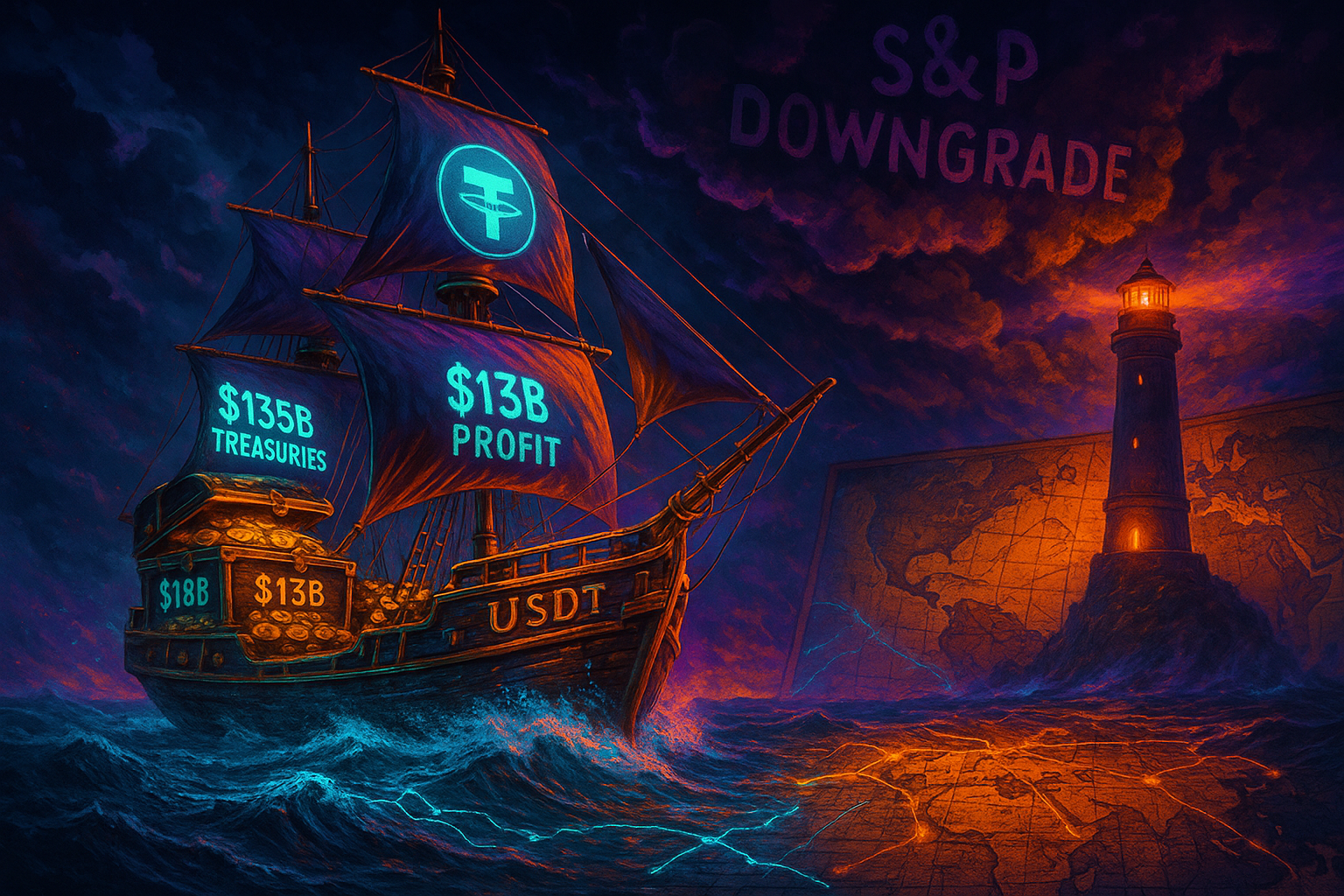
Tether Fires Back at S&P USDT Downgrade October 10, 2024,2025-11-28T21:43:38.229Z


Crypto Briefing: Tether fires back at S&P after USDT downgraded to weakest score


Illustration of Tether's response to S&P downgrade of USDT stablecoin

Tether has sharply responded to S&P Global’s downgrade of its USDT stablecoin to the lowest investment-grade rating, highlighting its robust financial position and essential role in worldwide transactions.

What happened

S&P Global recently downgraded Tether’s USDT stablecoin to the weakest investment-grade score, prompting a strong rebuttal from the company behind the world’s largest stablecoin.

Why it matters

This exchange underscores ongoing scrutiny of stablecoins, which are pivotal in the crypto ecosystem for maintaining value pegs to the U.S. dollar and facilitating seamless global payments, potentially influencing user confidence and regulatory discussions.

Key points

  • Tether points to $135 billion in U.S. Treasuries as evidence of its strong reserves.
  • The company reported $13 billion in profits, bolstering its financial stability claims.
  • USDT plays a critical role in enabling efficient cross-border payments worldwide.

What to watch next

Observers may monitor further responses from rating agencies, potential regulatory developments, and how this affects USDT’s adoption in payment networks.

🔗 More insights at
Navigator’s News.

Source: original article

PayPal Bitcoin Raffle: Win Up to $100K for US Users October 10, 2024,2025-11-28T14:43:26.422Z


Crypto Briefing: PayPal introduces Bitcoin raffle with prizes up to $100K for US users


Illustration of PayPal's Bitcoin raffle promotion offering up to $100K prizes for US users

PayPal has launched a Bitcoin raffle exclusively for US users, where participants can win weekly prizes of up to $100,000 through purchases or mail-in entries, running until December.

What happened

PayPal announced a promotional Bitcoin raffle targeted at its US customers. The event allows entry via qualifying purchases on the platform or through free mail-in submissions. Weekly drawings offer substantial prizes in Bitcoin, with the maximum reaching $100,000, and the initiative will continue through December.

Why it matters

This raffle represents PayPal’s continued push into cryptocurrency engagement, potentially drawing more users to its crypto services. It highlights how mainstream financial platforms are incorporating digital assets into everyday incentives, which could broaden Bitcoin’s visibility and adoption among non-expert audiences in the US.

Key points

  • Exclusive to US PayPal users, with entries open until December.
  • Prizes awarded weekly in Bitcoin, up to $100,000 each.
  • Participants can enter for free via mail-in method or by making purchases.

What to watch next

Monitor updates on participation rules, winner announcements, and any extensions beyond December. Similar promotions from other platforms could follow, influencing how crypto incentives evolve in the fintech space.

🔗 More insights at
Navigator’s News.

Source: original article

History Lessons for Reeves’ UK Budget November 26, 2025,2025-11-28T07:43:31.030Z


International: Top News And Analysis: CNBC’s UK Exchange newsletter: History lessons for Reeves ahead of UK’s much-hyped Budget


UK Chancellor Rachel Reeves preparing for budget announcement with historical financial documents

Only a handful of Budgets from the last 45 years or so remain well-remembered by the wider public — and not always for good reason.

What happened

As UK Chancellor Rachel Reeves gears up for the upcoming Budget, a new edition of CNBC’s UK Exchange newsletter draws on historical precedents to offer insights into the event’s potential impact.

Why it matters

Budget announcements shape the UK’s economic landscape, influencing public finances, taxes, and growth strategies, with past examples showing how such decisions can leave a lasting mark on policy and public perception.

Key points

  • Few Budgets over the past 45 years have stuck in public memory, highlighting the rarity of truly influential fiscal events.
  • Historical lessons provide context for Chancellor Reeves as she navigates the high expectations surrounding the upcoming announcement.
  • Not all remembered Budgets are viewed positively, underscoring the risks and challenges in fiscal policymaking.

What to watch next

Observers will monitor how the Budget unfolds in relation to historical patterns, including any policy shifts or economic measures that could affect markets and public sentiment in the coming months.

🔗 More insights at
Navigator’s News.

Source: original article

Trump-Backed WLFI Buys Back $10M Tokens in 6 Hours October 10, 2024,2025-11-28T00:43:29.804Z


Crypto Briefing: Trump-backed World Liberty Financial conducts nearly $10M WLFI token buyback in six hours


Visual representation of World Liberty Financial's WLFI token buyback activity

The buyback may boost investor confidence and market value, potentially enhancing the project’s credibility and future growth prospects.

What happened

World Liberty Financial, a project supported by former President Trump, recently executed a swift buyback of its WLFI tokens, repurchasing nearly $10 million worth within just six hours.

Why it matters

Such buybacks can signal a commitment to supporting token value, potentially increasing trust among investors and strengthening the overall perception of the project’s stability in the volatile crypto space.

Key points

  • The buyback totaled close to $10 million in WLFI tokens.
  • It was completed rapidly, in under six hours.
  • Backed by Trump, the project aims to bolster its market position.

What to watch next

Observers may track any follow-up announcements from World Liberty Financial regarding token utility or additional financial moves that could influence its trajectory in the broader cryptocurrency ecosystem.

🔗 More insights at
Navigator’s News.

Source: original article

Rush Hour 4 Revived After Trump’s Push November 25, 2025,2025-11-27T17:43:42.476Z


International: Top News And Analysis: ‘Rush Hour 4’ revived after Trump urged Paramount Skydance to resurrect franchise: Reports


Rush Hour 4 revival announcement with franchise stars and political influence

Studios earlier declined a fourth “Rush Hour” over concerns about director Brett Ratner, whose career crashed after sexual misconduct allegations he denies.

What happened

Reports indicate that former President Donald Trump personally encouraged Paramount and Skydance to bring back the “Rush Hour” franchise for a fourth installment, leading to its revival despite previous hesitations tied to the director’s past controversies.

Why it matters

This development highlights how high-profile political figures can influence entertainment decisions, potentially shifting industry norms around accountability for past allegations and opening doors for reboots of popular series.

Key points

  • Trump’s involvement reportedly played a key role in persuading studios to move forward with “Rush Hour 4.”
  • Earlier rejections stemmed from controversies surrounding director Brett Ratner, which he has denied.
  • The franchise, known for its action-comedy buddy films, had been dormant due to these concerns.

What to watch next

Observers will track casting announcements, production timelines, and any further statements on handling past allegations as the project advances in Hollywood’s evolving landscape.

🔗 More insights at
Navigator’s News.

Source: original article

Russia Simplifies Crypto Investor Rules: Key Updates October 10, 2023,2025-11-27T10:43:37.643Z


Crypto Briefing: Russia’s Finance Ministry considers simplifying crypto investor requirements


Russia’s Finance Ministry building with digital cryptocurrency elements overlay

Russia’s Finance Ministry is exploring ways to ease the rules for crypto investors, potentially opening the door wider for participation in digital asset markets.

What happened

Russia’s Finance Ministry has proposed simplifying the requirements for individuals and entities looking to invest in cryptocurrencies. This move comes as part of broader discussions on regulating digital assets, aiming to reduce barriers that currently limit access to crypto trading and investment opportunities.

Why it matters

Easing these investor requirements could encourage greater involvement from Russian citizens and businesses in the crypto space, fostering innovation and integration of digital assets into the economy. This signals a evolving regulatory approach that balances oversight with accessibility, potentially influencing how other nations view crypto adoption.

Key points

  • Russia’s Finance Ministry is actively considering regulatory changes to simplify crypto entry.
  • The proposal targets reducing complex investor qualification processes.
  • This reflects a shift toward a more welcoming environment for digital asset participation.

What to watch next

Keep an eye on official announcements from the Finance Ministry regarding the proposal’s timeline and any public consultations. Further developments could include details on implementation or adjustments based on feedback from stakeholders in the crypto community.

🔗 More insights at
Navigator’s News.

Source: original article

Tether Hadron Integrates Crystal for RWA Compliance October 10, 2024,2025-11-27T03:43:19.035Z


Crypto Briefing: Tether’s Hadron taps Crystal Intelligence for RWA compliance infrastructure


Illustration of Tether's Hadron integrating Crystal Intelligence for enhanced RWA compliance in tokenized assets

Tether’s Hadron platform has integrated Crystal Intelligence to bolster its compliance infrastructure for real-world assets (RWAs), enabling more secure and scalable tokenized assets.

What happened

Tether, a leading stablecoin issuer, has chosen Crystal Intelligence to power the compliance features of its Hadron platform. This integration aims to strengthen the handling of tokenized real-world assets, which represent physical or traditional assets like real estate or commodities digitized on blockchain networks.

Why it matters

As the RWA sector grows, robust compliance tools become essential for ensuring regulatory adherence and building trust among institutions. This move supports the broader adoption of tokenized assets by providing scalable solutions that align with evolving legal standards, potentially smoothing the path for mainstream finance to intersect with blockchain technology.

Key points

  • Hadron, part of Tether’s ecosystem, focuses on tokenizing real-world assets for blockchain use.
  • Crystal Intelligence specializes in compliance and risk management for digital assets.
  • The integration prioritizes security and scalability in RWA tokenization processes.

What to watch next

Developments in RWA regulations and further platform enhancements could influence how tokenized assets are deployed across industries. Keep an eye on announcements from Tether and similar providers regarding expanded compliance capabilities or partnerships.

🔗 More insights at
Navigator’s News.

Source: original article

×