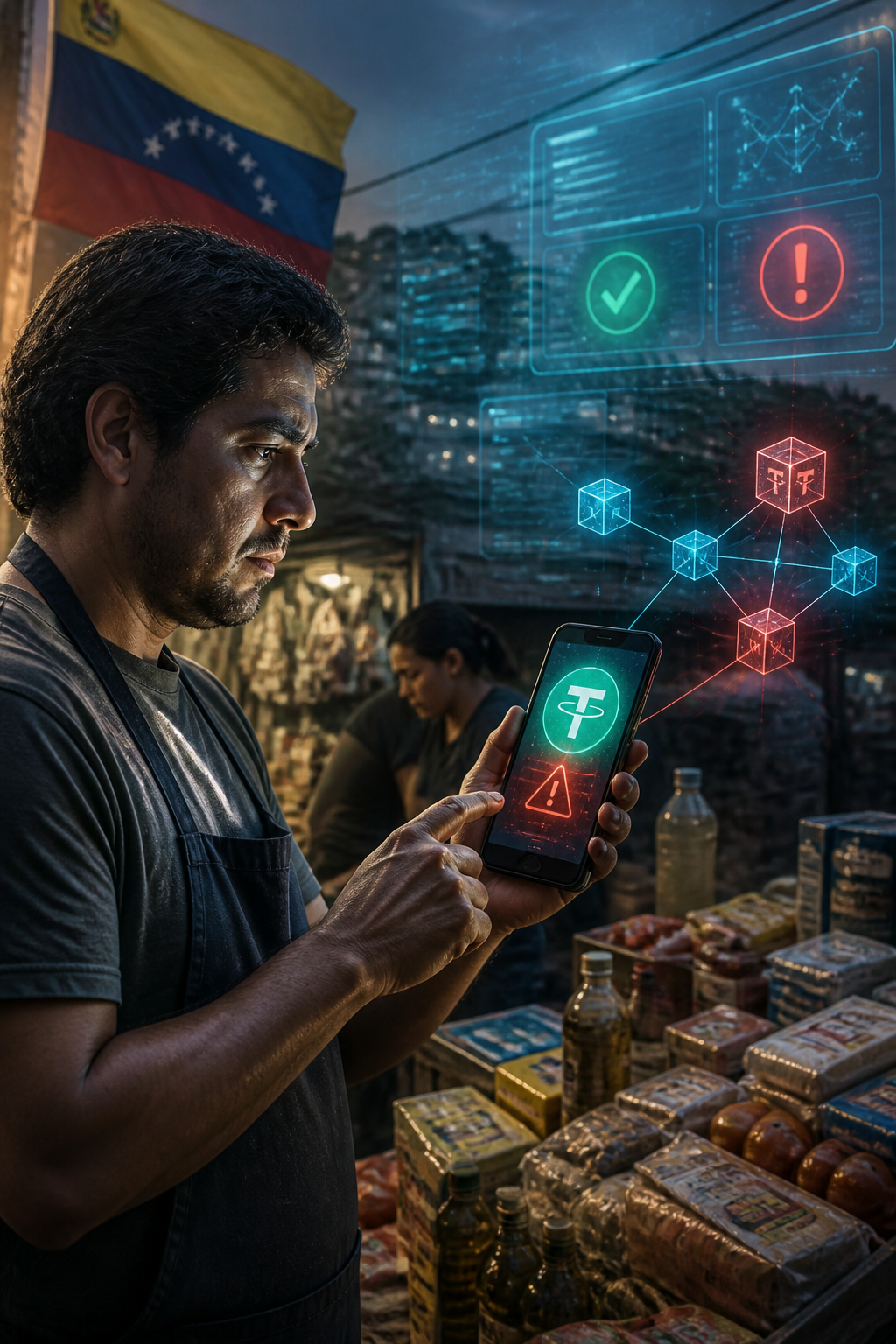
Scammers Target Venezuelan Merchants With Fake USDT Payments
Scammers are reportedly exploiting the widespread use of Tether’s USDT stablecoin in Venezuela by sending counterfeit tokens as payment. The tokens appear to resemble USDT but have no monetary value, potentially causing losses for merchants who accept cryptocurrency through self-custody wallets.
Counterfeit Tokens Mimic USDT
According to reports, threat actors are creating or transferring tokens designed to look like legitimate USDT. These assets may use similar names, symbols, or branding, making them difficult to distinguish from the genuine stablecoin during a transaction.
Unlike authentic USDT, counterfeit tokens are not issued by Tether and are not redeemable for U.S. dollars. Their presence in a wallet does not confirm that a valid payment has been made.
Self-Custody Wallets Require Additional Verification
The reported scams primarily target merchants who accept payments directly through self-custody wallets. In these transactions, users are responsible for checking the asset, blockchain network, contract address, and transaction details.
A payment may appear in a wallet while still having no practical value if it involves an unrelated or fraudulent token. Merchants can reduce the risk of accepting counterfeit assets by verifying that the token contract matches the official contract for USDT on the relevant network and by confirming the transaction through a trusted blockchain explorer.
USDT’s Role in Venezuela
USDT is widely used in Venezuela for payments, savings, and transfers because it is designed to track the value of the U.S. dollar. Its adoption has also made the stablecoin a target for fraudsters seeking to exploit gaps in payment verification.
Users and merchants should treat the appearance of a token in a wallet as only one step in confirming a payment. Verifying the asset’s authenticity and the transaction’s status before releasing goods or services is essential.