SEC Names New Crypto Enforcer as Old Crypto Cases Fade

Wellermen Image

SEC Picks New Crypto Cop as Old Cases Melt Away

The US Securities and Exchange Commission has named David Woodcock as its new enforcement chief, stepping into the job just as lawmakers are demanding answers about why the agency suddenly dropped high-profile lawsuits against Justin Sun and several other crypto firms. The move signals a potential shift in how aggressively Washington intends to police digital assets going forward.

Woodcock takes over an enforcement division that spent the last two years filing dozens of actions against exchanges, token issuers, and DeFi protocols. Now those same cases are being quietly walked back, prompting senators to question whether political pressure or internal policy changes are driving the pullback. The timing suggests the agency may be recalibrating its approach rather than doubling down.

Who benefits depends on where you sit. Crypto projects that faced years of litigation now see lighter legal bills and clearer paths to product launches, while enforcement staff must adjust to a narrower mandate. Investors, meanwhile, get mixed signals: reduced regulatory overhang could lift valuations, but it also raises questions about what rules still apply and who will enforce them.

What This Means for Crypto

The jargon here is straightforward. “Enforcement chief” simply means the person who decides which crypto cases get filed, settled, or dropped. When that person changes, the whole tone of regulation can shift without new laws being passed.

For traders, this means fewer surprise lawsuits that tank token prices overnight. Long-term investors may see more room for established projects to operate openly inside the US, while builders gain breathing room to ship products without fearing retroactive enforcement actions.

Market Impact and Next Moves

Short-term sentiment looks cautiously bullish for US-facing tokens and exchanges, as the threat of sudden SEC suits appears to be fading. The bigger risk is that lighter enforcement creates a vacuum where clearer rules should exist, leaving market participants guessing until Congress or the courts step in.

The opportunity lies in projects that were previously sidelined by regulatory fear. Teams with strong fundamentals and real users now have a window to rebuild credibility and capture market share before any new enforcement wave returns.

Watch the Senate hearings closely—if answers on the dropped cases feel evasive, the relief rally could stall fast.


SpaceX Tokenized IPO Campaign Nets $557M on Binance Ahead of Debut

Crypto markets are increasingly being used to gauge investor demand for private companies, with tokenized instruments and prediction markets signaling interest ahead of SpaceX’s widely watched potential listing reportedly targeted for June 12. While such activity can provide an early read on sentiment and implied valuation, it remains separate from any official offering and carries significant risk.

Tokenized pre-IPO trading gains traction

Digital-asset venues and on-chain platforms have emerged as parallel arenas for pre-IPO price discovery. Through synthetic tokens, IOUs, and prediction markets, traders can express views on the valuation of high-profile private companies before any traditional listing. These markets have drawn attention around SpaceX, reflecting strong investor interest in aerospace and satellite-connectivity plays.

How crypto-based price discovery works

Pre-IPO crypto markets typically use instruments that mirror the performance of a company’s implied valuation or the anticipated price range of a future listing. Unlike traditional equity, these tokens do not confer ownership, voting rights, or claims on cash flows. Prices are driven by supply and demand among participants, creating an informal “signal” that may or may not align with eventual pricing in regulated capital markets.

Risks and regulatory considerations

  • No official linkage: Tokenized or synthetic assets tied to private companies are not the same as shares and are not issued by the company.
  • Event uncertainty: There is no guarantee that a rumored listing will occur on any given date, or at all.
  • Market structure: Liquidity can be thin, volatility high, and pricing subject to rapid changes based on headlines and sentiment.
  • Jurisdictional rules: Access and legality vary by region, and platforms may impose restrictions or change terms without notice.

Outlook

As investors watch for any formal updates on SpaceX’s plans, crypto-native instruments are likely to remain an early barometer of sentiment. Whether these markets ultimately track official pricing will depend on deal structure, broader equity conditions, and regulatory developments surrounding tokenized financial products.

MEXC Names New CEO Vugar Usi, Targets MiCA License and Europe with Zero-Fee Trading

Wellermen Image

MEXC Taps New CEO to Chase MiCA License

MEXC has named Vugar Usi as its new CEO while signaling a clear push into Europe through MiCA licensing and zero-fee trading. The move comes as global exchanges race to secure regulatory approval before stricter rules reshape how they operate on the continent.

Usi takes the helm at a time when competition among mid-tier exchanges is intensifying, with platforms scrambling to differentiate on fees, liquidity, and compliance. MEXC’s decision to pursue a MiCA license shows it is prioritizing legitimacy in one of the world’s most demanding regulatory environments rather than relying solely on volume growth.

The exchange also plans to expand its zero-fee trading offerings, a tactic designed to attract retail traders who are increasingly price-sensitive. This strategy pairs regulatory credibility with aggressive pricing, a combination that could pressure smaller platforms that lack either the capital or the licenses to compete.

What This Means for Crypto

MiCA, or the Markets in Crypto-Assets regulation, sets clear standards for custody, disclosures, and stablecoin issuance across the European Union. Securing a license under this framework means MEXC could offer services to EU users without the legal gray areas that currently limit many offshore platforms.

For traders, this translates to more predictable access and potentially safer fund handling, while long-term investors may view licensed exchanges as lower-risk venues for holding positions. Builders and projects listing on MEXC could also benefit from greater visibility among European users once compliance is achieved.

Market Impact and Next Moves

The announcement carries a mildly bullish tone for MEXC’s token listings and trading volumes in the short term, as regulatory progress often draws fresh capital. However, the real test will be execution — obtaining the license, maintaining zero-fee incentives without eroding margins, and fending off larger competitors already ahead in the compliance race.

Key risks include delays in licensing, potential fee-structure changes if costs rise, and the possibility that stricter MiCA rules on stablecoins or token disclosures could limit certain high-risk assets. On the opportunity side, early movers who secure EU access may capture market share from platforms that choose to exit rather than comply.

Regulatory approval is no longer optional window dressing — it is becoming a core competitive advantage.

Bitcoin Holds at $72K as Bulls Eye Breakout; Altcoins Ready to Follow

Wellermen Image

Bitcoin Holds the Line at $72K as Bulls Eye Breakout

Bitcoin is testing the $72,000 zone again, and early signs suggest the market is not ready to give ground. After a sharp relief rally, profit-taking has kicked in, but the technical picture still leans bullish. The question now is whether altcoins will ride the same wave or get left behind.

The move higher started when buyers stepped back in after the latest macro scare, pushing BTC from the low $60,000s into the current range. Resistance has formed right around $72,000, where sellers have repeatedly appeared. Yet every dip has been bought, showing that demand remains stronger than the supply hitting the tape.

Altcoins are watching closely. If Bitcoin can clear and hold above $72,000, capital rotation into Ethereum, Solana, and the usual high-beta names often follows within days. If it fails here, risk assets across the board could see another round of deleveraging.

What This Means for Crypto

The $72,000 level is more than just a number; it sits near previous all-time highs and acts as a psychological gate. Clearing it would signal that the correction phase may be over and that fresh money is willing to chase.

For traders, the setup favors waiting for either a clean daily close above resistance or a confirmed rejection that triggers stops. Long-term holders see this as typical cycle noise rather than a reason to exit.

Builders and projects with real usage metrics remain insulated from short-term swings, but any sustained stall at $72,000 could delay funding rounds and token launches that rely on positive sentiment.

Market Impact and Next Moves

Sentiment is cautiously bullish as long as price holds above the recent swing low. A decisive break higher could trigger short-covering and bring sidelined capital back into the market quickly.

The main risks remain macro surprises and leverage. If funding rates spike or macro data disappoints, the same level that looks like support today can flip into a trap. Liquidity pockets below $68,000 are thin, so any flush could be sharp.

Opportunity sits in relative strength stories. Tokens showing rising active addresses and developer activity during this consolidation often outperform once Bitcoin confirms direction.

Watch the next few daily closes; the market is one clean move away from either extending the rally or resetting lower.

Metaplanet Acquires Siiibo to Accelerate Bitcoin Ecosystem

Metaplanet has completed an acquisition valued at approximately $13.1 million, securing a regulated securities platform designed to support the development of Bitcoin-linked investment products.

Acquisition Secures Regulated Platform for Bitcoin-Linked Products

The transaction provides Metaplanet with a licensed framework to design and distribute securities tied to Bitcoin’s performance. Access to a regulated platform is a key step for offering compliant investment instruments to institutional and retail investors, subject to applicable approvals.

Strategic Context

Metaplanet has increasingly aligned its strategy with Bitcoin-focused initiatives, reflecting growing demand for compliant avenues to gain exposure to digital assets. Establishing or acquiring regulated infrastructure can reduce time to market for new products, enhance oversight, and broaden distribution channels.

What the Platform Could Enable

  • Development of Bitcoin-linked investment products such as exchange-traded instruments, structured notes, or managed products.
  • Integration of risk, custody, and compliance controls within a regulated framework.
  • Potential expansion of offerings to different investor segments, subject to jurisdictional rules.

Outlook

Metaplanet did not disclose a rollout timeline for new products. Any offerings developed through the platform will remain contingent on regulatory review and market conditions.

Bitcoin Nears $90K as Binance Buy Pressure Fuels Bull Run

Wellermen Image

Bitcoin Bulls Push Toward $90K as Binance Sees Aggressive Buying

Bitcoin is showing fresh signs of strength as aggressive buyers flood Binance order books, pushing the market toward the long-awaited $90,000 level. The move comes as traders appear to be betting that recent consolidation was just a pause before the next leg higher. With momentum building, the question is whether this buying pressure can hold or if profit-taking will stall the rally.

The spark came from on-exchange data showing a clear shift toward aggressive market buys rather than passive limit orders. On Binance, one of the most liquid venues for Bitcoin, buyers are stepping in with size, absorbing sell pressure and lifting prices in real time. This kind of volume profile often signals conviction from larger players rather than retail noise, and it has historically preceded sharp upside moves when it appears during consolidation phases.

Who benefits most right now is anyone positioned long with tight risk management. Short sellers face increasing pressure as dips get bought almost immediately, while leveraged bears risk getting squeezed if price breaks cleanly above recent highs. On the other side, late buyers chasing the move could get caught if momentum stalls near resistance, especially if broader risk assets start to wobble on macro data.

What This Means for Crypto

Aggressive buying on a major exchange like Binance usually means institutional desks or high-net-worth traders are stepping in with conviction, not just retail FOMO. This matters because it reduces the chance of a quick reversal driven by weak hands. For long-term holders, it reinforces the narrative that Bitcoin remains the dominant store of value in crypto, especially as ETF inflows continue to provide steady demand in the background.

Traders should watch whether this buying persists once price tests the next resistance zone. If volume stays elevated and dips continue to be absorbed, it suggests the uptrend is healthy. Builders and projects outside Bitcoin may also benefit indirectly, as rising BTC prices often lift sentiment across altcoins and increase overall market liquidity.

Market Impact and Next Moves

Short-term sentiment looks bullish as long as Binance buy dominance holds, but the move is still vulnerable to sudden macro shocks or profit-taking at round numbers like $90,000. Leverage levels across the market are always a risk here — a quick reversal could trigger cascading liquidations if too many traders pile in with high leverage.

The opportunity lies in the possibility that this is the start of a breakout rather than another fakeout. Strong on-chain accumulation combined with spot-driven volume suggests real demand, not just derivatives games. Investors who have been waiting for clearer signals may now have one, though entering at these levels still requires discipline around position sizing and stops.

Bitcoin is testing whether $90,000 is a magnet or a ceiling — watch the Binance tape closely.

Here are punchy, under-12-word SEO titles you can choose from: – One Simple Sign Bitcoin Has Not Bottomed Yet – Bitcoin Bottom Indicator: It Has Not Bottomed Yet – Has Bitcoin Bottomed? One Clear Sign It Has Not

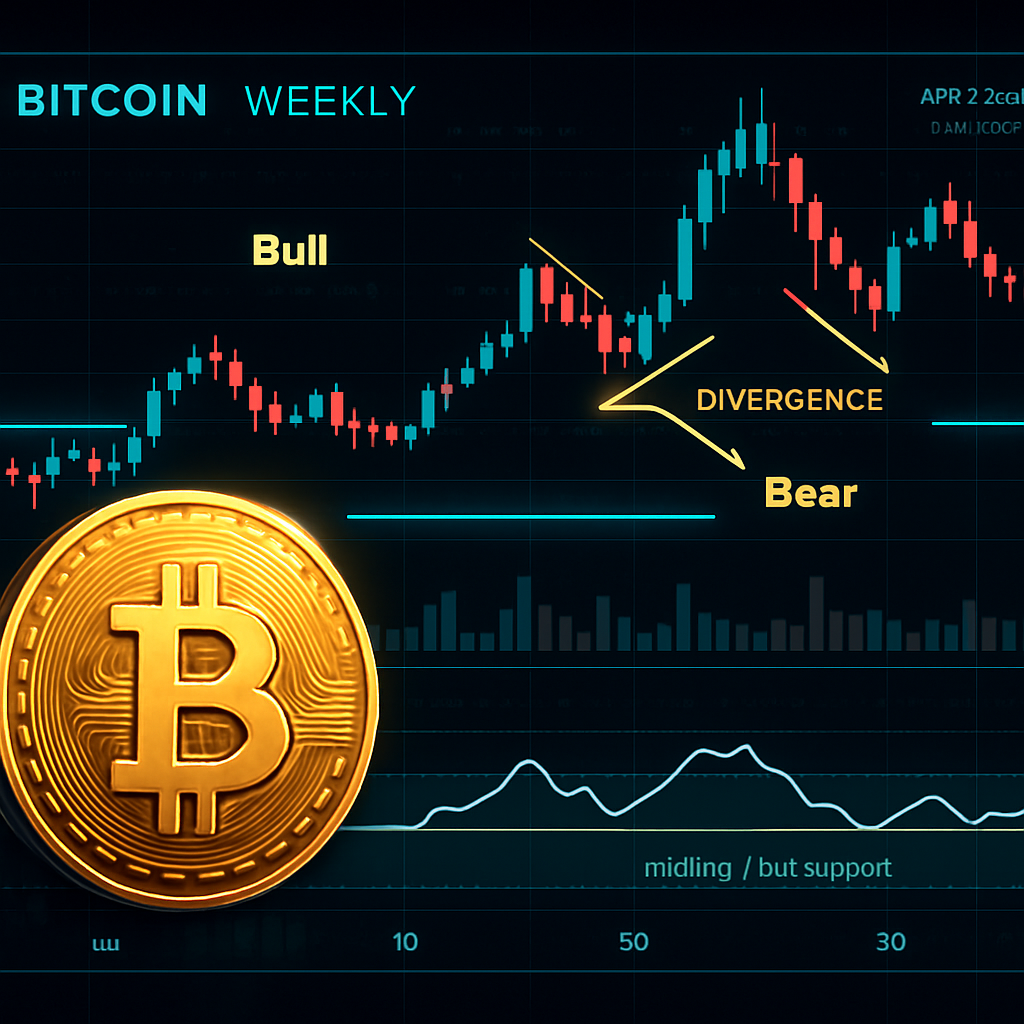
Bitcoin’s weekly Relative Strength Index (RSI) has not yet reclaimed a historically important threshold that has often delineated bull and bear market regimes, leaving confirmation of a sustained momentum shift unresolved.

Why the weekly RSI matters

The RSI is a momentum oscillator that measures the speed and magnitude of recent price changes on a 0–100 scale. On higher timeframes such as the weekly chart, it is widely used to assess broader market regimes rather than short-term swings. Technicians often monitor the RSI’s midline near 50—readings above it suggest strengthening upside momentum, while sustained readings below it point to prevailing downside momentum. Some analysts also track a mid-50s “bull market support” area as an added confirmation zone.

Historical context across cycles

Across multiple Bitcoin market cycles, extended periods with the weekly RSI holding above its midline have tended to align with durable uptrends, while breaks and sustained moves below that area have commonly accompanied bear phases. While no single indicator is definitive, a decisive weekly close and hold back above the midline has frequently served as a confirmation signal that momentum has shifted in favor of buyers.

Current reading and market implications

The weekly RSI has yet to clear the historically watched threshold, indicating that a broader trend transition remains unconfirmed. A convincing move and sustained hold back above the midline would strengthen the case for a bullish momentum regime, whereas continued rejection below it could keep conditions choppy or biased to the downside.

What to watch next

  • Sustained weekly RSI close above the midline (and, for some, the mid-50s band) to validate a momentum shift.
  • Whether price action, trading volume, and market breadth align with any RSI breakout or breakdown.
  • Potential divergences between price and RSI that could foreshadow trend exhaustion or continuation.

Bitcoin Surges to $72K on Ceasefire Hopes, Then Fades as Volume Dries Up

Wellermen Image

Bitcoin Hits $72K on Ceasefire Hopes, Then Fades

Bitcoin briefly touched $72,000 after news of a potential ceasefire between Iran and Israel, but the rally lost steam almost as quickly as it started. The move highlighted how sensitive BTC remains to geopolitical headlines even as broader market conditions stay mixed. Traders are now watching whether this spike was a one-off reaction or the start of something more durable.

The spark came from reports that a temporary halt in hostilities could ease energy supply fears and reduce immediate risk-off pressure across global markets. Bitcoin, which often moves in tandem with risk assets during macro shocks, climbed on the news before running into familiar resistance near $72,000. Volume stayed relatively thin, suggesting the buying lacked conviction from larger players.

Who benefits here is less clear than usual. Short-term traders caught the quick pop and exit, while longer-term holders saw little change in their positions. Exchanges handling high volumes during the spike likely collected extra fees, but the lack of follow-through volume leaves open the question of whether this move builds real momentum or simply resets expectations for the next leg higher or lower.

What This Means for Crypto

Geopolitical headlines can override technical setups in crypto because Bitcoin still trades partly as a risk asset rather than a pure inflation hedge. When macro fear drops even briefly, capital flows back into BTC, but these moves often reverse fast if the underlying tension remains unresolved.

For traders, this means treating geopolitical spikes as short-term signals rather than trend confirmations. Long-term investors may view dips after these events as opportunities if fundamentals like ETF inflows and network activity remain steady.

Builders and protocols tied to Bitcoin see little direct change from headline-driven price moves, but sustained higher prices can improve sentiment and liquidity across the ecosystem.

Market Impact and Next Moves

Sentiment turned mixed after the fade. Bulls point to the quick reclaim of $72,000 as proof of underlying demand, while bears note the immediate rejection and thin volume as signs the market may need more catalysts to break higher.

Key risks include renewed geopolitical flare-ups that could trigger another risk-off wave, plus the usual leverage flush if price stalls and forces liquidations. Liquidity remains a concern if spot volumes stay low while derivatives positions build.

On the opportunity side, any sustained move above $72,000 with rising volume could open a path toward previous cycle highs, especially if ETF flows accelerate again and macro conditions stay supportive.

Watch the next 48 hours closely — if $72,000 holds with conviction, the narrative shifts from headline reaction to breakout confirmation.

MEXC Names New CEO Vugar Usi, Targets EU MiCA License with Zero-Fee Trading

Wellermen Image

MEXC Names New CEO and Eyes EU MiCA License

MEXC has appointed Vugar Usi as its new CEO while signaling a clear push into the European market through MiCA compliance. The move comes as exchanges race to secure regulatory licenses that will determine who can operate legally across the EU after 2025. For traders, this is less about corporate theater and more about which platforms will survive the regulatory filter.

Under Usi’s leadership, MEXC is doubling down on its zero-fee trading model while actively preparing to meet the EU’s Markets in Crypto-Assets framework. The exchange is positioning itself as both aggressive on fees and serious about regulatory approval, a combination that has historically been difficult to execute. Usi’s appointment replaces previous leadership and appears designed to bring fresh operational discipline ahead of MiCA enforcement deadlines.

Exchanges that secure MiCA licenses gain legal access to millions of European users and institutional capital that remains wary of unregulated platforms. Those that fail to comply face restricted access or outright bans in key markets. MEXC’s early positioning suggests it wants to be among the survivors rather than casualties of the coming regulatory shakeout.

What This Means for Crypto

MiCA is the EU’s attempt to create uniform rules for crypto service providers, covering everything from custody standards to stablecoin issuance. For users, licensed platforms should offer greater legal protections but will likely impose stricter KYC and trading restrictions than offshore exchanges.

Traders who value low fees may see MEXC’s zero-fee push as attractive in the short term, but compliance costs could eventually force adjustments to that model. Long-term investors should watch whether MEXC can maintain both regulatory approval and aggressive pricing once MiCA obligations kick in.

Builders and projects listing on MEXC will benefit if the exchange secures EU access, expanding their potential investor base. However, they should prepare for increased scrutiny on token quality and disclosure standards that licensed platforms must enforce.

Market Impact and Next Moves

Short-term sentiment around MEXC remains cautiously positive as the leadership change and regulatory roadmap reduce some uncertainty. However, the broader market is watching whether other mid-tier exchanges can match this pace or will be forced into regional retreat.

The key risk is execution. MiCA compliance is expensive and slow; promising licensing plans without delivering approvals could damage credibility. Liquidity fragmentation is another concern if MEXC must eventually separate EU and non-EU operations.

Opportunities lie in European user growth and potential institutional inflows once licensing is secured. Platforms that combine regulatory compliance with competitive fees could capture meaningful market share from slower competitors.

Watch whether MEXC’s zero-fee model survives MiCA scrutiny or becomes its first major concession.

Zcash Jumps 30% on Ceasefire Hopes—But Bulls Should Watch for a Reversal

Wellermen Image

Zcash Jumps 30% on Ceasefire Hopes, Bulls on Notice

Zcash surged nearly 30% in hours as news of a US-Iran ceasefire spread, lifting the privacy coin alongside a broader risk-on move in crypto. The spike caught traders off guard and pushed ZEC back above key resistance levels that had held for weeks. While the headline looks bullish, the move mirrors sharp bounces seen during the 2021 bear market that quickly reversed.

The rally began after reports confirmed a temporary de-escalation between Washington and Tehran, sending capital into higher-beta assets like ZEC. On-chain data showed a quick uptick in spot buying, but derivatives markets remained relatively quiet, suggesting the move was driven more by short covering than fresh long-term conviction. Volume stayed modest compared with previous breakouts, leaving the sustainability of the advance in question.

Privacy coins like Zcash often benefit first when macro tensions ease because traders view them as safe-haven assets during uncertainty. Yet the same coins are among the first to give back gains once risk appetite fades. With ZEC’s price structure still showing lower highs on the daily chart, any failure to hold above the recent spike could trigger another leg lower.

What This Means for Crypto

The ZEC move highlights how macro headlines can override technical setups in the short term, especially for smaller-cap assets. Traders need to separate headline-driven pumps from genuine accumulation; the former often reverse within days while the latter shows rising volume and stronger on-chain flows.

For long-term holders, the ceasefire relief does not change Zcash’s core challenges around adoption and regulatory scrutiny of privacy features. Builders and investors should watch whether transaction growth and shielded pool activity increase alongside price, rather than relying on geopolitical noise alone.

Market Impact and Next Moves

Sentiment turned sharply bullish in the hours after the spike, but the lack of sustained derivatives demand leaves room for a fast reversal. A 30% move on thin volume often signals trapped late buyers rather than a trend change, raising the odds of a 35-40% retracement if macro conditions stabilize further.

The main risks sit in liquidity and narrative fatigue. Privacy coins remain sensitive to exchange delistings and regulatory pressure; any fresh enforcement talk could cap upside quickly. On the opportunity side, any real increase in shielded transactions would give ZEC a fundamental floor that headline rallies lack.

Watch the next 48 hours closely: if ZEC fails to hold its breakout level with real volume, history suggests the bounce was just another bear-market trap.

SpaceX’s Crypto IPO Rebounds to $2.4T Valuation, Bitcoin and Ethereum

The SPCX perpetual contract on decentralized derivatives exchange Hyperliquid rebounded from this week’s lows, signaling improved sentiment ahead of the asset’s anticipated public-market debut. Separately, Bloomberg reported that pricing in other “shadow markets” now implies a first-day gain of more than 35%.

Market action on Hyperliquid

Hyperliquid’s SPCX perpetual—an on-chain futures contract without expiry that mirrors traders’ expectations for the asset’s debut valuation—has recovered after dipping earlier in the week. While specific price levels were not disclosed, the bounce suggests renewed risk appetite among crypto-native participants speculating on the upcoming listing.

Shadow-market signals

According to Bloomberg, activity in off-exchange venues and informal pre-listing markets indicates expectations for a first-day pop exceeding 35%. Such “shadow markets” encompass a mix of private secondary channels and derivatives that attempt to price the outcome of a listing before official trading begins.

Why it matters

The divergence and subsequent recovery in crypto-based perpetuals, alongside strong implied gains in parallel markets, highlight how pre-listing sentiment is being shaped across both decentralized and traditional trading venues. These indicators are closely watched for early reads on demand, volatility, and potential price discovery once the asset lists.

What to watch

  • Further price action in the SPCX perpetual as listing-related headlines emerge.
  • Any updates from major venues tracked by Bloomberg that could shift the implied first-day performance.
  • Liquidity and basis behavior between crypto-native derivatives and traditional shadow-market instruments as the debut approaches.

Zcash Surges 30% on Ceasefire Hopes, But a 40% Reversal Looms

Wellermen Image

Zcash Surges 30% on Ceasefire Hopes, But Trap Looms

Zcash (ZEC) ripped higher by roughly 30% in a matter of days after news of a tentative US–Iran ceasefire filtered through markets, turning the privacy coin into one of the week’s strongest performers. The move echoed sharp relief rallies seen during the 2021 bear phase, when liquidity-starved assets spiked on thin volume only to retrace hard once the initial euphoria faded.

Price action shows classic signs of a liquidity grab: open interest jumped quickly while spot volume remained modest, suggesting leveraged traders rather than long-term holders drove the move. On-chain data indicates older coins stayed dormant, implying the rally was largely speculative rather than adoption-driven.

Traders chasing the headline risk walking straight into a 40% retracement if macro tensions re-escalate or if broader risk assets stall. For ZEC specifically, privacy narratives remain secondary to macro sentiment until real usage metrics—shielded transaction volume or developer activity—show sustained growth.

What This Means for Crypto

Privacy coins like ZEC often act as high-beta plays on risk appetite; when global tensions ease, capital flows into assets perceived as “safe yet edgy,” but the same capital exits just as fast when uncertainty returns. The technical setup here is textbook: a vertical pop on geopolitical relief followed by fading momentum.

Investors should watch whether ZEC can hold above its pre-rally range; failure to do so would confirm this as another bear-market-style fake-out rather than the start of a new uptrend. Builders in the privacy sector gain little from headline spikes—they need consistent shielded usage and regulatory clarity, neither of which this move provides.

Market Impact and Next Moves

Short-term sentiment is mixed at best: momentum traders may squeeze price higher on low liquidity, but swing traders are already eyeing short entries near recent highs. The biggest near-term risk is a sudden geopolitical reversal that triggers broad de-risking across altcoins.

Opportunity exists only for those who bought the rumor early and plan to exit into strength; long-term holders gain nothing from a headline-driven pop unless fundamentals shift. Watch open interest and exchange reserves—if both rise together, the setup tilts toward another liquidity trap.

Headline relief can mask structural weakness—treat ZEC’s 30% spike as a trade, not a thesis.

MEXC Names New CEO Vugar Usi as It Targets MiCA License and Zero‑Fee Trading in Europe

Wellermen Image

MEXC Taps New CEO to Chase MiCA License and Zero Fees

MEXC has named Vugar Usi as its new chief executive while signaling a sharper push into Europe through MiCA licensing and zero-fee trading. The move comes as global exchanges race to lock in regulatory credibility ahead of stricter rules that will soon decide who can serve European customers.

Usi takes the helm at a time when MEXC is trying to stand out in an increasingly crowded field of centralized platforms. The exchange is betting that offering zero-fee spot trading alongside formal licensing in the EU will attract both retail traders and institutions wary of operating in gray zones. The timing is deliberate: MiCA’s full enforcement is approaching fast, and platforms without licenses risk losing access to one of crypto’s most important markets.

Who benefits is clear. MEXC gains a shot at legitimacy in Europe, while traders there could soon enjoy lower costs and clearer legal protections. Rivals still operating without MiCA approval face growing pressure, and any exchange slow to adapt risks seeing liquidity and users migrate toward licensed venues.

What This Means for Crypto

MiCA is Europe’s new rulebook for crypto markets. It sets standards for custody, disclosures, and stablecoin reserves, effectively creating a single passport for platforms that comply. For everyday users, this means fewer surprises when an exchange suddenly restricts services or collapses under regulatory scrutiny.

Traders should expect a clearer split between licensed and unlicensed platforms. Long-term investors gain more certainty that their chosen exchange meets baseline standards on reserves and transparency. Builders and projects, meanwhile, may see easier on-ramps into European capital once exchanges operate under a unified framework rather than a patchwork of national rules.

Market Impact and Next Moves

Sentiment around this announcement is cautiously bullish for MEXC’s European ambitions, though execution risk remains high. The exchange must still secure the actual license and prove it can maintain zero fees without compromising security or liquidity.

Key risks include regulatory delays, potential capital requirements under MiCA, and competition from larger platforms that already hold multiple licenses. On the opportunity side, successful licensing could unlock steady European volume and position MEXC as a credible alternative for traders priced out of higher-fee venues.

Watch how quickly MEXC moves from announcement to approved license—speed will determine whether this is a genuine strategic shift or just another headline in a tightening regulatory race.

Bitcoin Puell Multiple Falls to 0.74 as Miner Revenue Slips

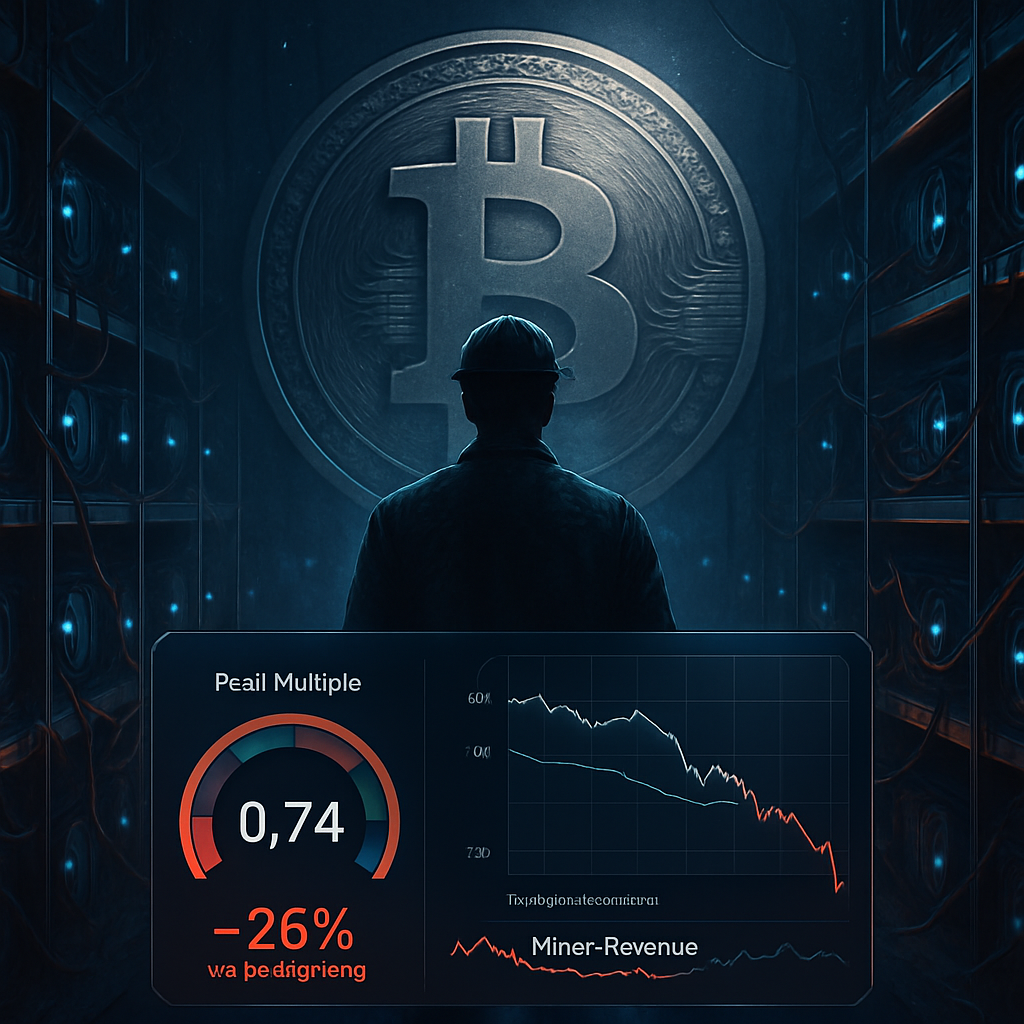
Bitcoin’s Puell Multiple, a key on-chain metric tracking miner revenue relative to its long-term average, has fallen to 0.74, suggesting miner earnings are currently below the past year’s norm. The move, highlighted by CryptoQuant analyst Axel Adler Jr. in a post on X, may signal growing revenue pressure on miners following recent market conditions.

What the Puell Multiple Measures

The Puell Multiple compares the USD value of daily Bitcoin issuance (newly mined BTC multiplied by the spot price) to its 365-day moving average. Lower readings indicate miner income is subdued versus the prior year, while higher readings point to elevated revenue conditions.

Latest Reading and Context

The indicator’s drop to 0.74 places miner revenue roughly 26% below its 12-month average. Such declines can occur when prices soften, network issuance falls, or both. With Bitcoin’s block subsidy reduced by the most recent halving cycle, miners are more sensitive to price and fee dynamics; if spot prices or transaction fees do not fully offset the lower subsidy, the Puell Multiple tends to compress.

Why It Matters

  • Miner stress risk: Sustained revenue pressure can challenge higher-cost operators, potentially leading to machine shutdowns, consolidation, or changes in selling behavior.
  • Market signaling: Historically, depressed Puell readings have aligned with phases of miner capitulation or post-stress recovery, though the signal is not deterministic and should be used alongside other metrics.
  • Network dynamics: Extended revenue weakness may influence hash rate trends and difficulty adjustments as miners optimize operations.

What to Watch

  • Hash rate and difficulty: Persistent declines in miner revenue could reflect in hash rate slippage or slower growth, feeding into difficulty adjustments.
  • Miner balances and flows: Changes in miner-held BTC and transfer activity to exchanges can hint at stress or strategic selling.
  • Transaction fees: Elevated fees can partially offset subsidy cuts, supporting miner income and the Puell Multiple.

While a reading of 0.74 underscores below-average miner revenue, the broader market impact depends on whether the trend persists and how miners respond through operational adjustments, holdings management, and capital strategies.

Bitcoin Demand Roars Back, Bulls Eye $72K

Wellermen Image

Bitcoin Demand Roars Back as Bulls Eye $72K Support

Bitcoin is showing fresh signs of buyer conviction just as selling pressure from short-term holders eases, improving the chances of turning the $72,000 level from resistance into a firm floor. Spot and derivatives markets are both flashing higher demand, giving bulls renewed fuel after weeks of choppy price action.

The shift comes as spot buying volumes climb and open interest in futures and options markets expands, signaling that traders are stepping in with real capital rather than just leverage. At the same time, data shows short-term holders—those who bought within the last 155 days—are reducing their selling, a key change from the distribution pattern that capped rallies earlier this year.

Stronger demand at these levels matters because it shifts market psychology: instead of waiting for dips to sell, buyers appear willing to defend higher prices. That dynamic often precedes sustained moves higher, especially when it coincides with thinning supply from recent buyers locking in rather than exiting.

What This Means for Crypto

Spot buying means actual coins changing hands between investors, not just paper bets on price movement, which tends to create more durable support. Derivatives activity, meanwhile, reflects trader conviction but can amplify moves in either direction if leverage gets overextended.

For long-term holders this suggests the base of demand is widening, reducing the risk of sharp drawdowns below recent highs. Short-term traders may see cleaner setups for momentum plays, but must watch funding rates and open interest spikes that often precede liquidations.

Market Impact and Next Moves

Sentiment looks cautiously bullish in the near term as dip-buying returns and selling dries up, yet any sudden macro shock or regulatory headline could still trigger fast profit-taking. Liquidity remains decent but concentrated around key technical levels, so moves through $72,000 could accelerate quickly if stops are triggered.

The main risks sit with leverage build-up in derivatives and the potential for short-term holders to flip back to sellers if price stalls. On the opportunity side, sustained spot accumulation at these levels often marks the start of broader participation that lifts the entire market cap.

Watch how price behaves around $72,000—if it holds with volume, the path higher opens; if it fails, expect a swift retest of lower supports.

×