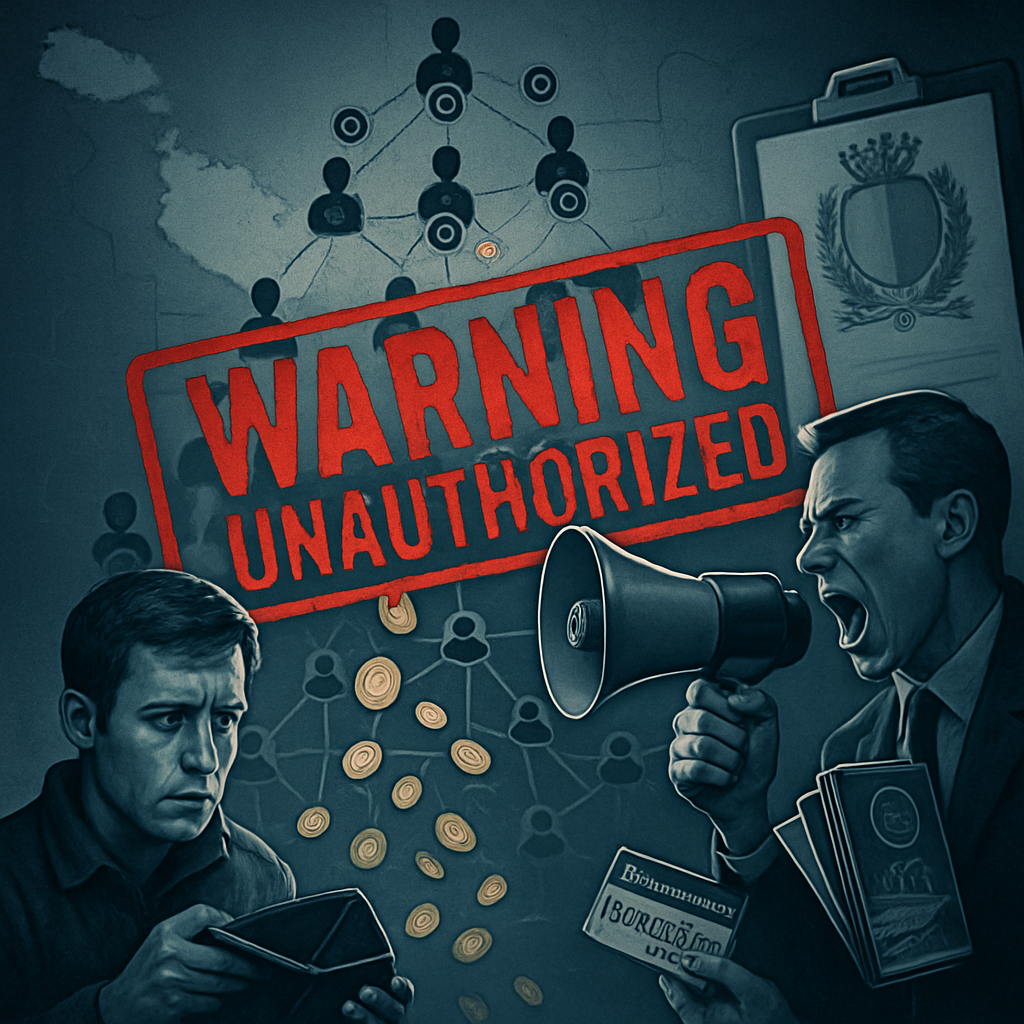
DC Circuit Orders SEC to Treat Bitcoin ETFs Equally

Wellermen Image Court Rejects SEC’s Bitcoin ETF Double Standard

The D.C. Circuit just ordered the SEC to stop its selective freeze on bitcoin exchange-traded products. In a unanimous August 29 ruling, the court told the agency that it cannot approve futures-based bitcoin ETFs while simultaneously blocking spot bitcoin ETFs from Grayscale without offering a rational explanation for the difference. The decision cracks open a regulatory door that the SEC had kept bolted shut for years.

Grayscale sued after the Commission rejected its application to convert the world’s largest bitcoin trust into an actual ETF. The agency had green-lit several bitcoin futures ETFs earlier, yet argued that Grayscale’s spot product posed unacceptable fraud and manipulation risks. Judges found the SEC’s reasoning contradictory: if futures contracts on bitcoin are safe enough for an ETF wrapper, then actual bitcoin held in custody should meet the same standard. The court sent the case back to the SEC with instructions to reconsider under a consistent policy.

The ruling lands like a regulatory earthquake. It doesn’t force the SEC to approve Grayscale’s product tomorrow, but it strips away the agency’s favorite excuse for denial. Spot bitcoin ETFs can now argue they are materially identical—in market exposure and surveillance—to the futures versions already trading. That narrows the SEC’s legal room to maneuver and could force Chair Gensler either to approve spot products or to defend a distinction that the D.C. Circuit has already labeled unpersuasive.

For crypto markets, the opinion signals that the SEC’s long campaign to keep bitcoin at arm’s length may be running out of legal runway. Exchanges and issuers who have products waiting in the wings can now cite judicial precedent that the agency must treat like products alike. Traders betting on eventual spot ETF approval just got fresh ammunition; short-term price action will hinge on whether the SEC appeals or caves.

The SEC’s aura of total discretion over crypto product approvals just took a visible dent.

Seventh Circuit Expands CFTC Reach: Unregistered Crypto Promoters Face Federal Enforcement

Wellermen Image COURT EXPANDS CFTC SWEEP OVER CRYPTO PROMOTERS


The Seventh Circuit just ruled that unregistered crypto promoters can be sued under the same laws that cover futures traders, handing the CFTC new ammunition in its fight to police digital assets. The decision means anyone who pitches tokens or trading schemes could now face federal enforcement even if they never touched a futures contract.

James Donelson ran a crypto operation that promised high returns from trading digital assets. When the CFTC sued him for fraud, he fought back, arguing the agency had no authority because his business wasn’t connected to futures or commodities. The district court rejected that claim, and last week the appeals court agreed. Judges said the Commodity Exchange Act covers any scheme that involves trading advice or solicitation, not just the underlying contracts themselves.

The ruling turns on a simple but powerful interpretation. The CFTC doesn’t have to prove Donelson was trading futures. It only needs to show he was giving investment advice about assets that could be classified as commodities. That lowers the bar for enforcement actions and removes a major defense that crypto promoters have used to dodge federal oversight.

In plain terms, the court decided that the CFTC’s reach extends beyond traditional markets. If you’re telling people how to trade crypto and taking their money, you’re now under the same microscope as a futures broker. That means registration requirements, disclosure rules, and fraud liability all apply—even if the tokens themselves are brand new or loosely defined.

This decision strengthens the CFTC’s hand against DeFi influencers and token sellers who have long claimed their activities fall into regulatory gaps. Exchanges that list advisory services or partner with promoters will face new compliance pressure, while traders could see more platforms exit the U.S. or require stricter KYC. Stablecoins and governance tokens that blur the line between commodity and security now carry added enforcement risk.

The message to crypto entrepreneurs is blunt: the CFTC just moved the goalposts, and ignoring registration is no longer a safe bet.

– U.S. Treasury Proposes GENIUS Act Stablecoin Rule – GENIUS Act Stablecoin Rule Proposed by U.S. Treasury – Treasury Proposes GENIUS Act Stablecoin Regulation

The U.S. Treasury Department has introduced a proposal that would establish core definitions and clarify jurisdictional boundaries within a statute completed by Congress last year, a move that could shape how digital asset activities are overseen across the federal government.

Key provisions in the Treasury proposal

The proposal would set out foundational definitions and delineate areas of regulatory responsibility within the law, aiming to create a consistent framework for implementation. By standardizing terms and identifying which agencies oversee specific activities, the initiative is designed to reduce ambiguity in how the statute is applied.

Implications for digital asset firms and markets

Clearer definitions and jurisdictional lines are critical for companies operating in and around digital assets. Improved clarity could affect registration obligations, reporting standards, compliance expectations, and supervisory approaches for entities such as exchanges, custodians, payment providers, and other intermediaries. It may also help align oversight across securities, commodities, and financial-crime enforcement mandates, areas that have historically overlapped in digital asset regulation.

What to watch next

Proposals of this nature typically proceed through a public comment process before finalization. Industry participants, policy advocates, and legal experts are expected to weigh in on the scope of the definitions and the contours of jurisdiction outlined by Treasury. The final rules, once adopted, could be phased in to allow firms time to adjust compliance programs and operational practices.

Third Circuit Denies Coinbase APA Challenge, Upholds SEC Rulemaking Discretion

Wellermen Image Court Deals Coinbase Sharp Blow on SEC Review

The Third Circuit just slammed the door on Coinbase’s attempt to force the SEC into crypto rulemaking, leaving exchanges and token issuers exposed to more enforcement risk and fewer procedural shields. The ruling means the agency keeps its enforcement-first posture, and the industry loses a key lever for regulatory clarity.

Coinbase filed a petition under the Administrative Procedure Act after the SEC denied its 2022 rulemaking request, which asked the Commission to spell out exactly which digital assets count as securities and how trading platforms should register. Coinbase argued the denial was arbitrary, ignored industry innovation, and left market participants guessing under threat of enforcement actions. The SEC countered that it already had an adequate regulatory framework and that petitions like Coinbase’s were attempts to bypass ongoing litigation.

Judges Ambro, Shwartz, and Fuentes agreed with the Commission in a unanimous opinion. They held that the APA does not give courts power to second-guess an agency’s discretionary refusal to start a rulemaking when the agency provides a rational explanation tied to its enforcement priorities and resource limits. The court found the SEC’s denial letter adequately addressed Coinbase’s concerns and that forcing a rulemaking would intrude on the agency’s prosecutorial discretion.

In plain English, the decision tells crypto firms they cannot drag the SEC into court simply because they dislike the agency’s enforcement-heavy approach. Unless Congress steps in with new legislation, the industry’s best route to clearer rules is still through the political process or by winning individual enforcement cases on the merits.

For crypto markets, the ruling cements the SEC’s authority to pick its targets without judicial interference, raises the stakes on pending enforcement actions against exchanges, and keeps the decentralization-versus-regulation tension squarely in the agency’s favor. Stablecoin issuers, DeFi protocols, and token sponsors now face continued uncertainty about how existing securities doctrines will be applied, while exchanges must weigh the cost of compliance programs against the risk of surprise enforcement. Traders should expect headline-driven volatility around any new SEC filings or settlements.

The message from Philadelphia is blunt: without legislation or decisive court losses for the SEC, the regulatory fog over digital assets is likely to thicken before it clears.

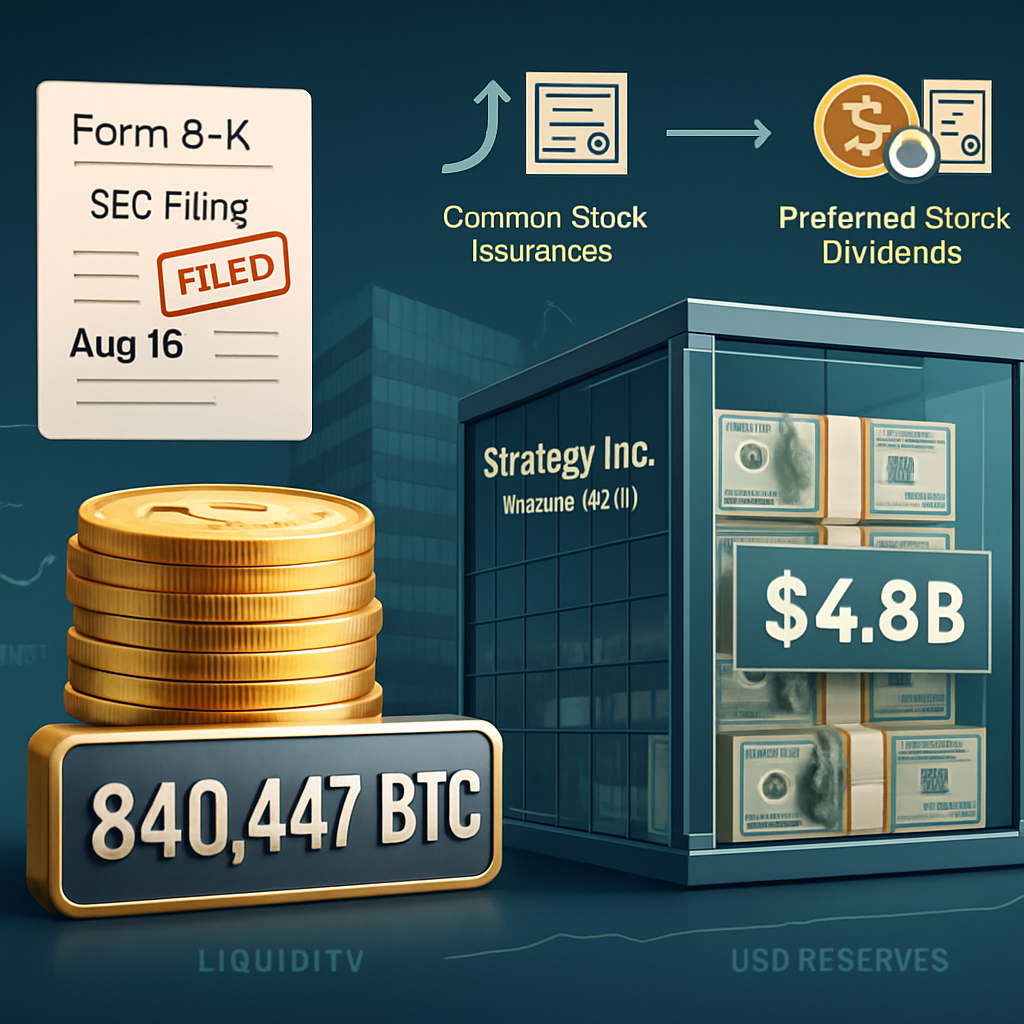
Strategy Secures 840,447 BTC as Cash Reserve Tops $4.8B

Strategy Inc. (Nasdaq: MSTR) reported that its bitcoin holdings remained unchanged at 840,447 BTC as of Aug. 16, while its U.S. dollar reserves increased to $4.8 billion, according to a Form 8-K filed with the U.S. Securities and Exchange Commission (SEC). The company said common-stock sales funded the reserve build, share repurchases, and preferred-stock dividends.

Bitcoin Treasury Unchanged

The company kept its bitcoin balance steady at 840,447 BTC through Aug. 16. Strategy Inc. is one of the largest corporate holders of bitcoin and has made BTC a core component of its corporate treasury strategy. The filing did not indicate any new bitcoin purchases or sales during the reporting period.

Liquidity and Capital Actions

Strategy Inc. increased its U.S. dollar reserve to $4.8 billion. The company said proceeds from common-stock issuances were used to bolster cash reserves, fund share repurchases, and pay preferred-stock dividends. The moves reflect ongoing balance sheet management alongside its long-term bitcoin holdings.

Regulatory Disclosure

Details were provided in a Form 8-K submitted to the SEC. The filing outlines the company’s recent capital activities and current holdings, offering investors an update on liquidity and treasury positioning.

Why It Matters

Keeping bitcoin holdings steady while adding to dollar reserves suggests Strategy Inc. is maintaining its BTC exposure while reinforcing near-term liquidity. The combination of equity financing, buybacks, and preferred dividends highlights an active capital allocation approach amid ongoing market volatility.

Bitpanda Fined €70,000 in Austria’s First MiCA Enforcement Case

Bitpanda has been fined for failing to submit a mandatory white paper at least 20 days before publication and for omitting required disclosures in its marketing materials. The enforcement action underscores increasing regulatory scrutiny of crypto-asset offerings and promotional practices.

Regulatory Findings

Authorities determined that Bitpanda did not meet the required advance notification timeline for publishing a white paper, a key document outlining the characteristics, risks, and terms of a crypto-asset offering. The company’s marketing communications also lacked mandated disclosures designed to provide balanced, clear, and non-misleading information to prospective customers.

Why It Matters

Pre-publication white paper requirements and strict marketing standards are central to investor protection in crypto markets. The 20-day advance submission period enables regulatory review and helps ensure transparency before offers are made to the public. Missing disclosures in promotional materials can obscure risks and undermine fair marketing practices, exposing firms to penalties and other sanctions.

Company and Market Context

Bitpanda is a European digital asset platform that offers retail access to cryptocurrencies and other tokenized instruments. The fine reflects a broader push by regulators to align crypto-asset issuers and intermediaries with established consumer-protection norms and disclosure obligations as the market matures.

What’s Next

Bitpanda is expected to strengthen its compliance controls around product documentation and marketing approvals. The action serves as a reminder to industry participants that procedural lapses—particularly around white paper timelines and advertising disclosures—can lead to enforcement and financial penalties.

Live Updates: Bitcoin Near $63.5K as Ethereum Flows Shift

U.S.-listed spot bitcoin exchange-traded funds (ETFs) absorbed more than 14,000 BTC over a five-day span, turning third-quarter net flows positive, according to Yusuf Fakhro of digital asset firm ARP Digital. Fakhro characterized the renewed buying as “fresh demand landing in the thinnest, most sold-out market in years.”

ETF Inflows Rebound

Fakhro said spot bitcoin ETFs collectively recorded net inflows exceeding 14,000 BTC within five days, a shift that follows a choppier period for the products earlier in the quarter. While he did not provide a date range, the figure points to a meaningful uptick in demand for funds that hold bitcoin directly and trade on U.S. exchanges.

Q3 Flows Flip Positive

The latest inflows were enough to push third-quarter flows back into positive territory, Fakhro noted. Net inflows indicate that ETF share creations are outpacing redemptions, typically requiring underlying bitcoin purchases by fund providers to back new shares.

Liquidity Backdrop and Market Implications

Fakhro described current market conditions as unusually thin, suggesting limited available supply on exchanges. In such environments, incremental ETF demand can have an outsized impact because fund creations are settled with spot bitcoin. “Fresh demand landing in the thinnest, most sold-out market in years,” he said, underscores the potential for higher sensitivity to new capital entering the asset class.

Why It Matters

Spot bitcoin ETFs, launched in the U.S. in early 2024, have become a key conduit for institutional and retail exposure to bitcoin through traditional brokerage accounts. Their flow dynamics are closely watched by market participants as a gauge of sentiment and as a direct source of buy-side pressure in the spot market.

Here are punchy options under 12 words: – Malta Regulator Flags Unlicensed Crypto Marketing Firm – Bitcoin News: Malta Regulator Flags Unlicensed Crypto Marketing Firm – Malta Regulator Cracks Down on Unlicensed Crypto Marketing – Malta Regulator Probes Unlicensed Crypto Marketing Firm

Malta’s financial regulator has issued a public warning about Distributex, describing it as an unauthorized cryptocurrency marketing entity that exhibits high-risk features associated with multilevel marketing and pyramid schemes. The Malta Financial Services Authority (MFSA) said the entity holds no regulatory approval or registration in Malta and urged the public to exercise caution.

MFSA Flags High-Risk, Recruitment-Driven Activity

According to the MFSA, Distributex has been conducting recruitment drives and demonstrates characteristics commonly linked to multilevel marketing and pyramid schemes. Such models typically emphasize enrolling new participants over offering legitimate products or services, increasing the risk of financial loss for consumers.

No Authorization or Registration in Malta

The MFSA stated that Distributex is not authorized or registered to provide financial, investment, or virtual financial asset-related services in or from Malta. The regulator warned consumers to avoid engaging with unlicensed entities and to remain vigilant when approached with crypto-related promotions, especially those reliant on referrals or rapid network expansion.

Investor Precautions

  • Verify whether a firm is authorized on the MFSA’s Financial Services Register before transacting.
  • Be cautious of aggressive recruitment tactics and incentives tied primarily to bringing in new members.
  • Treat promises of high or guaranteed returns with skepticism.
  • Avoid paying upfront membership or participation fees to unlicensed entities.
  • Report suspected fraudulent activity to the relevant authorities.

Regulatory Context

The MFSA oversees crypto-related services in Malta under the country’s regulatory framework for virtual financial assets. Entities promoting or facilitating cryptocurrency-related activities may fall within the scope of Maltese financial regulations and are required to meet authorization and conduct standards aimed at safeguarding consumers and market integrity.

XRP Dips to $1; Bearish Chatter Fuels Rebound Bets

Futures market activity accelerated as open interest rose to $2.78 billion while positioning on Binance and OKX skewed heavily long, even as crypto-related social sentiment fell to a three-month low. The divergence highlights a growing gap between leveraged market positioning and broader investor mood.

Futures Open Interest Climbs to $2.78B

Open interest, the total value of outstanding futures contracts, increased to $2.78 billion. Rising open interest typically indicates more capital flowing into derivatives, reflecting higher participation and potential leverage in the market.

Binance and OKX Traders Tilt Long

Trading metrics from major derivatives venues Binance and OKX show traders leaning decisively to the long side. A long skew suggests participants are positioning for price gains, concentrating directional risk on the upside.

Sentiment Hits Three-Month Low

Despite the bullish tilt in futures, social sentiment around crypto has dropped to a three-month low. Sentiment gauges derived from social platforms often reflect retail investor mood and can diverge from derivatives positioning during periods of uncertainty.

Why It Matters

  • Market structure: Elevated open interest alongside a long-heavy bias can amplify market moves if prices break in either direction.
  • Risk dynamics: A crowded long side increases the risk of forced unwinds and liquidation cascades if prices turn lower.
  • Divergence signal: Weak social sentiment paired with strong derivatives appetite may precede volatility as the market resolves conflicting signals.

Bitcoin News: Safepal Data Breach Hits 39,798 Customers After Plugin Flaw

Hardware wallet maker SafePal disclosed a customer data incident affecting nearly 40,000 users, attributing the exposure to a malfunctioning plugin used for order tracking. The company said unauthorized actors accessed data between March 2, 2025, and April 11, 2026, increasing the risk of phishing attempts and fraudulent phone calls targeting affected customers.

Incident Overview

According to SafePal, threat actors exploited a faulty plugin integrated into its order-tracking process. The issue enabled unauthorized access to customer data over a 13-month period. The company did not detail the specific data fields involved but warned that exposed order-related information could be used to impersonate support staff or trick users into divulging sensitive details.

Risks to Customers

SafePal cautioned that the incident may lead to an uptick in social engineering, including:

  • Phishing emails or messages that appear to come from legitimate support channels.
  • Fraudulent phone calls requesting account details or recovery information.
  • Links directing users to fake websites designed to harvest credentials.

Recommended Precautions

  • Be skeptical of unsolicited emails, DMs, or phone calls requesting personal or wallet information.
  • Do not share recovery phrases, private keys, or verification codes with anyone.
  • Verify communications through SafePal’s official website or app before responding.
  • Manually navigate to official domains rather than clicking links in unsolicited messages.
  • Report suspicious outreach to SafePal’s support channels and monitor accounts for unusual activity.

Why It Matters

Customer data incidents at crypto firms can fuel targeted social engineering, even when on-device wallet security is not directly affected. Attackers frequently use contact and order information to impersonate company representatives, making vigilance essential for users.

Kalshi Wins Round One: D.C. Circuit Allows Election-Contract Trading During CFTC Appeal

Wellermen Image KALSHI WINS ROUND ONE: COURT BLOCKS CFTC ELECTION BAN

The D.C. Circuit just handed Kalshi a decisive victory in its fight to list election contracts, refusing the CFTC’s emergency request to block the contracts while the agency appeals a lower-court win. That means traders can keep betting on congressional control and presidential outcomes on a CFTC-regulated exchange—at least until the next hearing. The ruling signals that federal judges may be wary of letting regulators kill popular products without a stronger legal hook.

The clash started when Kalshi asked the CFTC for permission to offer “Congressional Control Contracts” that pay out based on which party wins House or Senate majorities. The agency said no, calling the contracts “event contracts” that involve gaming and could be used for illegal activity. Kalshi sued, arguing the CFTC lacked authority to ban contracts that are neither swaps nor futures on excluded commodities. In late August a district judge agreed and vacated the ban, prompting the CFTC to race to the appeals court for an emergency stay.

Judges on the D.C. Circuit panel concluded the agency failed to show it would suffer irreparable harm or that it was likely to win on appeal. They let the lower-court order stand, allowing the contracts to trade while the full appeal proceeds. Kalshi keeps its product; the CFTC keeps its right to argue later that elections fall outside the bounds of regulated commodities.

In plain terms, the court told the CFTC it cannot simply wave its hands and declare something off-limits without proving the move is both legal and urgent. That shifts the burden back to regulators to justify bans rather than expecting courts to rubber-stamp them.

For crypto markets the decision matters because it limits an agency’s power to decide what counts as a “commodity” versus “gaming.” If the CFTC cannot easily shut down election contracts, similar logic may protect prediction markets, decentralized event protocols, and even certain stablecoin-linked derivatives from sudden shutdowns. Exchanges gain breathing room, DeFi builders gain precedent, and traders gain another on-chain or off-chain venue to hedge political risk.

The bigger test will come when the full appeal is heard; until then, regulators will think twice before flexing authority that courts may not automatically endorse.

Texas Appeals Court Orders Envy Blockchain to Stay, Release Records

Wellermen Image COURT ORDERS ENVY BLOCKCHAIN TO STAY IN TEXAS

A Texas appeals court has ordered Envy Blockchain and its executives to remain in the state and turn over key documents, halting their bid to block discovery in a civil dispute over alleged crypto-asset misconduct. The ruling tightens the noose on a company already under pressure from regulators and creditors, and it signals that Texas courts are willing to use mandamus power to keep digital-asset firms within reach.

The case began when plaintiffs sued Envy Blockchain, NV LandCo 1 LLC, and CEO Stephen DeCani, claiming the defendants misused investor funds and commingled crypto holdings. Envy tried to quash subpoenas and depositions by filing a writ of mandamus, arguing the trial court lacked jurisdiction and that discovery would expose trade secrets. Three judges on the Eighth Court of Appeals rejected that argument in a brief per curiam order, directing the company to comply or face sanctions.

Because the panel refused to intervene, the underlying litigation will now proceed on a faster timetable. Plaintiffs gain immediate access to internal ledgers, wallet records, and communications that could reveal whether tokens sold by Envy meet the Howey test for securities. Envy, meanwhile, loses both time and leverage; any future settlement talks will occur with its books already open.

In plain English, Texas just told a crypto venture it cannot hide behind corporate formalities or procedural maneuvers when investors come calling. The decision does not decide whether Envy’s tokens are securities, but it removes a major roadblock that might have stalled regulators or plaintiffs for months.

For markets, the order underscores that state courts can still force blockchain entities to produce on-chain and off-chain evidence even when federal crypto rules remain unsettled. Exchanges and DeFi protocols that custody assets in Texas now face a precedent: local judges can pierce anonymity faster than the SEC can issue guidance. Traders who assumed corporate distance would shield token issuers should recalibrate risk models; discovery fights just became shorter and more expensive.

The takeaway is clear—until Congress draws firm jurisdictional lines, crypto firms operating in Texas must treat every lawsuit as an immediate threat to proprietary data and business continuity.

Seventh Circuit Blocks CFTC Data Raid on Kraft, Forcing Privilege Screening

Wellermen Image COURT SHIELDS KRAFT FROM CFTC DATA RAID


The Seventh Circuit just blocked the CFTC from raiding Kraft’s internal files, ruling the agency cannot force production of privileged documents while it pursues a manipulation case. The decision is a sharp reminder that even regulators must respect privilege boundaries, and it arrives just as the CFTC eyes broader surveillance of crypto trading desks.

The fight began when the CFTC demanded every internal memo, chat log, and email touching on Kraft’s wheat and soybean trades. Kraft pushed back, arguing that turning over those materials would expose attorney work-product and privileged strategy. The agency insisted its subpoena power trumped privilege; the district court agreed and ordered compliance. Kraft sought emergency relief, and the Seventh Circuit stepped in with a writ of mandamus—something courts rarely grant—telling the lower judge to reconsider the scope of the demand.

Judges ruled the CFTC cannot simply “trust us” that it will not read privileged material. They held that once a privilege claim is colorable, the agency must filter or segregate documents before any production. Kraft keeps its internal playbook for now; the CFTC keeps its case but must refine its discovery tactics. The precedent reaches any firm—exchange, prop shop, or DeFi protocol—facing a federal subpoena.

In plain English, the CFTC still has teeth, but its bite now requires a privilege gatekeeper. Regulated entities gain a procedural shield that slows broad “give us everything” fishing expeditions, yet they still must hand over non-privileged trading records. The decision tilts the balance toward privacy without neutering enforcement.

For crypto markets, the ruling signals that surveillance requests hitting on-chain analytics firms, OTC desks, or staking protocols could face similar privilege fights. If exchanges or DAOs store chat logs or governance memos under attorney review, they can now demand screening rather than wholesale surrender. That raises compliance costs for platforms and could slow CFTC evidence gathering, but it also gives traders and founders a stronger shield against fishing expeditions that might expose proprietary code or token-allocation strategies.

Bottom line: expect more procedural skirmishes, not fewer enforcement actions—every future CFTC subpoena will carry a privilege filter, and market participants who plan for it will trade with one less blind-side risk.

Bitcoin News: XRP Holders Trade Options on Derive with FXRP Collateral

Derive has added support for FXRP as collateral across its options, perpetual futures, and spot markets, expanding XRP’s onchain utility and giving wallet users self-custodial access to hedging, premium-generating, and leveraged strategies.

Derive Adds FXRP Collateral Support

The integration enables XRP holders to deploy FXRP as margin for options, perpetual futures, and spot trades on Derive’s onchain platform. By accepting FXRP as collateral, Derive allows traders to maintain exposure to XRP while using the tokenized asset to back positions across multiple market types.

What Is FXRP?

FXRP is a tokenized representation of XRP designed for use in smart contract environments. As a collateral asset, FXRP brings XRP liquidity into onchain markets, allowing holders to participate in decentralized trading and risk management without relying on custodial intermediaries.

Strategies and Self-Custody

With FXRP collateral, users can access a range of onchain strategies from a self-custodial wallet, including:

  • Hedging XRP price exposure via options and perpetual futures.
  • Premium-generating trades, such as selling options against collateralized positions.
  • Leveraged long or short positioning through perpetual contracts.

Implications for XRP Market Access

Support for FXRP on Derive broadens onchain market access for XRP holders by connecting the asset to decentralized derivatives and spot liquidity. The move underscores ongoing efforts to extend XRP’s utility beyond payments into DeFi-native trading and risk management use cases.

SEC Wins Fresh Round in 35-Year Bilzerian Battle, Keeps Global Injunction Tool Alive

Wellermen Image SEC Wins Fresh Round in 35-Year Bilzerian Battle

A federal judge just slammed the door on Paul Bilzerian’s latest attempt to escape a 2001 injunction that bars him from touching U.S. securities markets. The ruling keeps alive a case that began in 1989 and still shapes how regulators chase repeat offenders—even those who now live abroad.

The SEC originally sued Bilzerian for hiding his stake in several public companies and for filing false ownership reports. After a jury found him liable in 1989, the court ordered him to pay $33 million in penalties and restitution, then issued a permanent injunction banning him from serving as an officer or director of any public company or from participating in penny-stock offerings. Bilzerian moved overseas, declared bankruptcy, and repeatedly tried to vacate the injunction on procedural grounds. This latest motion claimed the injunction was vague, overly broad, and now violated due-process standards because he says the original order is impossible to obey from abroad. Judge Royce Lamberth rejected every argument, holding that the injunction’s language is clear, that impossibility is not a defense when Bilzerian created his own predicament by fleeing, and that nothing in the record justifies reopening a 23-year-old decree.

The decision leaves the SEC’s enforcement toolkit intact. Regulators can continue to cite the Bilzerian injunction as precedent when they seek broad, long-lasting bars against serial fraudsters. For crypto traders, the message is blunt: once the Commission obtains a permanent injunction, the order travels with the defendant—even if he relocates to a crypto-friendly island and tries to relaunch an unregistered exchange or stablecoin project.

The ruling also underscores the SEC’s willingness to treat past securities violations as radioactive for life. Any future token or DeFi protocol that Bilzerian might promote will carry the stigma of an active court order, raising red flags for exchanges, liquidity providers, and token-listing committees that already scrutinize legal history.

In short, the Commission can still reach across borders and across decades; crypto markets should price in the risk that yesterday’s fraud bar can become tomorrow’s enforcement weapon.

×