US Treasury Unveils GENIUS Act Rules to Police Stablecoins and Enforce AML

Wellermen Image

US Treasury Moves to Police Stablecoin Issuers

The Treasury Department just dropped proposed rules under the GENIUS Act that would force stablecoin issuers to build full anti-money-laundering programs and give them explicit power to freeze or reject transactions. The move signals Washington is done treating stablecoins like niche crypto toys and now sees them as critical payment rails that need the same guardrails as banks.

The draft rule would require issuers to maintain compliance teams, screen addresses against sanctions lists, and be ready to block, freeze, or reject payments flagged for illicit activity. Issuers that fail to meet these standards could face enforcement actions or lose the regulatory green light needed to operate at scale in the United States.

Big issuers like Circle and Tether stand to gain clearer operating rules but also heavier compliance costs, while smaller or offshore projects may find it harder to compete. Traditional banks and fintechs eyeing stablecoin licenses will now have a defined checklist, shifting the competitive edge toward those already running regulated businesses.

What This Means for Crypto

Stablecoins function like digital dollars, so AML rules here are less about banning crypto and more about forcing issuers to act like licensed money transmitters. The language around blocking and freezing transactions is standard banking practice, just applied to on-chain transfers for the first time at the federal level.

Traders holding USDC or USDT should expect occasional transaction reviews or delays if their wallet touches sanctioned addresses, but everyday transfers between compliant venues are unlikely to change. Builders launching new stablecoins will need legal and compliance budgets from day one instead of treating those functions as optional overhead.

Market Impact and Next Moves

Short-term sentiment is mixed: compliance-focused issuers may see inflows as institutions gain comfort, while privacy-focused or offshore tokens could face outflows. The bigger risk is uneven enforcement—if one major issuer gets hit with fines, liquidity can rotate quickly to rivals perceived as cleaner.

The real opportunity sits with projects that already run robust KYC programs and maintain banking partnerships, positioning them to capture institutional stablecoin volume once final rules land. Liquidity and custody providers that integrate sanctions screening early will likely win mandates from funds that need regulatory certainty.

Watch for final rule text and enforcement examples; the issuers who treat compliance as infrastructure rather than a cost center will set the pace for the next leg of stablecoin adoption.

Kraken App Adds On-Chain DEX for 2,500+ Solana Tokens

Kraken has enabled direct on-chain trading for nearly 2,500 Solana-based tokens within its main mobile app for eligible users, expanding access to Solana’s broader token ecosystem from a single interface.

What Kraken Added

The new capability allows users to trade a wide range of Solana Program Library (SPL) tokens directly on the Solana blockchain from within Kraken’s primary mobile application. Because trades execute on-chain, they settle on Solana rather than through Kraken’s centralized order books, providing access to a much larger set of assets than those traditionally listed on an exchange.

Why It Matters

Solana has become a leading network for high-throughput, low-cost transactions, supporting a growing universe of tokens spanning DeFi, gaming, and community-driven projects. By integrating direct on-chain execution, Kraken streamlines access to this long-tail market while keeping the user experience inside a familiar app. The move reflects a broader industry trend of bridging centralized platforms with decentralized liquidity to meet demand for a wider array of assets.

Access and Requirements

Kraken states the feature is available to eligible users, with availability varying by jurisdiction and account status. Because transactions are processed on-chain, users should expect to pay Solana network fees, typically denominated in SOL. Specific token availability may change over time based on market and technical factors.

Delaware Court Tosses Token-Deal Lawsuit Over Missing Contract Details

Wellermen Image COURT SLAMS DELAWARE STARTUP IN TOKEN DEAL

Delaware’s Superior Court just tossed a crypto-linked lawsuit that tried to force a token deal through the back door of contract law. The ruling matters because it signals judges will not rewrite token economics when founders cry foul after a handshake deal collapses.

Diamond Fortress Technologies and its CEO Charles Hatcher sued an unnamed counterparty over an alleged agreement to issue digital tokens tied to the company’s biometric security software. Hatcher claimed the deal promised him a large allocation of tokens that would vest over time and give him governance rights. When the other side walked away, the plaintiffs sued for breach, seeking either specific performance or massive damages measured in future token value. The defense argued no binding contract ever existed and that the supposed terms were too vague to enforce under Delaware law.

The court agreed. It found the writings between the parties were nothing more than preliminary discussions that lacked essential price, quantity, and delivery terms. Without those, Delaware’s strict contract rules left nothing for a jury to decide. Summary judgment was granted to the defendants, ending the case before trial and leaving Hatcher and Diamond Fortress with zero recovery.

In plain English, the decision tells founders and investors that Delaware courts will not treat loose token promises as binding contracts. If the economics are not nailed down in writing, judges will not fill in the blanks with speculation about future token prices or governance power. That raises the bar for anyone hoping to litigate their way into a digital asset allocation.

For crypto markets the ruling quietly strengthens the hand of exchanges and protocols that insist on formal listing agreements instead of casual founder chats. It also reduces the litigation risk around early-stage token warrants that were never properly documented, which may ease some compliance fears for DeFi projects. At the same time, it warns traders that any value assigned to promised tokens remains highly speculative until those tokens actually exist and clear legal title is transferred.

Bottom line: verbal or half-written token deals just got more expensive to chase in court.

Bitcoin Holds $72K as Sellers Circle; Altcoins Poised for Breakout

Wellermen Image

Bitcoin Holds $72K but Sellers Are Circling

Bitcoin’s latest push toward $72,000 has stalled as profit-taking kicks in, yet the underlying technical picture still leans bullish. The stall matters because it sets the tone for whether altcoins can finally break out or if risk appetite stays capped.

The move higher followed a brief relief rally that lifted Bitcoin from the low-$60,000s. Price is now testing resistance right around the psychologically important $72,000 level while support sits near $68,000. Volume has thinned on the upside, hinting that buyers are pausing rather than exiting.

Traders watching derivatives data note that funding rates have cooled from the euphoric levels seen earlier, reducing the chance of a sudden long squeeze but also capping aggressive new buying. Meanwhile, altcoin pairs remain largely range-bound, waiting for a decisive Bitcoin move to dictate direction.

What This Means for Crypto

The $72,000 zone is more than just a round number; it marks the upper boundary of the range Bitcoin has traded inside since March. A clean break above it on rising volume would likely trigger follow-through buying across major altcoins, while repeated rejections could extend the consolidation phase that has frustrated momentum traders.

For long-term holders the difference between $68,000 and $72,000 is noise; the macro setup—halving aftermath, ETF inflows, and corporate adoption—remains intact. Short-term traders, however, must decide whether to defend positions or wait for either a confirmed breakout or a deeper pullback toward $65,000 before re-entering.

Market Impact and Next Moves

Sentiment is cautiously bullish: dips are still being bought, but leverage has been trimmed, lowering the odds of a violent liquidation cascade. The biggest near-term risk is a failed breakout that invites stop runs below $68,000 and forces leveraged longs to unwind quickly.

On the opportunity side, any sustained move above $72,000 opens the door for capital rotation into higher-beta names that have underperformed year-to-date. Watch funding rates and spot ETF flows over the next 48 hours; both will signal whether fresh money is still entering or if the market is simply digesting gains.

Bitcoin is knocking on the door—watch who answers first, bulls or sellers.

Grayscale Wins as DC Circuit Vacates SEC Bitcoin ETF Denial

Wellermen Image Grayscale Beats SEC in Landmark Bitcoin ETF Ruling

The D.C. Circuit just handed Grayscale a major victory by vacating the SEC’s denial of its Bitcoin ETF application. The ruling forces the agency to reconsider its refusal and signals that regulators can no longer reject crypto products with vague or inconsistent logic. Markets are already pricing in higher odds of approval, and the decision could reshape how every spot Bitcoin product gets reviewed going forward.

The fight began when Grayscale asked the SEC to convert its existing Bitcoin trust into an exchange-traded fund that would trade like a stock. The Commission said no, claiming the new product would expose investors to fraud and manipulation because the underlying spot Bitcoin market lacked sufficient surveillance. Grayscale sued, arguing the denial was arbitrary since the SEC had already approved nearly identical futures-based Bitcoin ETFs that rely on the same spot market for pricing. Judges on the D.C. Circuit agreed, finding the agency failed to explain why futures products were safe enough but spot products were not.

In plain terms, the court told the SEC its reasoning did not hold up. The panel ruled that treating two investment vehicles differently when both ultimately track the same Bitcoin prices violated basic standards of fair administrative process. Grayscale wins a second look, the SEC loses its blanket denial, and the industry gains a precedent that demands consistent treatment across similar products. Nothing in the opinion forces immediate approval, but the bar for future rejections just got higher.

The decision narrows the SEC’s discretion by requiring it to justify distinctions between futures and spot vehicles with concrete evidence rather than blanket assertions about manipulation risk. It does not strip the agency of authority over crypto listings, yet it pressures the Commission to apply uniform standards or risk further court losses. Stablecoins and tokens remain untouched here, but the logic could bleed into token classification fights if the SEC tries to draw arbitrary lines between economically similar products.

Exchanges and asset managers now see a clearer path for spot Bitcoin ETFs, which could pull billions in new capital once approved and listed. DeFi protocols may benefit indirectly as institutional on-ramps improve liquidity across the ecosystem, while traders gain more regulated venues and potentially tighter spreads. The ruling does not resolve broader questions about ether or altcoin products, but it shifts momentum toward the view that if one Bitcoin vehicle clears regulatory hurdles, comparable structures should too.

This decision raises the probability of eventual spot Bitcoin ETF approvals and warns the SEC that inconsistent rejections will face judicial pushback.

CFTC Wins Big: Seventh Circuit Declares Donelson’s Crypto Trading a Futures Fraud

Wellermen Image CFTC Wins Big: Court Brands Donelson a Futures Fraudster

The Seventh Circuit just handed the CFTC a decisive win, ruling that James Donelson’s Bitcoin and ether trading scheme was futures fraud under the Commodity Exchange Act. The decision strengthens the agency’s hand over crypto markets, signals that unregistered platforms can’t hide behind novelty, and raises the stakes for anyone pitching leveraged digital-asset bets to retail traders.

Donelson ran a firm that solicited customers with promises of automated crypto trading profits. He collected roughly $1.4 million, took 20 percent cuts, and lost most of the rest, prompting the CFTC to sue for fraud and failure to register. The district court granted summary judgment; Donelson appealed, arguing his crypto products were not “futures” and that the CFTC lacked authority. The Seventh Circuit disagreed on both counts.

Judges held that the contracts Donelson offered met the classic futures test: standardized terms, margin mechanics, and an obligation to settle gains or losses daily even if delivery never occurred. Because the accounts were traded on a pooled basis and customers never took possession of coins, the court found the arrangements indistinguishable from regulated futures. The panel also rejected Donelson’s constitutional challenge, reaffirming that the CFTC’s enforcement power extends to any commodity—including digital assets—when fraud or registration violations are alleged.

In plain terms, the ruling tells crypto promoters that if your product behaves like a futures contract, regulators will treat it like one. Donelson must now pay restitution and penalties, and similar unregistered platforms face a clearer compliance target.

The decision tilts authority toward the CFTC at a moment when SEC-CFTC turf fights remain unsettled. It tightens the noose around DeFi protocols or exchanges offering leveraged crypto exposure without registration, and it nudges token classification risk higher: anything promising daily settlement or margin could slide into the futures bucket. Traders lose another gray-area venue, while compliant, licensed platforms may see modest inflows as risk-averse capital seeks regulated venues.

Expect more enforcement copycats—and higher legal budgets for anyone still operating in the leveraged-crypto sandbox.

Third Circuit Forces SEC to Rule on Coinbase’s Crypto-Rule Petition

Wellermen Image Coinbase Beats SEC on Rulemaking Petition

The Third Circuit just forced the SEC to answer Coinbase’s demand for crypto-specific rules, handing exchanges and DeFi platforms a rare procedural win that could slow the agency’s enforcement-first approach. The ruling matters because it signals courts may no longer let the Commission dodge clear requests to clarify when tokens, staking rewards, and trading interfaces cross into securities territory.

The fight began when Coinbase filed a formal petition asking the SEC to write new regulations for digital assets instead of chasing platforms one lawsuit at a time. The agency sat on the request for more than a year before denying it without explanation. Coinbase appealed, arguing that silence violated the Administrative Procedure Act’s requirement that agencies respond to petitions in a reasoned way. A three-judge panel agreed, vacated the denial, and ordered the SEC either to start a rulemaking process or provide a substantive justification for refusing.

The decision hands Coinbase and the broader industry a narrow but concrete victory: the SEC must now treat the petition as live rather than pretend it never existed. Coinbase gains time and leverage; the Commission loses the luxury of ignoring industry calls for clarity while simultaneously bringing enforcement cases that assume the very rules it refuses to write. No new legal standard for tokens was created, yet the agency’s discretion just became harder to wield without written justification.

In plain terms, the court told the SEC it cannot keep crypto in regulatory limbo forever. The agency must either begin crafting rules that spell out registration, custody, and disclosure duties for tokens and trading venues, or explain—on the record—why doing so would be impractical or unnecessary. That requirement alone shifts power toward market participants who have long argued that fair notice should precede enforcement.

The ruling tightens the SEC’s grip less than it appears and loosens it more than Chair Gensler probably wanted. Other exchanges now have a template for demanding similar rulemakings, raising the odds that CFTC jurisdiction claims gain traction if the SEC drags its feet. Stablecoin issuers and DeFi protocols face continued classification risk, but the temperature drops a notch because any future enforcement will occur against a backdrop where the agency’s refusal to regulate is itself under judicial scrutiny. Traders should expect slightly lower headline risk in the near term, though volatility around enforcement headlines is unlikely to vanish.

The SEC can still regulate by lawsuit, but it can no longer pretend silence is a policy.

– Bitcoin News: Schwab Targets Kalshi and Polymarket With Cboe Deal – Bitcoin News: Schwab Eyes Kalshi, Polymarket in New Cboe Pact – Schwab Expands into Kalshi, Polymarket via Cboe Deal – Schwab Targets Kalshi and Polymarket With New Cboe Deal

Charles Schwab is reportedly preparing to offer binary-style options tied to the S&P 500 through a partnership with Cboe Global Markets, signaling a mainstream push into prediction-style trading within a regulated venue. The Wall Street Journal, citing people familiar with the matter, reported that the contracts would allow customers to take yes/no positions on specific S&P 500 outcomes.

Schwab Teams Up With Cboe on Binary-Style Index Contracts

According to the report, Schwab plans to make fixed-payout, “binary-style” options available to clients, with contracts linked to the S&P 500. While full specifications have not been disclosed, binary-style options typically pay a set amount if a predefined condition is met and zero if it is not, offering defined risk and defined reward to traders.

The collaboration suggests the products would be listed on Cboe’s marketplace and accessible through Schwab’s brokerage platform. Neither company had publicly detailed launch timing, pricing, or contract parameters at the time of reporting.

Targeting Prediction-Market Territory—Within a Regulated Framework

The move positions Schwab and Cboe closer to the rapidly growing “prediction market” space popularized by platforms like Kalshi and Polymarket, while keeping the activity inside the established, regulated listed-options ecosystem. Unlike broad event markets that span politics or macroeconomic data, Schwab’s offering—as described—focuses on outcomes tied to a major equity index.

Interest in simple, short-duration, defined-risk trades has accelerated alongside the rise of 0DTE (zero days to expiration) options and exchange-listed event-style products in recent years. A Schwab–Cboe binary-style contract could appeal to retail traders seeking clear, capped outcomes without navigating complex multi-leg strategies.

Regulatory Considerations and Open Questions

Options on equity indexes such as the S&P 500 are overseen within the U.S. securities regulatory framework. Binary-style structures have historically drawn scrutiny when offered off-exchange, but an exchange-listed and cleared product would operate under established rules, surveillance, and customer protections.

Key details still to watch for include:

  • Contract design: settlement triggers, maturities (intraday, daily, or longer), and payoff amounts
  • Risk controls: position limits, suitability, and margin treatment
  • Access and fees: platform availability, commissions, and potential retail education requirements
  • Timeline: listing, launch date, and any required regulatory approvals or rule filings

Context: Growing Demand for Defined-Risk Instruments

Retail and professional interest in straightforward payoff profiles has grown as markets adopt more granular instruments—ranging from micro and 0DTE options to exchange-offered event contracts. A Schwab–Cboe binary-style S&P 500 product would extend that trend, offering a yes/no format on a widely followed benchmark while keeping trading within a regulated exchange environment.

Schwab and Cboe had not issued public statements with full product details at the time of publication. The Wall Street Journal report cited people familiar with the matter.

GENIUS Act Turns Stablecoin Issuers Into AML Gatekeepers

Wellermen Image

US Treasury Pushes Stablecoin Issuers Into AML Frontline

The Treasury’s proposed GENIUS Act rules would force stablecoin issuers to build full anti-money laundering programs and give them the power to block, freeze, or reject transactions on command. The move is aimed squarely at cutting off illicit finance flows before they can use dollar-pegged tokens as an on-ramp or off-ramp. Markets are watching because any compliance burden here lands directly on the issuers that back the largest stablecoins by volume.

Under the draft, issuers must screen users, monitor flows in real time, and maintain the technical ability to freeze addresses or claw back funds that hit sanctions lists. The Treasury is also signaling that future guidance could expand these obligations to cover decentralized protocols and non-custodial wallets. Issuers that fail to meet the standards risk losing the regulatory green light needed to keep banking relationships and maintain peg credibility.

Issuers with deep compliance teams stand to gain market share as weaker players exit or get acquired. Exchanges and OTC desks that already run robust KYC programs will likely see smoother settlement with compliant stablecoins, while privacy-focused services could lose liquidity. For users, the change means faster freezes on flagged addresses but also fewer anonymous on-ramps into dollar tokens.

What This Means for Crypto

AML and sanctions compliance translate into mandatory transaction monitoring systems, customer due diligence, and the legal authority to freeze balances without a court order. In plain terms, issuers become de-facto gatekeepers who can turn a wallet’s stablecoin balance into unusable digital dust at the government’s request.

Traders relying on quick, borderless dollar liquidity may face longer settlement times and extra verification steps. Long-term investors holding major stablecoins should expect issuers to pass compliance costs through higher fees or reduced yields. Builders launching new tokens will need to budget for audits, legal retainers, and on-chain monitoring tools from day one.

Market Impact and Next Moves

Short-term sentiment is mixed: compliant issuers could see inflows as institutions rotate into “clean” stablecoins, but overall stablecoin trading volumes may dip while the market digests the new rules. Liquidity risk rises for smaller issuers that lack the infrastructure to freeze or reject transactions at scale.

The clearest opportunity sits with established players who already run enterprise-grade compliance stacks; they can market themselves as the only safe on-ramp for institutions wary of regulatory blowback. Watch for increased M&A as bigger issuers scoop up smaller ones that can’t afford the coming compliance spend.

Issuers that treat the GENIUS Act as a moat rather than a burden will pull ahead; everyone else risks watching their banking partners and user bases walk away.

Bitcoin Trades Like a Macro Asset, Binance India Says

Binance India said Bitcoin’s relationship with traditional asset classes has become more consistent, noting that the cryptocurrency increasingly reflects broader macroeconomic dynamics.

Growing Alignment With Macro Markets

According to the exchange, Bitcoin’s price action has shown a steadier connection with key traditional market drivers, including equities, government bond yields, and currency strength. This indicates that developments such as interest rate expectations, inflation readings, and economic growth data are playing a larger role in shaping crypto market moves.

Why the Shift Matters

  • Risk assessment: A clearer link to macro trends can help market participants better gauge how Bitcoin may respond to economic data and policy signals.
  • Portfolio context: More consistent relationships with stocks, bonds, and commodities can influence diversification strategies and hedging decisions.
  • Market maturity: Closer tracking of macro dynamics is often associated with growing institutional participation and deeper liquidity.

Context on Correlations

Bitcoin’s correlation with traditional assets has varied over time, alternating between periods of strong alignment and weaker association. The latest assessment from Binance India suggests that these relationships have recently stabilized, reinforcing the view that crypto markets are increasingly integrated with broader global financial conditions.

US Treasury’s GENIUS Act Forces Real-Time Compliance on Stablecoins

Wellermen Image

US Treasury Moves to Lock Down Stablecoin Transfers

The Treasury Department has floated new rules under the GENIUS Act that would force every stablecoin issuer to run full AML, sanctions, and counter-terrorism finance programs. Issuers would also need real-time tools to block, freeze, or reject payments that hit red flags. The move turns what many still treat as “just another payment rail” into a tightly supervised channel.

Under the draft, companies like Circle and Tether would have to screen every wallet, flag high-risk addresses, and prove they can stop a transaction before it settles. Failure to comply could mean licensing restrictions or forced delistings from US platforms. The proposal lands as regulators race to close gaps before stablecoins scale into mainstream payments and Treasury markets.

Issuers that already run heavy compliance desks may absorb the cost and keep market share. Smaller or offshore projects face a stark choice: build expensive controls or exit the US dollar stablecoin business. Exchanges and DeFi protocols that route these tokens will inherit new monitoring duties, shifting risk downstream.

What This Means for Crypto

Stablecoins are programmable dollars; the new rules add programmable compliance at the issuer level. Traders will see fewer anonymous on-ramps, while institutions gain clearer rails once the guardrails are in place. Builders must now treat sanctions screening as core infrastructure rather than an afterthought.

Long-term holders should watch which issuers publish detailed compliance reports and maintain reserves that regulators can audit. Short-term traders may face brief liquidity squeezes if offshore tokens lose US venue access.

Market Impact and Next Moves

Sentiment is mixed: compliant dollar stablecoins look safer, yet any forced freeze capability raises censorship concerns that could dent adoption outside regulated corridors. Liquidity risk sits with smaller issuers that cannot staff a 24/7 compliance desk.

The clearest opportunity lies with issuers that already publish attestations and maintain banking partnerships. Watch volumes on regulated platforms versus offshore alternatives; a sustained gap would signal where real demand is heading once the rules take effect.

Regulation is catching up; issuers that treat compliance as a feature, not a burden, will set the pace for the next leg of stablecoin growth.

Bitcoin Stalls at $72K as Bulls Target Fresh Breakout

Wellermen Image

Bitcoin Stalls at $72K as Bulls Eye Fresh Breakout

Bitcoin is knocking on the door of $72,000 again, but sellers are pushing back hard enough to stall the relief rally that started last week. The market is watching closely to see whether this is just healthy profit-taking or the start of another rejection that drags altcoins lower with it.

Price action near the round-number resistance has been choppy, with repeated tests failing to produce a clean close above $72K. Technical indicators still lean bullish on higher timeframes, yet the lack of follow-through volume suggests traders are waiting for either a decisive breakout or a confirmed rejection before committing fresh capital.

Altcoins are largely mirroring Bitcoin’s hesitation. While a few majors like ETH and SOL have posted modest gains on the week, most smaller tokens remain range-bound, reflecting the same wait-and-see attitude that dominates BTC trading desks right now.

What This Means for Crypto

The $72,000 level is more than just a number—it represents the last major high before the steep correction earlier this year. Clearing it with conviction would likely trigger short-covering and bring sidelined buyers back into the market.

For traders, the current setup rewards patience over aggression. A sustained move above resistance opens the door to $75K–$78K quickly, while a rejection could send price back toward $68K support and shake out leveraged long positions.

Long-term holders are less affected by the intraday noise, but they should watch funding rates and open interest closely; rising leverage during consolidation often precedes sharp moves in either direction.

Market Impact and Next Moves

Sentiment is cautiously bullish but fragile. Without strong spot demand or positive regulatory headlines, the rally risks stalling and inviting another round of deleveraging.

The biggest near-term risk is a failed breakout that triggers cascading liquidations, especially if macro data turns sour or ETF flows slow. On the flip side, any surprise institutional accumulation or clearer policy signals could provide the spark needed to push through resistance decisively.

Traders positioned for a breakout should keep stops tight below recent lows, while those waiting for dips may find better entries if $68K holds and volume picks up on the next leg higher.

Bitcoin’s next few daily closes will decide whether this is the start of a new leg up or just another fakeout at resistance.

Ethereum Foundation Introduces Clear Signing Standards to Secure Wallets

The Ethereum Foundation is promoting “clear signing” standards designed to make wallet approvals more readable and reduce the risk of phishing in decentralized applications.

What Clear Signing Means

Clear signing is a security approach that presents human-readable information to users before they approve on-chain actions or sign messages. Instead of opaque hexadecimal data, wallets display structured details about what a transaction or signature will do, enabling users to verify permissions and intent before proceeding.

Why It Matters for Wallet Approvals

Wallet approvals are a common target for phishing and wallet-draining schemes. Users are often prompted to sign unclear requests that can grant broad permissions to third parties or initiate unintended transfers. By standardizing how approvals and permissions are displayed across wallets and dapps, clear signing aims to reduce “blind signing” and help users make informed decisions.

Key Objectives

  • Improve readability of transaction and message data presented to users.
  • Standardize how approvals and permissions are described across wallets and applications.
  • Reduce successful phishing attempts that exploit confusing or opaque signature requests.
  • Strengthen user trust and safety without adding excessive friction to everyday transactions.

Industry Implications

If broadly adopted by wallet providers and developers, clear signing standards could create a more consistent user experience across the Ethereum ecosystem and help curb common attack vectors. The initiative aligns with ongoing efforts to improve wallet security, increase transparency in dapp interactions, and set common expectations for how on-chain permissions are requested and granted.

Bitcoin Fails to Sustain $72K Spike as Iran Ceasefire Hopes Fade

Wellermen Image

Bitcoin’s $72K Rally Fizzles as Ceasefire Hopes Fade

Bitcoin spiked above $72,000 on news of an Iran ceasefire, only to give back most of the gains within hours. The quick reversal left traders wondering whether the move was a real breakout or just another headline-driven fakeout.

The spark came from reports that tensions between Iran and Israel had cooled, easing immediate fears of energy supply shocks and broader Middle East escalation. Risk assets, including crypto, jumped on the relief trade, but Bitcoin quickly ran into resistance near its three-week high and failed to hold the level.

Volume stayed thin on the upside, and macro concerns around U.S. interest rates and a stronger dollar quickly reasserted themselves. Without fresh buying from institutions or leveraged retail, the rally lacked the fuel to push higher.

What This Means for Crypto

Traders often treat geopolitical headlines as short-term catalysts, but lasting price moves require sustained capital inflows and clearer macro signals. A ceasefire reduces one tail risk, yet it does not change Bitcoin’s sensitivity to liquidity conditions or regulatory developments.

For long-term holders, these swings are mostly noise unless they coincide with ETF flows or major policy shifts. Builders and projects continue unaffected, though they may see short-term volatility in token prices and funding rates.

Market Impact and Next Moves

Sentiment looks mixed: relief from geopolitical tension is positive, but the inability to hold $72,000 raises doubts about near-term momentum. Leverage remains a double-edged sword here; any sharp reversal could trigger liquidations on both sides.

The biggest near-term risk is a return of macro jitters if inflation data or Fed comments turn hawkish again. On the opportunity side, dips below key moving averages often attract dip-buyers who view any macro-driven selloff as temporary.

Watch volume and funding rates closely over the next few sessions; sustained buying above $70,000 would signal real conviction rather than headline chasing.

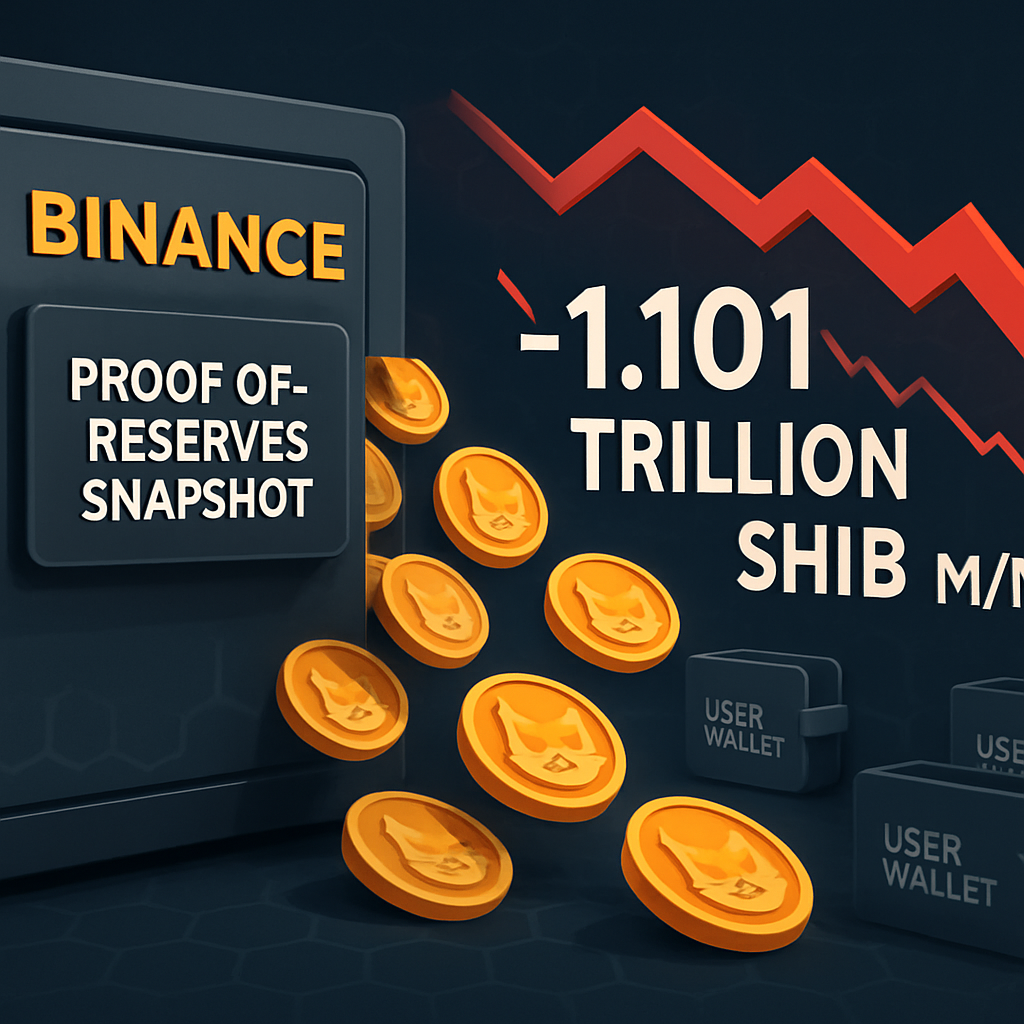
Shiba Inu on Binance Plunges 1.1T Tokens in a Month

User balances of Shiba Inu (SHIB) on Binance declined by approximately 1.101 trillion tokens over the past month, according to the exchange’s latest proof-of-reserves data.

Key Details

  • Asset: Shiba Inu (SHIB)
  • Exchange: Binance
  • Change in reported user balances: -1.101 trillion SHIB month over month
  • Source: Binance proof-of-reserves (PoR) snapshot

Why It Matters

Binance is one of the world’s largest cryptocurrency exchanges by trading volume, and shifts in user balances can signal changing user behavior on the platform. A decline in reported SHIB balances on the exchange may indicate net withdrawals over the period, which can affect on-exchange liquidity. However, balance changes can stem from multiple factors, including user deposits and withdrawals, market conditions, or internal wallet movements.

Understanding Proof-of-Reserves

Proof-of-reserves snapshots are periodic disclosures that show an exchange’s recorded assets and user balances at a specific point in time. They are intended to enhance transparency but are limited by their snapshot nature and underlying methodologies. PoR data does not explain the reasons behind balance changes and should be considered alongside other metrics and market information.

What to Watch

  • Subsequent Binance PoR updates to confirm whether the SHIB balance trend continues or reverses.
  • On-exchange liquidity and order book depth for SHIB trading pairs.
  • Broader market flows and user migration between centralized exchanges and self-custody.
×