Bitcoin News: Ireland Targets Crypto Assets to Disrupt Illicit Flows

Ireland has unveiled a National Risk Assessment and a 30-point action plan to combat money laundering, terrorist financing, and complex financial crime, placing a particular focus on closing vulnerabilities related to digital assets and cryptocurrency. The strategy, announced on June 18, sets out coordinated measures across government, regulators, and law enforcement.

National Strategy Targets Financial Crime

The government’s new framework combines a comprehensive National Risk Assessment—used to identify and prioritize threats across sectors—with a detailed action plan to enhance prevention, detection, and enforcement. The initiative is designed to tighten Ireland’s defenses against illicit finance by improving risk understanding, strengthening supervision, and boosting operational coordination.

According to the announcement, the plan addresses emerging and traditional financial crime typologies, with actions intended to improve information sharing, sharpen enforcement capabilities, and align supervisory approaches across agencies. It also underscores the need to adapt quickly as criminal methods evolve.

Focus on Digital Assets and Crypto Misuse

A central pillar of the strategy is tackling the misuse of cryptocurrency and other digital assets. Authorities highlighted the growing role of crypto in facilitating laundering, terrorist financing, fraud, ransomware, and other illicit activity, and signaled closer scrutiny of the ecosystem that supports it.

The plan emphasizes addressing crypto-related loopholes, reinforcing oversight of virtual asset service providers (VASPs), and tightening controls around high-risk activities. While legitimate use of digital assets continues to expand, the government aims to reduce avenues for anonymity and cross-border abuse, consistent with global standards on virtual assets.

Aligned With EU and Global Standards

Ireland’s approach dovetails with the European Union’s broader regulatory program, including the Markets in Crypto-Assets (MiCA) framework and updated anti-money laundering rules. MiCA establishes licensing, conduct, and disclosure requirements for crypto service providers across the bloc, while the EU’s AML reforms strengthen due diligence, reporting, and cross-border supervision.

The strategy also reflects international recommendations, such as those of the Financial Action Task Force (FATF), including expectations around the “travel rule” for crypto transfers and risk-based supervision of VASPs. By aligning domestically with these standards, Ireland seeks to enhance consistency, legal clarity, and enforcement effectiveness.

Implications for the Crypto and Financial Sectors

For exchanges, custodians, payment firms, and other service providers operating in Ireland, the plan signals sustained regulatory attention on governance, customer due diligence, transaction monitoring, sanctions screening, and controls for higher-risk activity. Supervisory coordination and data sharing are expected to deepen as agencies implement the 30-point program.

The initiative aims to strengthen market integrity and reduce systemic risk while providing clearer expectations for compliance. Further updates are anticipated as authorities execute the action plan and publish additional guidance informed by the National Risk Assessment.


Zcash Surges 30% on Ceasefire Hopes, But Signals Point to a Short-Lived Rally

Wellermen Image

Zcash Surges 30% as Ceasefire Hopes Ignite Old Bull Trap Fears

Zcash (ZEC) jumped roughly 30% in a single session as traders priced in a potential US–Iran ceasefire, yet the move is already flashing warning signs familiar from the 2021 bear market. The rally lifted ZEC above key resistance levels that previously marked local tops, but on-chain and technical data suggest this may be another short-lived bounce rather than the start of a sustained recovery.

The trigger appears straightforward: any hint of reduced geopolitical tension tends to weaken the US dollar and lift risk assets, and privacy coins like Zcash often catch a speculative bid during such windows. Volume spiked sharply on the move, but funding rates turned positive only briefly before cooling, indicating that leveraged long positions were opened quickly and may now be vulnerable to profit-taking.

History adds caution. Similar percentage pops in ZEC during the 2021–2022 bear phase were followed by 35–45% retracements within weeks as weak hands exited and macro uncertainty returned. Current support sits near $38–$40; a break below that zone could accelerate selling toward the $28–$30 range seen earlier this year.

What This Means for Crypto

Privacy coins remain highly sensitive to both regulatory tone and macro sentiment because their value proposition is tied to shielding transactions from surveillance. A ceasefire narrative reduces immediate risk-off pressure, yet it does not alter the longer-term regulatory overhang facing privacy-focused assets in major jurisdictions.

For traders, the move highlights how quickly narrative-driven liquidity can reverse when positioning gets crowded. Long-term holders may view dips below $35 as accumulation zones if they believe Zcash’s shielded transaction usage continues to grow, but they should size positions expecting volatility rather than steady appreciation.

Market Impact and Next Moves

Short-term sentiment is mixed at best: the headline pop drew attention, but derivatives data shows limited conviction for further upside without fresh macro catalysts. Key risks include sudden regulatory headlines targeting privacy tools and the possibility of broader risk-asset rotation if equity markets stall.

Opportunities lie in relative-value trades—pairing ZEC strength against weaker privacy peers—if on-chain shielded volume actually rises rather than just price. Any sustained move above $55 would need clear volume confirmation and improving funding to avoid another classic bull trap.

Watch the next 48 hours closely; if ZEC fails to hold above $42, history suggests the ceasefire rally may already be over.

Bitcoin Quantum Risk Is Narrow, Bernstein Says—3–5 Years to Prepare

Wellermen Image

Bitcoin’s Quantum Clock Is Ticking, But Bernstein Says Panic Is Overdone

Bitcoin is staring down a theoretical threat from quantum computers that could one day crack its cryptography, yet a new Bernstein analysis argues the risk is narrower and more manageable than headlines suggest. The firm’s researchers conclude that only older wallets with exposed public keys are truly vulnerable, and the network has a multi-year runway before any meaningful quantum capability arrives.

Quantum computers threaten to break the elliptic curve cryptography that secures Bitcoin addresses. Bernstein’s report highlights that most active addresses either hide their public keys until spending occurs or belong to exchanges and institutions that can migrate to quantum-resistant signatures. The real exposure sits in dormant wallets from Bitcoin’s earliest days, many of which have never moved coins and may never do so.

Who benefits and who is exposed depends on preparation speed. Miners, developers, and large custodians gain time to coordinate a soft-fork upgrade to post-quantum signatures. Holders of lost or untouched early coins face permanent risk if those keys ever surface. Retail users who reuse addresses or leave funds on exchanges inherit indirect exposure through counterparty risk rather than direct cryptographic attack.

What This Means for Crypto

Quantum risk is often described in technical terms that obscure the practical timeline. Bernstein’s estimate gives the ecosystem three to five years before quantum machines reach the scale needed to threaten exposed keys, buying developers breathing room to test and deploy new signature schemes without rushing into unvetted code.

For traders, the story matters less as immediate price fuel and more as a reminder that Bitcoin’s security model is not static. Long-term holders should treat address hygiene as basic portfolio maintenance, while institutions already conducting quantum-readiness audits will likely accelerate those programs. Builders gain a clear mandate to prototype quantum-resistant wallets and layer-two solutions before any regulatory push arrives.

Market Impact and Next Moves

Sentiment around this report is likely to stay measured rather than panicked, because Bernstein frames the threat as solvable rather than existential. Short-term traders may use any headline spikes as exit liquidity, while longer-horizon funds could quietly accumulate exposure to infrastructure projects focused on post-quantum cryptography.

The largest near-term risks are coordination failure among developers and liquidity shocks if large dormant wallets suddenly move. On the opportunity side, any credible quantum-resistant upgrade narrative could lift related tokens or protocols that position themselves as forward-compatible, provided they deliver working code rather than marketing slides.

Bitcoin still has time, but only if the community treats the quantum horizon as a scheduled engineering task rather than a distant theoretical debate.

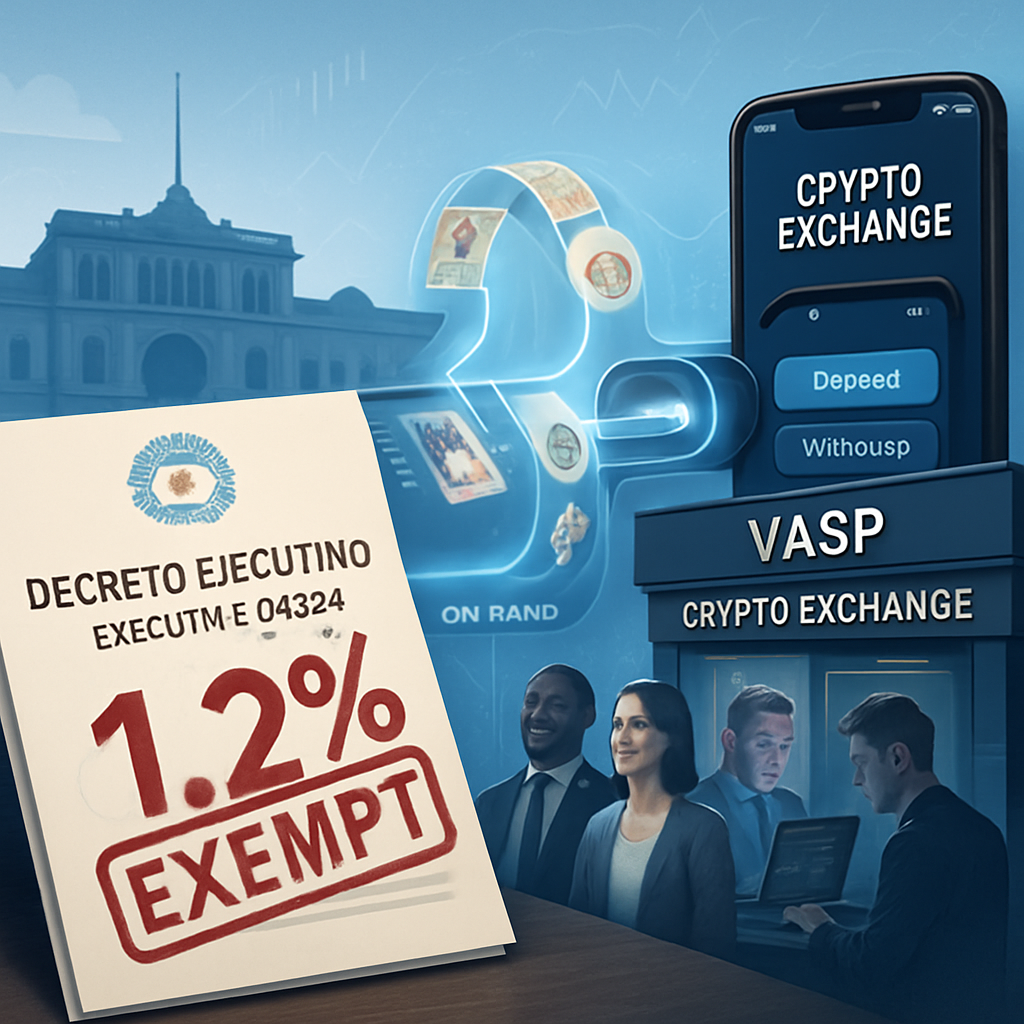
Here are punchy options under 12 words (WordPress-friendly): – Bitcoin News: Milei Exempts Registered Crypto Exchanges From Argentina’s Cheque Tax – Bitcoin News: Milei Drops Cheque Tax for Registered Crypto Exchanges – Bitcoin News: Argentina’s Milei Exempts Registered Crypto Exchanges From Cheque Tax – Bitcoin News: Argentina’s Milei Exempts Crypto Exchanges From Cheque Tax Want me to tailor for a specific keyword (e.g., “Argentina,” “crypto exchanges,” or “cheque tax”)?

Argentina has issued an executive order exempting money flows involving virtual asset service providers (VASPs) from a 1.2% tax, removing the levy on fiat deposits to and withdrawals from crypto platforms. The measure is designed to reduce user costs and bring crypto intermediaries closer to parity with other financial services in the country.

Executive Order Exempts VASP Fiat Flows From 1.2% Tax

The administration of President Javier Milei approved exemptions to the 1.2% tax that applied to transactions involving VASPs, a category that includes crypto exchanges and related service providers. Under the change, users will no longer incur the charge when transferring fiat funds into or out of these platforms.

The adjustment directly benefits retail and institutional users who interact with crypto services via local currency bank rails, trimming the cost of on-ramping and off-ramping and easing friction for market participants.

Why It Matters for Crypto Users and Platforms

  • Lower transaction costs: Removing the levy reduces the effective spread on deposits and withdrawals, particularly for frequent traders and high-volume users.
  • Improved competitiveness: The change helps level the playing field for crypto platforms relative to other financial intermediaries not subject to comparable charges on similar flows.
  • Greater market efficiency: Reduced frictions on fiat transfers can support liquidity and price discovery across local crypto markets.

Regulatory Context

VASPs are entities that facilitate the exchange, transfer, safekeeping, or administration of digital assets. Clarifying how traditional levies apply to their fiat interfaces has been a focal point for jurisdictions seeking to modernize financial rules without stifling innovation. Argentina’s move aligns with efforts to streamline costs associated with digital asset use while maintaining oversight of on- and off-ramps.

What Comes Next

Implementation details, including eligibility criteria and any reporting requirements for service providers, are expected to be clarified as the order takes effect. Market participants will be watching for further guidance to understand the scope of the exemption and ensure compliance.

MEXC Names New CEO, Eyes EU MiCA License

Wellermen Image

MEXC Names New CEO and Eyes EU MiCA License

MEXC just put a new captain at the helm and declared its intent to chase a European license under the Markets in Crypto-Assets rules. The move signals that one of crypto’s most aggressive fee-cutting exchanges is shifting from pure growth mode into regulatory survival mode.

Vugar Usi steps in as CEO with a mandate to expand the exchange’s zero-fee trading program while steering the platform through the costly and complex MiCA licensing process. Europe’s new regime demands strict capital, custody, and transparency standards; exchanges that fail to secure a license risk losing access to one of the world’s largest retail markets.

By pursuing the license now, MEXC is betting that regulatory clarity will outweigh the short-term costs of compliance. Rival platforms that already hold or are close to MiCA approval will face less friction onboarding European users, while non-compliant venues could see liquidity and listings migrate away.

What This Means for Crypto

MiCA turns vague “crypto-friendly” rhetoric into hard rules around reserves, audits, and consumer protections. For traders it means fewer gray-area platforms and potentially higher fees once exchanges pass compliance costs downstream.

Long-term investors gain a clearer legal framework that could attract traditional capital, yet they must accept that smaller or offshore exchanges may delist tokens or restrict services to stay inside the rules. Builders now face a higher bar to list on licensed venues, favoring projects with strong legal and operational hygiene.

Market Impact and Next Moves

Short-term sentiment around MEXC is mixed: the zero-fee push is bullish for volume, but the added regulatory overhead and possible token restrictions could weigh on altcoin liquidity. Watch whether European volumes shift toward already-licensed platforms.

Key risks include execution delays on the MiCA application, sudden policy changes from EU watchdogs, and the chance that fee compression squeezes margins faster than new users arrive. On the opportunity side, a licensed MEXC could capture institutional flow that currently sits on the sidelines waiting for clearer custody standards.

Compliance is becoming table stakes; exchanges that treat it as a cost center instead of a moat risk watching their best customers move to venues that already cleared the regulatory bar.

Congress Probes Crypto’s Power to Challenge China and Russia’s Grip

U.S. House lawmakers will convene a roundtable on June 25 to examine how digital assets could support people living under repressive governments or fragile financial systems, framing broader access to cryptocurrency as a national security consideration, according to a congressional notice issued June 18.

House Roundtable Set for June 25

The session will review whether open blockchain networks and digital assets can preserve access to money and payments when banking rails break down or are restricted. Lawmakers plan to gather input from policy experts and stakeholders on practical use cases, potential harms, and the implications for U.S. interests abroad.

National Security and Financial Freedom

The discussion is expected to explore how digital assets might counter financial repression and surveillance by authoritarian states, including those with tightly controlled banking systems. It will also consider how state-led digital currency models and capital controls intersect with civil liberties, global payments, and the role of the United States in setting financial norms.

Key Issues Under Review

  • Human rights and access: Whether censorship-resistant payments and self-custody tools can help individuals and civil society groups operating under restrictive regimes or amid banking instability.
  • Financial inclusion: The role of stablecoins and crypto rails in cross-border transfers, remittances, and as a potential store of value in high-inflation or capital-controlled environments.
  • Illicit finance and compliance: Risks related to sanctions evasion, money laundering, and terrorist financing, and how to align digital asset policy with existing regulatory frameworks.
  • State-controlled systems: The implications of central bank digital currencies and expanded financial surveillance for privacy, competition, and U.S. strategic interests.

Policy Outlook

Insights from the roundtable could inform future legislative proposals on digital asset oversight, sanctions enforcement, and technology that supports financial freedom and privacy. Lawmakers are expected to weigh the benefits of open networks against risks to consumers and national security, seeking guardrails that preserve innovation while addressing abuse.

Texas Appeals Court Denies Writ, Keeps Envy Blockchain Case in State Court

Wellermen Image Court Blocks Crypto Firm’s Bid to Sidestep Texas Judge

Texas appeals court just slammed the brakes on Envy Blockchain’s attempt to escape a state district judge’s oversight. The Eighth Court of Appeals refused to issue a writ of mandamus that would have forced the lower court to drop or transfer the case. In one brisk order, the panel left the underlying lawsuit parked exactly where it started—under the same Texas judge who first took it up.

The dispute began when investors and co-venturers accused Envy Blockchain, NV Landco 1 LLC, and Stephen DeCani of misusing funds tied to a cryptocurrency-mining operation. Rather than answer those claims in El Paso County, the defendants asked the trial judge to bow out, arguing improper venue or lack of jurisdiction. When that motion failed, they raced to the court of appeals seeking an extraordinary writ that would yank the case away. The appellate panel saw no “clear abuse of discretion” and no “adequate remedy by appeal,” so it denied the petition outright and left the litigation exactly where the plaintiffs filed it.

The ruling means the case stays alive in Texas state court and can now move into discovery, possible class allegations, or even settlement talks without further procedural detour. For the plaintiffs, it is a tactical win that keeps pressure on the company’s officers and assets inside the state. For Envy and its backers, the loss removes one shield and raises the specter of a public trial record that could surface token-sale documents, wallet flows, and internal governance lapses.

In plain terms, a Texas appeals court just told a crypto venture it cannot use procedural maneuvers to dodge accountability in state court. The decision underscores that once plaintiffs plead facts tying a digital-asset venture to Texas soil—bank accounts, marketing, or physical mining rigs—judges are unlikely to hand the matter to another forum without compelling proof.

For the crypto market the order is a quiet warning shot: state courts remain open for business even when federal regulators stay quiet. Companies hoping to lock mining facilities or sell tokens inside Texas now face the tangible risk that local judges will keep jurisdiction and force disclosure of blockchain records. Exchanges and DeFi protocols that route user funds through Texas entities should price in the chance of parallel state-court scrutiny on top of any SEC or CFTC watch-list.

The takeaway is blunt—venue fights are expensive theater; the real exposure for crypto firms is still the underlying conduct alleged in the complaint.

Bitcoin Quantum Risk: Bernstein Says 3–5 Year Window to Upgrade

Wellermen Image

Bitcoin Has Years to Fix Quantum Risk, Says Bernstein

Bitcoin is not about to be cracked by quantum computers tomorrow, but the clock is ticking. Bernstein analysts warn that older wallets holding exposed public keys remain the clearest target, while the broader network still has a 3-to-5-year runway to upgrade its cryptography.

The threat centers on wallets created before address reuse became rare. In those addresses the public key is visible on-chain, giving future quantum machines a head start at deriving the private key. Newer addresses that only reveal a hash are far safer, and the vast majority of Bitcoin’s supply now sits behind them.

Bernstein’s assessment is that an existential break of the entire chain is unlikely. Instead, the real risk is a slow-motion theft of dormant, high-value coins if owners fail to move funds to quantum-resistant addresses once the technology matures.

What This Means for Crypto

Quantum risk is often treated as science-fiction until the first practical machine arrives. Bernstein’s timeline suggests the industry still has time to coordinate a soft-fork or new address standard without panic, but the window is finite and coordination always takes longer than expected.

For everyday holders the message is simple: keep coins in modern addresses and be ready to migrate when quantum-safe wallets become the default. Builders and exchanges will need to integrate post-quantum signatures well before any machine can actually threaten the chain.

Market Impact and Next Moves

Short-term price impact looks muted. The market has seen quantum warnings before and tends to price them as distant tail risks rather than immediate catalysts.

The real risk is complacency. If upgrades lag and headlines intensify, older large wallets could face a liquidity squeeze as holders rush to move coins, creating brief but sharp volatility.

Opportunity lies with teams already shipping quantum-resistant tooling. Early adoption could become a competitive edge once the narrative shifts from “if” to “when.”

Move your coins while the threat is still theoretical; waiting for the first headline could be the most expensive mistake in Bitcoin’s history.

First Circuit Nixes SEC’s Relief-Defendant Tactic in Crypto Case, Returns Gastauer’s Frozen Funds

Wellermen Image SEC Loses Key Relief-Defendant Ruling in Crypto Case

The First Circuit just told the SEC it cannot freeze a German banker’s assets to claw back money from a fraud he never joined. In a swift reversal, the appeals court ripped the agency’s tactic of naming “relief defendants” who hold no legal claim to disputed funds, handing Raimund Gastauer his money back and clipping the SEC’s reach in crypto enforcement actions.

The trouble started when the SEC sued Roger Knox and a web of offshore companies for allegedly running an unregistered crypto exchange and Ponzi-like scheme that raised tens of millions from U.S. investors. Knox and his firms never showed up in court, so a default judgment handed the agency nearly $40 million in disgorgement. To collect, the SEC added Knox’s German uncle, Raimund Gastauer, as a “relief defendant,” claiming he received $1.27 million from the scheme and had no legitimate claim to it. Gastauer fought the label, arguing he was an arms-length investor who simply wired funds to Knox’s entities and later got repaid. The district court sided with the SEC, froze the money, and ordered Gastauer to hand it over.

Judges on appeal saw it differently. They ruled that relief-defendant status requires the SEC to show the recipient lacks any ownership interest or defense to the funds—not merely that the money came from a wrongdoer. Because Gastauer had a facially valid contract claim against the Knox entities, the court held, the agency could not treat him like a passive wallet. The panel vacated the disgorgement order against him and told the SEC to return the frozen assets.

In plain English, the First Circuit just narrowed the government’s shortcut for grabbing crypto-tainted money from third parties. The SEC can still sue actual fraudsters, but it can no longer assume that every downstream recipient is fair game without proving unjust enrichment.

For markets, the decision tilts power back toward exchanges, market makers, and liquidity providers who touch customer or protocol funds. It raises the bar the agency must clear before freezing wallets or bank accounts in enforcement sweeps, potentially slowing cases against DeFi mixers, OTC desks, and offshore stablecoin issuers. Traders and funds now have a stronger shield when they receive payments from counterparties later accused of fraud, lowering the risk that legitimate trading gains get clawed back years later.

The ruling signals that the SEC’s expansive use of relief defendants in crypto cases will face tougher scrutiny, forcing the agency to build stronger unjust-enrichment cases or risk watching its recovery targets slip away.

Bitcoin Bulls Flood Binance as $90K Target Emerges

Wellermen Image

Bitcoin Buyers Flood Binance as $90K Target Emerges

Bitcoin is showing fresh signs of life as aggressive buying volumes surge on Binance, pushing the market closer to the long-awaited $90,000 level. The move comes amid broader signs that buyers are stepping back into control after weeks of hesitation. For traders watching order flow, the shift is hard to ignore.

The spark came from on-exchange data showing a clear tilt toward aggressive buy orders, with Binance seeing sustained volume from traders willing to pay up rather than wait for dips. This isn’t quiet accumulation — it’s visible pressure that lifts price in real time. Bitcoin has already clawed back key levels, and the $90K mark now sits as the next psychological and technical hurdle.

Who benefits here is obvious: holders and leveraged bulls riding the momentum. Losers are those still short or sitting on the sidelines waiting for a deeper correction that keeps failing to arrive. The change now is psychological — once $90K becomes the conversation, it starts shaping positioning across desks and retail screens alike.

What This Means for Crypto

Aggressive buying on a major exchange like Binance often signals conviction rather than speculation. When buyers dominate volume, it usually means capital is entering with intent instead of testing the waters. This matters because it can flip neutral or bearish sentiment faster than macro news alone.

For traders, the signal is simple: momentum is back on the long side until proven otherwise. Long-term investors see this as confirmation that demand is still alive above current prices. Builders and projects tied to Bitcoin’s narrative get an indirect boost as attention and liquidity rotate back into the dominant asset.

The risk is leverage. Binance volumes can flip quickly if profit-taking hits or if external shocks — regulatory noise, macro surprises — trigger liquidations. What looks like strength can unravel fast when too many positions pile in at once.

Market Impact and Next Moves

Short-term sentiment leans bullish as long as buy-side aggression holds. The market is pricing in a test of $90K, and every higher tick reinforces that narrative. Mixed signals would only appear if volume suddenly dries up or sellers re-enter with size.

Key risks include over-leveraged positions building too quickly and any sudden regulatory headline that could spark a cascade. Liquidity remains the real gatekeeper — if Binance flow stays heavy, dips get bought; if it fades, the same levels that looked supportive can turn into resistance.

Opportunity sits in the momentum itself. Bitcoin breaking into price discovery above recent highs tends to pull capital from altcoins and stablecoins back into BTC, setting up the classic “Bitcoin season” rotation that often precedes broader market moves.

Watch the order flow on Binance — when aggressive buyers stay dominant, $90K stops being a hope and starts looking like the next stop.

Seventh Circuit Expands CFTC Reach, Accelerating Crypto Investigations

Wellermen Image CFTC’s Courtroom Win Hands Regulators New Edge Over Crypto

The Seventh Circuit just handed the Commodity Futures Trading Commission a rare procedural victory, ordering Kraft Foods and Mondelēz to hand over internal documents that the agency claims will prove price manipulation in wheat futures. The ruling matters because it strengthens the CFTC’s investigative muscle at the exact moment crypto markets are being pulled into the same regulatory orbit.

Kraft and Mondelēz had refused to comply with CFTC subpoenas, arguing the agency was fishing for documents outside its statutory reach. When a district judge sided with the companies, the CFTC petitioned the appeals court for a writ of mandamus—an extraordinary remedy usually reserved for clear legal error. The Seventh Circuit found the lower court’s refusal “clearly and indisputably” wrong, holding that the CFTC’s enforcement power under the Commodity Exchange Act is broad enough to cover pre-litigation document demands and that judicial second-guessing of such demands is sharply limited.

The companies lose the ability to stonewall and must now produce records that could expose trading strategies and internal communications. The CFTC wins a precedent that lowers the bar for future investigations, while traders and exchanges lose another layer of procedural protection against agency fishing expeditions.

In plain English, the court told judges to step back and let the CFTC decide what documents it needs. That translates into faster, wider-ranging probes with fewer court-imposed guardrails—exactly the environment in which crypto enforcement actions are expected to multiply.

The decision tilts authority further toward the CFTC at the expense of market participants who value privacy and predictability. Exchanges and DeFi protocols now face an agency emboldened to demand trading records, wallet data, and algorithmic strategies with reduced judicial oversight. Stablecoin issuers and token projects already under CFTC scrutiny should expect quicker and more intrusive document sweeps, while traders will price in higher compliance risk and potential front-running by regulators armed with real-time position data.

For crypto markets, the message is blunt: procedural shields are shrinking, and the CFTC’s investigative reach just got longer.

Coinbase’s Everything Exchange Expands With Pre-IPO Perps, Stock Options, Tokenized Stocks

Coinbase is accelerating its push to become an “everything exchange,” unveiling pre-IPO perpetual futures, stock options, and plans to introduce tokenized stocks. The expansion marks a move beyond traditional crypto spot trading as the company broadens its multi-asset offering. Coinbase Global Inc. (Nasdaq: COIN) said the additions advance its strategy to serve a wider range of investors and trading strategies.

New Products and Features

  • Pre-IPO perpetual futures: Derivative contracts designed to let traders speculate on the value of private companies ahead of a public listing, without expiry dates typical of traditional futures.
  • Stock options: Options linked to equities, enabling investors to express views on direction, volatility, or hedge exposure using standardized contracts.
  • Tokenized stocks (planned): Digital tokens intended to mirror the price performance of publicly listed shares. These instruments are typically structured to provide price exposure rather than direct shareholder rights.

Broader Strategy

The product rollout supports Coinbase’s stated goal of evolving into a comprehensive marketplace for multiple asset classes, not just cryptocurrencies. By introducing equity-linked derivatives and preparing tokenized stock offerings, the company is positioning its platform to capture demand from traders seeking both crypto-native and traditional market exposure in one venue.

Regulatory and Market Context

Equity-linked derivatives and tokenized stock products operate within complex regulatory frameworks and often vary by jurisdiction. Access, listing scope, and investor eligibility for these instruments typically depend on local laws and licensing requirements. Market participants will watch how Coinbase structures compliance and disclosures as it expands into areas that intersect with securities regulation.

Outlook

With pre-IPO perpetuals and stock options live and tokenized stocks on the roadmap, Coinbase is broadening its toolkit for traders and institutions. The company’s “everything exchange” strategy suggests further convergence of digital assets and traditional finance on a single platform, subject to regulatory approvals and market demand.

SEC Revives 1989 Bilzerian Injunction, Signals Crypto Crackdown

Wellermen Image SEC Revives 1989 Bilzerian Injunction, Signals Crypto Crackdown

The D.C. District Court just dusted off a 22-year-old injunction against convicted stock manipulator Paul Bilzerian, ruling that his family’s 2014 attempt to dissolve the asset-freezing order violated the original decree. The decision matters because it shows how aggressively the SEC can still enforce ancient judgments and how little tolerance judges have for creative corporate structures that try to move money out of reach.

The case began in 1989 when the SEC sued Bilzerian for securities fraud tied to his hostile takeover attempts. A 2001 permanent injunction barred him, his wife, and any “persons acting in concert” from starting new lawsuits or asset transfers that could frustrate the Commission’s collection efforts. In 2014, Bilzerian’s wife and son created B&B Xpress Inc. in St. Kitts and filed a motion in Florida state court to terminate the freeze. The SEC argued this maneuver violated the injunction; the defendants claimed the injunction had expired or could not bind foreign entities. Judge Royce Lamberth rejected both arguments, holding that the injunction remains in force and that the family’s actions constituted an improper collateral attack on a federal judgment.

Bilzerian and his relatives lose; the SEC wins broader enforcement power. The ruling keeps the asset freeze intact, prevents the family from using offshore vehicles to sidestep collection, and warns that anyone—even non-parties—who knowingly assists in evading the order can be held in contempt. Practically, the decision closes a procedural escape hatch that Bilzerian’s camp had counted on for nearly a decade.

In plain terms, the court said an old SEC win is still a win. Once a federal judge freezes assets to satisfy a judgment, defendants cannot simply incorporate abroad or file parallel state actions to unwind it. The injunction functions like a continuing gag order on litigation and asset movement, and violations anywhere in the world can be punished back in D.C.

For crypto markets the message is unmistakable: the SEC’s institutional memory is long and its tools durable. If tokens or wallet keys are deemed proceeds of fraud or unregistered offerings, the agency can lock them up under decades-old orders and chase them across borders or through new legal entities. Exchanges and DeFi protocols that custody such assets face secondary liability risk; traders who think anonymity or offshore wrappers provide permanent shelter may learn otherwise when an old judgment resurfaces.

Old injunctions never truly die—they just wait for the next wallet.

Supreme Court Narrows SEC’s Crypto Reach, Says Token Sales Aren’t Automatic Securities

Wellermen Image COURT SLAPS SEC, HANDS CRYPTO A RARE WIN

The Supreme Court just clipped the SEC’s wings on crypto enforcement, ruling that most digital asset sales do not automatically qualify as securities offerings. In a swift 6-3 decision, the justices rejected the agency’s broad “investment contract” theory, forcing regulators to prove each token meets the Howey test rather than treating every sale as a presumptive violation. Markets rallied on the news, but the victory is narrower than it looks.

The lawsuit began when the SEC sued a mid-tier exchange for listing unregistered tokens, arguing the mere act of offering digital assets to retail buyers met the definition of an investment contract. Lower courts split, with one panel embracing the agency’s view and another demanding evidence of profit expectations tied to the promoter’s efforts. The justices granted certiorari to settle whether crypto sales should be judged under the same flexible standard applied to orange groves and whiskey warehouse receipts, or whether the SEC needed a tighter statutory hook.

Writing for the majority, Justice Kagan held that the securities laws require a showing of “reasonable expectation of profits derived from the efforts of others,” and that this test cannot be satisfied by marketing hype alone. The Court found the SEC’s enforcement theory stretched the statute beyond Congress’s text, creating due-process problems for issuers who had no clear notice their tokens would be reclassified retroactively. Three justices dissented, warning that the ruling would gut retail protections and invite regulatory arbitrage.

In plain English, the SEC can no longer treat every token launch as an unregistered securities offering without doing the homework. Issuers now have a fighting chance to structure distributions that fall outside the agency’s reach, provided they avoid explicit profit promises and limit promoter control. The decision does not legalize fraud, but it shifts the burden back to regulators to build case-specific records rather than relying on blanket theories.

The ruling tilts power away from the SEC and toward the CFTC on purely commodity-like tokens, easing pressure on decentralized exchanges and liquidity providers who feared retroactive registration demands. Stablecoin issuers may still face banking scrutiny, but the threat of automatic securities liability recedes; centralized platforms gain breathing room to list tokens that lack clear profit-sharing mechanics. Traders should expect lighter enforcement waves on smaller assets, yet large, heavily marketed projects remain exposed if promoters continue promising ecosystem returns. DeFi protocols that never sell tokens directly are the clearest winners, while any exchange still hosting aggressive ICO-style marketing should reassess compliance fast.

The SEC just learned it cannot outrun statutory limits by redefining old words; issuers who read the opinion as total deregulation will learn the same lesson the hard way.

Zcash Soars 30% on Ceasefire Hopes, Yet History Warns of a Trap

Wellermen Image

Zcash Surges 30% on Ceasefire Hopes, But History Warns of a Trap

Zcash (ZEC) ripped 30% higher this week as U.S.–Iran ceasefire rumors spread through crypto Twitter, turning a privacy coin into the market’s sudden momentum leader. The move mirrors sharp rebounds ZEC posted during the 2021 bear market, when quick 25-40% pops were almost always followed by steeper drops. Traders are now watching whether this is a genuine shift or simply another liquidity trap.

The spark came from unconfirmed reports of de-escalation between Washington and Tehran, which lifted risk assets across the board. ZEC’s privacy narrative got an extra boost because investors often treat it as a hedge when geopolitical tensions rise, pushing volume sharply higher on Binance and several offshore exchanges. Within hours, the token climbed from roughly $28 to above $36 before stalling near resistance.

Price action alone does not reveal winners and losers, but the pattern does. Short-term momentum traders who bought the headline are sitting on gains, while anyone who chased late faces the same setup that produced 40% corrections in 2021. Long-term holders gain nothing concrete yet because no protocol upgrade or adoption catalyst accompanied the move. Exchanges collecting trading fees win either way.

What This Means for Crypto

ZEC remains a niche privacy asset whose value still hinges more on macro fear than on actual usage growth. A ceasefire rumor is not a structural change, so the token’s fundamentals—shielded transactions, limited developer activity, and thin real-world adoption—have not improved overnight. Traders should treat the move as sentiment-driven rather than a sign that privacy coins are entering a new bull phase.

For builders and long-term investors the lesson is simple: geopolitical headlines create volatility but rarely create durable demand. Unless Zcash sees renewed developer funding or clearer regulatory clarity around privacy tools, price spikes like this are likely to remain short-lived trading events rather than turning points.

Market Impact and Next Moves

Short-term sentiment is mixed at best. The 30% pop shows that liquidity is still hunting narratives, yet the resemblance to 2021 bear-market rallies suggests the move could fade fast if broader risk appetite cools. Leverage traders should watch funding rates and open interest closely—both tend to spike right before these relief bounces reverse.

The clearest risk is a rapid unwind once the ceasefire story loses steam or profit-taking hits. Liquidity remains thin outside the largest exchanges, so slippage on the way down could be severe. On the opportunity side, any sustained break above the recent high would invalidate the bear-trap thesis and could draw dip-buyers hunting privacy exposure ahead of potential regulatory fights in 2025.

Watch the next two weeks: if ZEC gives back more than half its gains on declining volume, history suggests another leg lower is probable.

×