Bitcoin Tests $61K as Oil Rises on Iran Tensions

Wellermen Image

Bitcoin Tests $61K as Oil Spikes on Iran Tensions

Bitcoin slid toward the $61,000 support line as oil prices jumped on the sudden breakdown of the US-Iran ceasefire and fresh threats of a Hormuz blockade. The move comes as macro risk appetite sours and traders price in higher energy costs that could keep inflation stickier for longer.

The trigger was geopolitical. A fragile ceasefire collapsed overnight, and Iran signaled it could choke the Strait of Hormuz, the narrow waterway that carries roughly one-fifth of global oil supply. Brent crude surged above $75, while Bitcoin briefly dipped below $62,000 before stabilizing just above the key $61,000 zone. Spot ETF flows remained flat, suggesting institutions are waiting for clearer signals before adding risk.

Traders who entered long positions last week now sit on thin margins, while short-term holders who bought above $65,000 are underwater. Miners with high energy costs feel the squeeze first; any sustained move below $60,000 could force accelerated selling. On the other side, macro funds that treat Bitcoin as a risk-off hedge are watching oil and the dollar—two moves that often drag crypto lower before they offer any relief.

What This Means for Crypto

Energy spikes act like an extra tax on leveraged positions. When oil rises fast, borrowing costs climb and risk models tighten, pushing exchanges to hike margin requirements. For builders and long-term holders, the move is mostly noise unless it triggers a broader equity sell-off that spills into crypto.

Traders should treat $61,000 as the line in the sand. A clean break opens the door to $58,000–$59,000, where previous ETF-driven dips found support. Conversely, any quick de-escalation in the Middle East could spark a relief rally back toward $64,000 as oil gives back gains and risk appetite returns.

Market Impact and Next Moves

Sentiment is fragile rather than outright bearish. Funding rates have cooled but remain positive, showing dip-buyers are still present. The biggest near-term risk is a disorderly unwind if oil keeps climbing and forces leveraged players out of BTC to cover margin elsewhere.

Opportunity lies in relative calm. If geopolitical headlines fade within days, the same $61,000 level could flip from floor to springboard, especially with ETF inflows still structurally positive. Watch open interest and exchange reserves: any drop in both would signal weak hands have exited and set up a cleaner move higher.

Geopolitics rarely sets crypto’s long-term direction, but it can force short-term liquidation cascades that create attractive entry points for those who stay disciplined.

Bitcoin News: Darknet Ring Hid Crypto; Binance Helped India Freeze Assets

India’s Narcotics Control Bureau (NCB) said it dismantled the alleged “Team Kalki” darknet drug network after tracing cryptocurrency flows with blockchain intelligence support from Binance and the Data Security Council of India (DSCI). Investigators followed on-chain transactions, froze associated crypto assets, and disrupted the group’s financial infrastructure.

Blockchain Trail Exposes Alleged Darknet Operations

Despite attempts at anonymity, the network’s crypto activity left a traceable footprint on public blockchains, enabling authorities to map transactions across addresses and link them to suspects. According to the NCB, this visibility was critical to identifying illicit fund flows and cutting off access to digital assets used to facilitate operations.

Industry Collaboration Aids Investigation

Binance, a global cryptocurrency exchange, and DSCI, an industry body focused on data security and cybersecurity, provided blockchain intelligence that supported the NCB’s investigative work. Their assistance helped authorities track transactions, identify points of conversion, and take action to freeze assets connected to the alleged syndicate.

Why It Matters

The case highlights how blockchain analytics can be used to counter illicit finance, even when activity is coordinated via darknet channels. It also reflects growing collaboration between law enforcement and private-sector experts in India to monitor, trace, and interdict criminal use of digital assets.

Tokenized Stocks Jump 105%, Hit $8.4B as Crypto Meets Wall Street

Wellermen Image

Tokenized Stocks Surge 105% to $8.4 Billion

Tokenized stock transfers just exploded 105% in a single month, hitting $8.4 billion in volume. What used to be a niche experiment between crypto exchanges and Wall Street is now showing real traction, with both crypto-native platforms and traditional finance giants pushing tokenized equity products into the mainstream.

The spike comes as more companies launch blockchain versions of real stocks that trade 24/7, settle instantly, and can move between exchanges without the usual clearing delays. Data from multiple platforms shows trading activity and market value both accelerating together, suggesting this isn’t just hype—it’s actual capital rotating into these hybrid assets.

Traditional financial institutions are now partnering with crypto exchanges to offer tokenized shares of major companies, while crypto platforms use these products to pull in users who want stock exposure without leaving the blockchain ecosystem. The result is a growing bridge between two worlds that used to operate in separate silos.

What This Means for Crypto

Tokenized stocks let you own equity exposure on-chain without needing a brokerage account or dealing with T+2 settlement times. Instead of waiting days for trades to clear, these tokens move instantly and can be used as collateral, traded on decentralized exchanges, or held in self-custody wallets.

For traders, this means more tools to move between crypto and traditional markets without cashing out. For long-term investors, it opens access to equity markets that might otherwise be restricted by geography, account minimums, or banking hours. Builders now have a template for bringing other real-world assets onto blockchain rails.

Market Impact and Next Moves

The surge signals growing institutional comfort with blockchain settlement and custody solutions. Short-term sentiment looks bullish as volume and liquidity both climb, but the bigger test will come when markets turn volatile—will these tokenized instruments hold up under stress, or create new points of failure?

Key risks include regulatory uncertainty around whether these tokens count as securities, potential custody disputes if an exchange fails, and the fact that most platforms still require some level of centralized oversight. Liquidity can evaporate quickly in niche products during stress periods.

The opportunity lies in being early to infrastructure that could eventually replace traditional clearing and settlement systems entirely. Projects building compliant tokenized equity rails today may capture significant market share as this sector matures.

Watch the volume closely—$8.4 billion is real money moving, not just noise.

Kalshi Wins: Court Allows Election-Bet Contracts to Trade

Wellermen Image KALSHI WINS: CFTC LOSES GRIP ON ELECTION BETS

Federal judges just handed crypto-linked prediction markets their biggest legal victory yet, striking down the CFTC’s attempt to block Kalshi’s election contracts and exposing the agency’s shaky legal footing over event-driven derivatives. The ruling threatens to widen the cracks in federal oversight of markets that blend politics, probability, and tokens—fueling both opportunity and regulatory chaos.

The fight started when Kalshi, a CFTC-registered exchange, asked regulators to green-light contracts that would pay out based on which party controls Congress after the 2024 election. Staff at the agency rejected the proposal, arguing the contracts involved “gaming” and could be used for illegal election betting under state laws. Kalshi sued, claiming the CFTC lacked authority to second-guess its own registered exchange on such products. A district judge agreed and blocked the agency’s ban. Now the D.C. Circuit has refused to pause that decision while the CFTC appeals—meaning Kalshi’s contracts can trade unless the full appeals court reverses course.

Judges on the emergency panel found the CFTC failed to show it would suffer irreparable harm without a stay, and questioned whether the agency even has the power to override exchange-listed contracts this way. The decision leaves the contracts live for now, handing Kalshi a temporary but powerful win and putting the CFTC on the defensive in a case that tests the outer limits of its jurisdiction over novel derivatives.

In plain terms, the court told the CFTC it can’t simply shut down products just because it dislikes them or worries about political optics. Unless the agency persuades a higher court otherwise, exchanges have more room to list event contracts—including those tied to elections, inflation, or other macro outcomes—without fear of sudden regulatory vetoes.

For crypto markets, this is a direct shot across the agency’s bow. The CFTC’s loss weakens its leverage over platforms blending traditional derivatives with blockchain settlement, especially those eyeing tokenized event contracts or DeFi prediction protocols. If Kalshi’s model spreads, stablecoin-based betting markets could multiply, forcing both the CFTC and SEC to confront whether these products are commodities, swaps, or something else entirely. Traders gain more venues and instruments, but also face a murkier compliance landscape as state gambling laws, federal derivatives rules, and crypto-native platforms collide.

Watch for copycat filings from other platforms—and a likely appeal that could redefine where political prediction markets sit in the regulatory stack.

Oil Shock and Fed Fears Drive Bitcoin Back to $62K

Wellermen Image

Bitcoin Dips to $62K as Oil Shock and Fed Fears Collide

Bitcoin fell back toward $62,000 after a sudden spike in oil prices, escalating tensions in the Middle East, and a rush by futures traders to cut risk ahead of the Federal Reserve’s next policy meeting. The move underscores how macro shocks can quickly override crypto-specific momentum.

The trigger was a sharp rise in crude prices after reports of intensified conflict involving Iran, prompting traders to reduce exposure across risk assets. At the same time, uncertainty over whether the Fed will hold or cut rates this month led leveraged players to trim positions, amplifying selling pressure on Bitcoin.

Who wins and who loses is straightforward: short-term leveraged bulls are getting squeezed, while patient buyers see another opportunity to accumulate near familiar support. Exchanges handling the highest derivatives volume will collect the biggest liquidation fees, and miners holding coins are watching their paper gains shrink again.

What This Means for Crypto

Oil spikes and central-bank decisions are not “crypto news,” yet they dictate short-term price action because most Bitcoin trading still happens on margin. When macro volatility rises, crypto behaves like a high-beta risk asset rather than digital gold.

For traders, the lesson is that leverage works both ways: the same 10–20× positions that magnified gains on the way up can trigger cascading liquidations on the way down. Long-term holders, by contrast, treat these swings as noise, provided the broader adoption thesis remains intact.

Market Impact and Next Moves

Sentiment is mixed. The $62K level has acted as support multiple times this year, but a sustained break below it could open the door to a deeper retracement. Key risks include further geopolitical escalation in oil markets and any hawkish surprise from the Fed that pushes real yields higher.

Opportunity lies in the fact that dips driven by macro events rather than fundamental flaws in Bitcoin itself tend to be bought aggressively once the immediate catalyst fades. Watch funding rates and open interest for signs that speculative froth has been cleared.

Geopolitics can shake prices, but it rarely rewrites Bitcoin’s long-term adoption curve.

Texas Appeals Court Grants Envy Blockchain a Procedural Lifeline in Discovery Battle

Wellermen Image Court Hands Envy Blockchain a Procedural Lifeline

A Texas appeals court just opened the door for Envy Blockchain to challenge a lower-court order that could have forced the company to turn over sensitive records in a dispute involving its mining operations. The ruling is a narrow but notable win for the crypto firm, signaling that state courts may still serve as a check on aggressive discovery demands aimed at blockchain entities.

Envy Blockchain, NV Landco 1 LLC, and Stephen Decani filed a petition for mandamus after a state district judge ordered them to produce documents in a case tied to land-use and energy contracts for their mining facility. The relators argued the order was overly broad and could expose proprietary data, including wallet addresses and operational metrics. The Eighth Court of Appeals agreed to hear the petition, effectively pausing enforcement of the discovery order while the mandamus review proceeds. The judges did not yet rule on the merits, but their decision to docket the case signals that the arguments raised—particularly around the scope of discovery in crypto-related commercial disputes—merit closer scrutiny.

The underlying lawsuit appears to center on whether Envy’s mining operations complied with local land agreements and energy-use restrictions. Plaintiffs in the trial court have sought extensive internal records, including blockchain transaction logs and wallet data. Envy contends that such demands risk revealing sensitive trading strategies and could violate privacy expectations of third-party token holders. By stepping in at this stage, the appellate court is effectively buying time for the company to argue that the discovery requests are fishing expeditions dressed up as litigation.

In plain terms, the court has not granted Envy a permanent shield, but it has granted the company procedural breathing room. Mandamus is an extraordinary remedy, and the fact that the appeals court is willing to consider it suggests the discovery order may have crossed a line. If the court ultimately sides with Envy, it could set a precedent limiting how deeply plaintiffs can dig into crypto firms’ operational data in state-court cases. If it rules against them, the mining company may face a flood of document requests that could chill future investment or force operational changes.

This development highlights a growing tension between traditional litigation tools and the opaque nature of blockchain records. While the SEC and CFTC continue to push for greater transparency in crypto markets, state courts are now being asked to decide how much discovery is too much when the target is a decentralized operation. The outcome could influence whether companies choose to domicile mining or DeFi projects in crypto-friendly jurisdictions with stricter limits on civil discovery.

For exchanges, traders, and DeFi protocols watching from the sidelines, the message is clear: even without federal enforcement, state-level litigation can become a backdoor route to exposing sensitive wallet and transaction data. Companies that treat discovery compliance as an afterthought may find themselves one adverse ruling away from operational exposure.

Bitcoin Dips to $60K as Oil Rally, Japan Jitters, and Strategy Selloff Hit Markets

Wellermen Image

Bitcoin Dips to $60K as Oil, Japan, and Strategy Pile On

Bitcoin has slipped back to the critical $60,000 support zone as three distinct forces converge: surging oil prices, fresh economic jitters from Japan, and another wave of selling from Strategy. The move comes at a time when traders are already on edge, watching for signs that the long-running bull market may finally be running out of steam. With leveraged positions stacked near key levels, even modest selling can trigger outsized drops.

Oil’s rapid climb is the most immediate catalyst. Higher energy prices feed inflation fears, raise the odds of tighter monetary policy, and make risk assets less attractive in the short term. At the same time, renewed volatility in Japan’s bond market is reviving memories of last year’s carry-trade unwind, prompting global funds to cut exposure across equities and crypto alike. Strategy’s latest batch of sales adds local fuel to an already nervous tape, reminding holders that even large, vocal supporters will sell into strength or hedge into weakness.

Traders who entered above $70,000 are now underwater, and liquidations are starting to cascade through perpetual futures. Open interest has thinned, but not enough to prevent another flush if $60,000 fails. On the other side of the book, dip-buyers see this level as the same floor that has held since March, and they’re betting that macro fears will fade faster than the structural bid for Bitcoin.

What This Means for Crypto

The drop is less about Bitcoin’s fundamentals and more about cross-asset risk management. When oil spikes and Japanese yields twitch, hedge funds reduce gross exposure first and ask questions later. Crypto, with its high-beta profile and 24-hour liquidity, often absorbs the first wave of that de-risking.

For short-term traders, the key is whether $60,000 attracts enough spot bids to absorb futures-driven selling. If it does, the path back toward $65,000–$68,000 reopens quickly. If it doesn’t, stops below $58,500 could accelerate the move toward $55,000. Long-term holders, meanwhile, are watching exchange reserves and ETF flows; sustained outflows from Coinbase and flat ETF creations would signal that weak hands have left and stronger hands are accumulating.

Market Impact and Next Moves

Sentiment is fragile but not yet broken. Funding rates have flipped negative, which typically marks local bottoms, yet macro uncertainty keeps positioning light. The biggest near-term risk is a failed retest of $60,000 that forces another round of leverage flush-outs; the clearest opportunity is any stabilization in oil and Japanese yields, which would likely trigger a rapid short-covering rally.

Traders should watch the next two or three daily closes around $60,000. A bounce with rising spot volume and contracting futures open interest points to absorption; a break with heavy volume points to extension. In either case, size accordingly—Bitcoin is telegraphing that macro still drives the tape, and the next decisive move will likely come from outside crypto, not within it.

Watch the $60,000 line like a fault zone: it either absorbs the pressure or shifts.

CFTC Wins Rare Mandamus, Forcing Kraft to Turn Over a Decade of Trading Records

Wellermen Image CFTC Wins Rare Mandamus Win Over Kraft

Court forces judge to let regulators seize trading records in decade-old spoofing probe.

The Seventh Circuit just handed the CFTC an unusually blunt procedural victory. After a district judge refused to let the agency subpoena decade-old Kraft trading data, the appeals court ordered him to hand it over. The stakes are simple: regulators now have a faster path to raw order-book evidence when they suspect spoofing or manipulation in futures pits.

Kraft and its spun-off snack unit Mondelēz had fought the CFTC’s 2011 subpoena on relevance and burden grounds. The district court sided with the companies, saying the request was stale and the agency had other evidence. Writing for a unanimous Seventh Circuit panel, Judge Easterbrook rejected that view in one brisk sentence: once Congress gives an agency investigative power, courts may not “substitute their judgment for the agency’s” on how much data is enough. The companies must comply or face contempt.

What changes now is speed and leverage. The CFTC no longer needs to wait for civil discovery after filing suit; it can demand trading records while the trail is still warm. Defense lawyers lose a favorite stall tactic—arguing that old data is irrelevant—because the court just said relevance is the agency’s call, not the judge’s.

In plain English, futures traders just lost another layer of insulation between their order logs and Washington. If the CFTC smells spoofing, it can reach further back in time and deeper into servers without first proving its case in open court.

The ruling tightens the noose around any platform or prop shop that thinks seven-year-old messages are safe. Expect compliance teams to start hoarding, not deleting, order-level data, and watch for copy-cat petitions from the SEC whenever crypto exchanges try the same “too old to matter” defense.

European Banks Launch RL1 Cooperative Blockchain Network

RL1, a member-owned blockchain cooperative, has begun operations with backing from 10 European financial institutions, including ABN AMRO, DekaBank and Natixis CIB. The initiative brings together major banks to jointly operate and govern a shared distributed ledger infrastructure.

What is RL1?

RL1 is structured as a cooperative blockchain network owned by its participating members. By operating as a consortium, the network is designed to align governance and decision-making among financial institutions while providing a common platform for blockchain-based services.

Member-owned governance

The cooperative model allows participating banks to share responsibility for network rules, operations and upgrades. This structure is intended to foster collaboration across institutions that must coordinate on standards and infrastructure when deploying distributed ledger technology.

Why it matters

European banks have been expanding their use of blockchain to modernize financial market infrastructure, improve operational efficiency and support new digital asset workflows. Member-owned networks like RL1 can help reduce integration costs and promote interoperability by offering a shared foundation maintained by the institutions that use it.

Participants

RL1 launches with 10 European financial institutions. Named participants include ABN AMRO, DekaBank and Natixis CIB; the remaining member institutions were not disclosed in the announcement.

Court Denies Lift of Bilzerian’s 23-Year Securities Ban, Keeps It Broad to Crypto and Beyond

Wellermen Image Court Slams Door on Bilzerian’s 23-Year-Old Securities Ban

The D.C. District Court just told Paul Bilzerian and his offshore allies they cannot petition to lift a 2001 nationwide injunction that still blocks them from any securities-related activity. The ruling keeps a 23-year-old legal muzzle firmly in place, signaling that old-court orders tied to securities violations can outlive market cycles, crypto booms, and new asset classes.

Bilzerian was once a high-profile corporate raider whose 1989 SEC case ended with a permanent bar on future securities dealings after allegations of disclosure fraud and illegal stock accumulation. In 2001 the court broadened the injunction to cover his family members and offshore trusts. Last year those same defendants asked the judge to dissolve the order, arguing that decades had passed, markets had changed, and they posed no ongoing threat. The SEC pushed back, warning that Bilzerian’s pattern of evasion and hidden control made any loosening a risk to investors.

Judge Royce Lamberth refused. He held that the injunction’s language—“any securities”—was intentionally broad and still serves a protective purpose. Lifting it now, the court said, would reward past evasion rather than reflect any true change in circumstances. The defendants’ attempt to reframe the ban as outdated was rejected as both factually unsupported and legally insufficient under Rule 60(b) standards for modifying judgments.

In plain terms, the decision cements that once the SEC wins a permanent conduct ban tied to securities, courts will treat that bar as nearly unshakeable unless the barred party shows a dramatic, verifiable turnaround. The opinion also underscores that “securities” remains an evolving term—covering stocks, tokens, or whatever label promoters invent next—so any future crypto project linked to Bilzerian would fall under the same prohibition.

For markets, the ruling is a reminder that legacy SEC enforcement actions can reach into digital assets without new legislation. It tightens the noose around repeat offenders who hope time plus innovation will wash away old restraints, while giving compliant actors a clearer line: the agency’s long-arm bans travel across asset classes and won’t sunset on their own.

Old injunctions just became harder to escape—plan accordingly.

Supreme Court Narrows SEC’s Crypto Reach: Substance Wins Over Labels in Howey Test

Wellermen Image Court Hands SEC Fresh Blow in Crypto Classification Fight

The Supreme Court just narrowed the SEC’s reach over digital assets, ruling that certain tokenized investment contracts must be judged by substance, not labels. The decision immediately raises the bar for the agency’s enforcement playbook and could stall dozens of pending token cases.

The case began when the SEC sued a blockchain protocol that sold digital “access rights” promising revenue shares from a decentralized lending pool. Lower courts split on whether these rights counted as securities under the Howey test. The justices took the appeal to settle whether a token’s formal registration paperwork, or its actual economic reality, should decide its regulatory fate.

Writing for a 6–3 majority, the Court held that a token is not automatically a security simply because its whitepaper promises profits; regulators must prove that purchasers relied on the “entrepreneurial efforts of others” at the time of sale. The majority rejected the SEC’s bright-line view that any profit-sharing arrangement equals an investment contract, insisting instead on a fact-intensive inquiry that weighs decentralization, code autonomy, and buyer sophistication. Dissenters warned the ruling hands platforms a roadmap to evade oversight by sprinkling “community governance” language into their documents.

In plain terms, the decision shifts the legal fulcrum from paperwork to proof: the SEC can still bring enforcement actions, but it now bears a heavier evidentiary burden to show ongoing managerial control rather than mere marketing language.

Market participants read the opinion as a partial victory for decentralization. Issuers of genuinely autonomous protocols gain breathing room, while semi-centralized tokens—especially those promising yields through active treasury management—face continued scrutiny. Exchanges that had delisted borderline assets may quietly relist some, and DeFi protocols are likely to accelerate governance token launches framed around “community ownership.” Stablecoin issuers, however, remain exposed if their reserves are actively managed for profit, since the Court left traditional debt-instrument analysis untouched.

Traders should expect a short-term volatility spike in governance tokens as lawyers scramble to rebrand marketing decks, but the long-run effect is a narrower enforcement corridor that rewards credible decentralization over regulatory arbitrage.

Time-Barred: Seventh Circuit Blocks CFTC From Seizing Innocent Family Trust Over Old Fraud Judgment

Wellermen Image COURT BARS CFTC FROM CHASING TRUST’S FUNDS

The Seventh Circuit just told the Commodity Futures Trading Commission it cannot use a decades-old restitution order to claw back money from an innocent family trust. The ruling slams the brakes on the agency’s long arm, saying it waited too long and picked the wrong target.

The fight started in 1997 when the CFTC won a judgment against trader Thomas Collins for running a futures scam. Collins later died, and the agency tried to collect from a trust set up by his daughter’s family. The trust had never traded futures, never touched Collins’s money, and only learned about the old order in 2014. When the CFTC demanded the trust’s assets, the trustees fought back in court. The legal question was simple: can an agency revive a twenty-year-old judgment against someone who was never part of the original case?

The three-judge panel said no. They ruled the CFTC missed its ten-year window to enforce the judgment and, even if timing were not an issue, the trust was a separate legal person that never received a dime from Collins’s fraud. The court dissolved the freeze order, ordered the agency to back off, and told regulators to respect both statutes of limitation and basic corporate separateness.

In plain English, the decision reminds the CFTC that it cannot treat every family pocket as an ATM simply because a distant relative once broke the rules. Trusts, LLCs, and other entities now have clearer protection against open-ended government claims.

For crypto markets the ruling lands like a warning flare. If the CFTC is told it cannot chase old judgments through family structures in traditional futures, expect the same logic to apply to digital-asset enforcement actions that stretch back years or target wallets loosely linked to alleged violators. Exchanges and DeFi protocols gain breathing room; traders holding tokens through trusts or multisig arrangements see reduced retroactive risk. The agency’s authority is intact, but its collection tactics just got narrower.

Bottom line: statutes of limitation and corporate separateness still matter—even when the regulator is the CFTC and the assets are crypto.

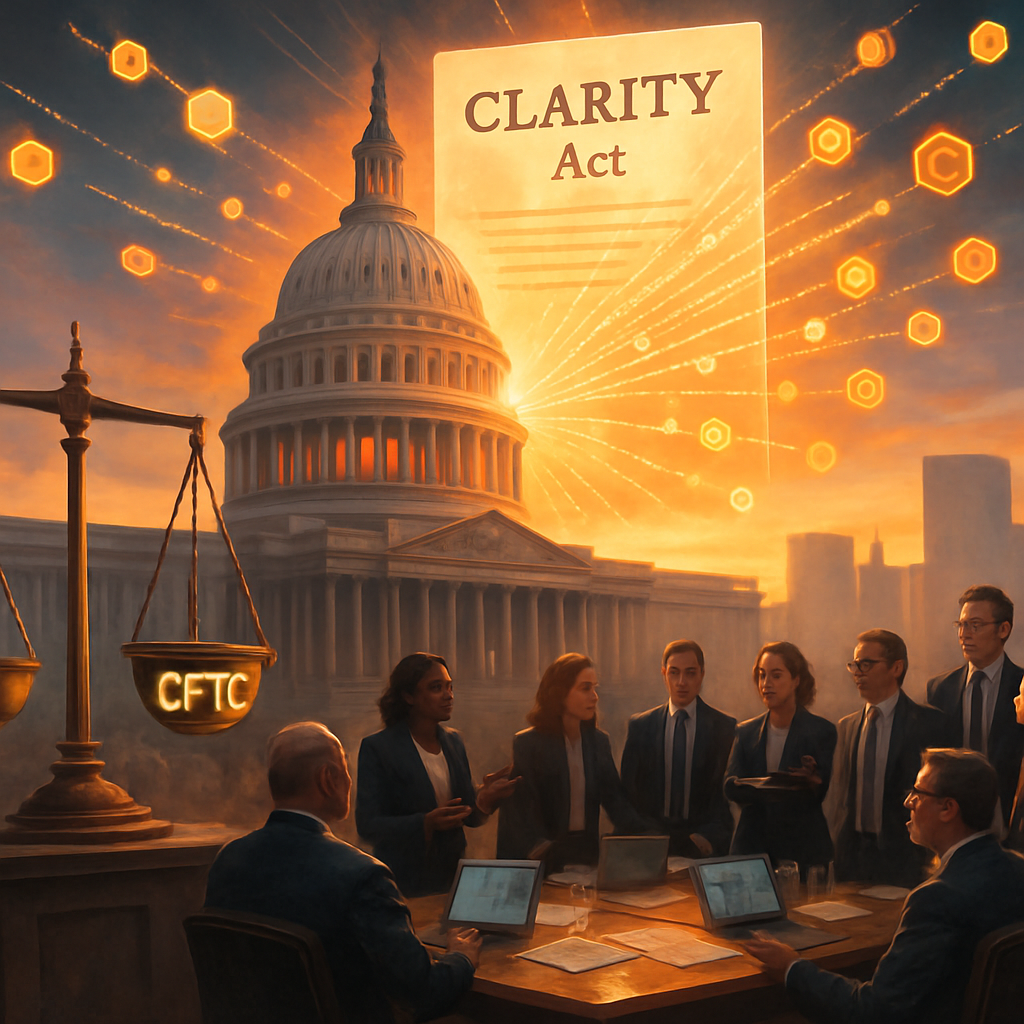
Bitcoin News: SEC Chair Backs CLARITY Act; Optimistic on Crypto Bill

Paul Atkins expressed optimism that Congress will pass the CLARITY Act, a landmark crypto market structure bill intended to establish clearer rules for digital assets. With the proposal now under Senate review, lawmakers face a pivotal test on whether the United States will implement its first comprehensive framework for the digital asset market.

Atkins Expresses Confidence in Legislative Path

Atkins, a former U.S. Securities and Exchange Commission (SEC) commissioner, said he is optimistic about the bill’s prospects in Congress. His comments come as momentum builds in Washington to define how cryptocurrencies and related platforms should be regulated across federal agencies.

What the CLARITY Act Seeks to Do

The CLARITY Act is positioned as a broad market structure proposal focused on reducing regulatory uncertainty for digital assets. While specific provisions will ultimately depend on the final text approved by Congress, the bill is expected to address core areas that have challenged the industry and regulators alike, including:

  • Clear definitions for digital assets and related activities.
  • Jurisdictional boundaries between the SEC and the Commodity Futures Trading Commission (CFTC).
  • Registration and compliance pathways for trading platforms and intermediaries.
  • Disclosure standards for token issuers and secondary market oversight.
  • Custody, consumer protection, and market integrity requirements.

Senate Review Marks a Critical Phase

The Senate’s consideration of the CLARITY Act will determine whether the framework advances to a final vote or undergoes further revisions. Committee hearings, potential amendments, and alignment with existing financial regulations are likely to shape the bill’s trajectory and implementation timeline.

Why It Matters for Markets

Comprehensive federal rules could set consistent standards for exchanges, brokers, and token projects, addressing long-standing compliance questions and enforcement risks. Clearer guidelines may also influence how new products come to market, how firms manage custody and disclosures, and how regulators coordinate oversight, with implications for both institutional participation and retail protections.

As the Senate weighs the proposal, market participants and policymakers will be watching for clarity on agency roles, compliance obligations, and the path toward a unified national framework for digital assets.

Fifth Circuit Denies SEC Fast-Track in Crypto Appeal, Keeping Case Alive

Wellermen Image SEC LOSES GROUND IN FIFTH CIRCUIT CRYPTO APPEAL

A divided Fifth Circuit panel today dealt the SEC a procedural setback in a high-stakes crypto enforcement case, refusing to fast-track an appeal that could have locked in the agency’s broad view of what counts as a security. The move keeps the underlying dispute alive and signals that at least some appellate judges are unwilling to give the Commission an easy runway to expand its regulatory reach over digital assets.

The case arose when the SEC sued a crypto-trading platform for selling unregistered securities. The platform fought back, arguing that its tokens were not securities under existing precedent. Rather than wait for a full trial-court ruling, the agency asked the Fifth Circuit to hear the legal question immediately—an “interlocutory” appeal that would have let the Commission bypass months, or years, of litigation. A majority of the panel said no. Judges held that the legal question was not so clear-cut, nor the harm so immediate, that skipping normal procedures was justified. One judge dissented, warning that delay would let potentially unlawful conduct continue unchecked.

With the fast-track denied, the case heads back to the district court for ordinary discovery and motion practice. Practically, that means more months of uncertainty: the SEC cannot yet claim appellate precedent that its expansive definition of “investment contract” applies to the tokens in question. The platform, meanwhile, keeps its ability to argue that secondary-market sales, wallet custody, or programmatic distribution arrangements fall outside Howey’s four-part test. For every other token issuer and trading venue watching, the clock just bought additional runway.

In plain English, the Fifth Circuit refused to hand the SEC a shortcut. The agency still believes most tokens are securities; today’s order simply says that belief must be proven under normal litigation rules, not assumed on appeal. That preserves the status quo under which issuers and exchanges operate until a final judgment—or a legislative fix—says otherwise.

The ruling subtly shifts power toward the defense. If the SEC wanted a quick precedent to wield in other districts, it will now have to grind through fact discovery and summary judgment. That raises litigation costs for both sides and keeps regulatory risk priced into token valuations. Exchanges that had planned compliance build-outs around an assumed Fifth Circuit win must keep contingency capital on hand. DeFi protocols that rely on secondary-market liquidity see their legal overhang extended rather than clarified.

For traders and market-makers, the decision is an uneasy reprieve rather than a victory: the larger question of token classification remains unresolved, and the SEC’s enforcement budget is undiminished. Watch for renewed settlement pressure as both parties recalculate the cost of waiting for a verdict that may still favor the Commission.

Regal Commodities Wins Big: Appellate Court Says Traders Can Be Personally Liable

Wellermen Image Regal Commodities Wins Big, Tauber Takes a Hit

New York’s Appellate Division just handed Regal Commodities a decisive victory over former trader Michael Tauber, reversing a lower court ruling that had favored the defendant. At stake is whether a commodities trader can be held personally liable for losses sustained through unauthorized trading on a firm’s account — and the court’s answer is a resounding yes. The ruling could reshape how exchanges, brokerages, and DeFi platforms approach trader accountability and risk.

The dispute began when Regal accused Tauber of executing a series of high-risk trades that triggered massive losses, allegedly without proper authorization. Tauber argued he was operating within the scope of his role and that Regal’s internal controls were lax. The lower court sided with him, dismissing the claims. But on appeal, the Second Department found that genuine questions of fact remain about whether Tauber exceeded his authority and whether Regal’s risk systems were properly enforced. The panel reinstated the case, allowing Regal to pursue damages.

The judges ruled that an employee’s authority is not unlimited simply because he holds a trading role. If evidence shows he acted outside that scope, he can be held personally liable. This shifts the burden back to traders and firms alike to document authority clearly and monitor activity in real time. Tauber now faces a full trial; Regal gains leverage to recover losses and possibly set a precedent for similar claims.

In plain terms, the court is saying that “I was the trader on the desk” is not a get-out-of-jail-free card. If you trade beyond what your firm allows, you can be sued individually. That message travels straight to every trading desk, prop shop, and decentralized protocol that lets users touch other people’s capital.

For crypto markets, the ruling tightens the noose around informal trading arrangements. If U.S. courts treat digital-asset desks the same way they treat commodities traders, then anyone executing trades on behalf of a fund, DAO treasury, or exchange hot wallet could face personal liability for rogue positions. Expect compliance teams to demand stricter sign-offs, multi-sig requirements, and real-time audit logs. Exchanges and DeFi front-ends may add new “authorized trader” whitelists or insurance wrappers to limit downstream claims. Traders themselves will price that legal risk into their spreads or demand higher compensation.

Bottom line: if you’re trading someone else’s money in crypto, assume the courts are watching — and price that risk before the next margin call hits.

×