Bitcoin News: 7 Fintechs Enter Zimbabwe Sandbox, Tokenization Surges

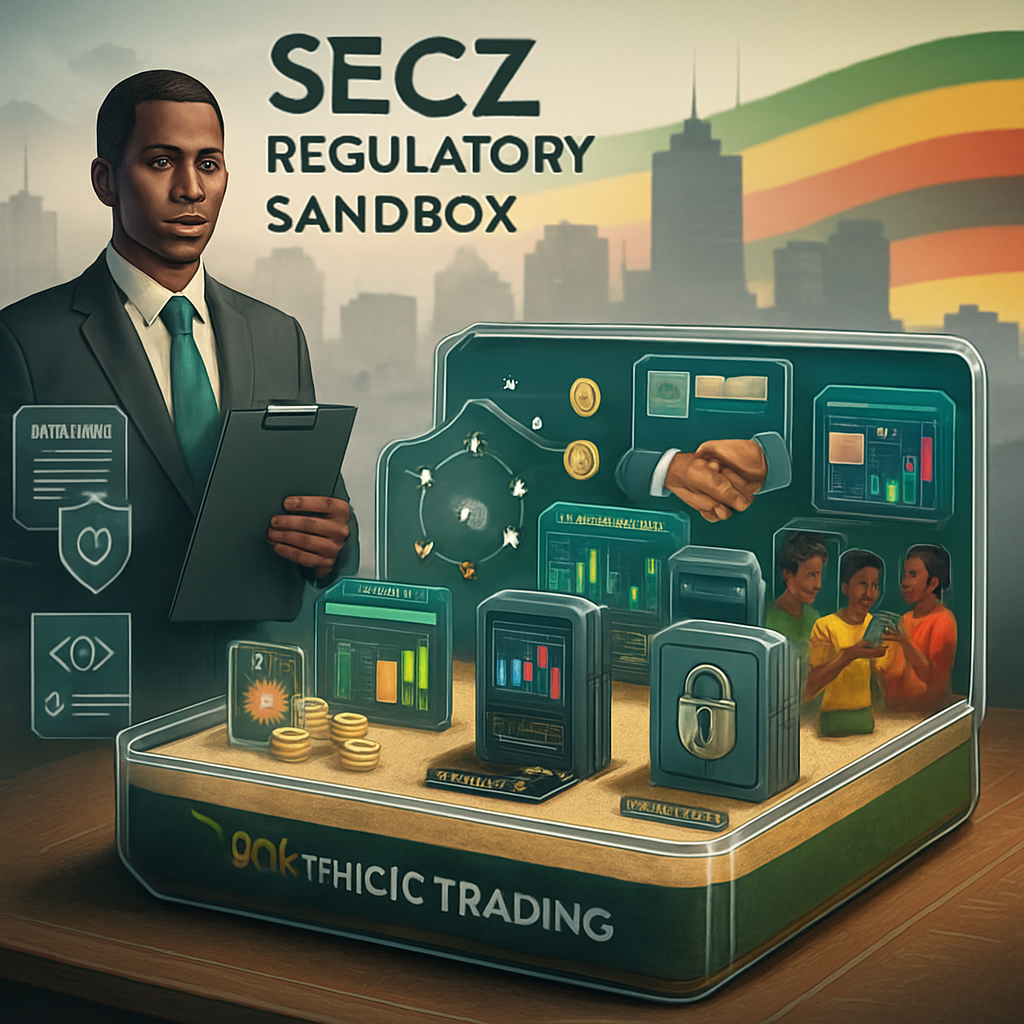
Zimbabwe’s Securities and Exchange Commission (SECZ) has approved seven financial technology firms to test their products in a supervised regulatory sandbox, opening the door for limited-market trials of blockchain platforms, synthetic trading tools, crowdfunding models, and tokenization services.

SECZ Opens Regulatory Sandbox to Seven Fintechs

The regulator said the cohort will operate under a controlled framework designed to evaluate innovative financial services while monitoring risks to investors and market integrity. The sandbox approach allows the commission to observe real-world performance and gather data that can inform future policy and licensing decisions.

Focus Areas in the New Cohort

The selected firms span several areas of digital finance and capital market innovation, including:

  • Blockchain platforms – infrastructure and applications leveraging distributed ledger technology for financial services.
  • Tokenization services – tools that represent assets as digital tokens, potentially improving settlement and fractional ownership.
  • Crowdfunding – platforms aimed at facilitating capital formation for startups and small businesses.
  • Synthetic trading – products that emulate exposure to underlying assets through derivatives or models, typically subject to strict risk controls.

How the Sandbox Works

Participants are allowed to offer services to a limited number of users and within defined parameters. The SECZ oversees testing periods, consumer safeguards, disclosure standards, and reporting requirements. This structure is intended to encourage responsible experimentation while protecting users and maintaining market stability.

Why It Matters

Regulatory sandboxes have become a common tool for capital markets authorities seeking to balance innovation with oversight. For Zimbabwe, the initiative could help broaden access to digital financial services, support new funding avenues for businesses, and clarify regulatory pathways for emerging technologies such as blockchain and tokenization. Admission to the sandbox does not constitute full authorization; firms may seek broader licensing after successful trials and regulatory review.

SEC Wins Generational Asset Freeze Power, Reaching Bilzerian-Era Injunction Into Crypto Wallets

Wellermen Image SEC Wins Fresh Power to Freeze Bilzerian Assets

The D.C. District Court just handed the SEC a legal sledgehammer that can crack open offshore trusts and frozen accounts decades after a 1989 fraud case closed. The ruling lets regulators chase Paul Bilzerian’s hidden money even when the original defendants are long gone or dead. Markets are watching because the same precedent could soon reach crypto wallets and DeFi protocols that treat old enforcement orders as ancient history.

The case began when the SEC accused Wall Street raider Paul Bilzerian of hiding millions after a 1989 securities-fraud judgment. In 2001 the court issued a broad injunction barring him and anyone acting with him from moving assets. Years later, Bilzerian’s family and offshore trusts tried to tap those funds. The SEC returned to court arguing the injunction still binds successors and agents. Judge Royce Lamberth agreed, holding that the order is “in personam” and therefore travels with anyone who knowingly assists the original defendants.

The decision tilts power toward regulators: the SEC no longer needs a fresh lawsuit to reach assets controlled by third parties or heirs. Instead, it can simply ask the original court to enforce the standing injunction. For crypto traders, that means wallets linked to past judgments could be clawed back without new charges. Exchanges holding such keys may face subpoenas or forced freezes. Stablecoin issuers could find their reserves targeted if a token is deemed tied to an enjoined party.

The legal impact is simple. An injunction is no longer a snapshot in time; it becomes a permanent tether. Decentralized projects that promise “unstoppable” code now carry hidden legal exposure whenever founders or early backers have old SEC orders hanging over them.

Exchanges and DeFi protocols should audit historical links to sanctioned individuals before regulators treat code as conspiracy.

Supreme Court Rules Stablecoins with Par Redemption Aren’t Securities; SEC Faces Major Setback

Wellermen Image **COURT SHATTERS SEC’S STABLECOIN SWEEP**


The Supreme Court just handed crypto markets a decisive win, ruling 6-3 that the SEC cannot force stablecoin issuers to register as investment contracts merely because the tokens promise redemption at par. The decision reverses a lower-court injunction that had frozen Circle’s USDC reserves and signals that the Commission’s two-year attempt to fold dollar-pegged tokens into securities law has hit a constitutional wall.

The case began when the SEC sued Circle in 2024, claiming the promise of one-to-one redemption turned every USDC into an unregistered security. Circle fought back, arguing that a fixed-value claim on a bank deposit is not an “investment of money” that depends on the “efforts of others.” The district court sided with the agency and issued a sweeping preliminary injunction; the appeals court affirmed. Yesterday the justices reversed, holding that a contractual right to redeem a token for fiat is closer to a bank deposit than to a profit-seeking scheme.

Writing for the majority, Justice Gorsuch said the Howey test’s fourth prong—“expectation of profits derived from the efforts of others”—is absent when the only return is the return of the exact dollars deposited. The dissent warned that the ruling “hands promoters a blueprint to evade registration by promising stability rather than growth,” but the majority found no precedent for treating a promise not to lose money as a security.

In plain English, the Court told the SEC it cannot stretch securities law to cover instruments whose value is deliberately untethered from venture risk. That narrows the agency’s runway for enforcement actions against any stablecoin whose marketing copy sticks to “always worth a dollar” language.

For markets, the decision slashes regulatory overhang on the $160-billion stablecoin sector and removes the immediate threat of reserve seizures or trading halts on Coinbase, Kraken, and Binance.US. It also hands DeFi protocols that custody or route USDC a clearer compliance map: if the stablecoin itself is not a security, downstream lending or trading activity may not trigger broker-dealer registration either. Expect Treasury’s stablecoin legislation to gain momentum, but the bill will now be written against a backdrop where the SEC has less leverage than it had a week ago.

The SEC’s authority over genuine yield-bearing tokens remains intact, yet the Court has drawn a bright line around flat-value claims—leaving traders and issuers to price that line into every new product launch.

Bitcoin Dips to $60K as Oil Surges and Strategy Sells

Wellermen Image

Bitcoin Dips as Oil Spikes and Strategy Sells

Bitcoin is back under pressure near the $60,000 mark after a sharp sell-off sparked by rising oil prices, new fears over Japan’s economic stability, and fresh selling from Strategy. The convergence of macro shocks and institutional moves is testing the market’s conviction at a critical level.

The trigger came as oil prices surged on geopolitical tensions, pushing investors toward traditional safe havens and away from risk assets like crypto. At the same time, Japan’s financial system showed signs of strain, adding to broader uncertainty. Strategy’s reported selling added immediate downward momentum, amplifying the selloff.

Traders watching the order books saw leveraged positions liquidated in rapid succession, while long-term holders largely stayed put. The move highlights how sensitive Bitcoin remains to outside shocks even as institutional adoption grows.

What This Means for Crypto

Oil shocks and macro scares tend to hit crypto first because it remains one of the most liquid risk assets. Japan’s troubles matter because yen-funded carry trades often fuel global liquidity—when those trades unwind, risk markets feel it fast.

For traders, this is a reminder that leverage magnifies both upside and downside; for long-term investors, it’s noise unless fundamentals change. Builders continue shipping regardless, but funding and sentiment can swing quickly when macro headlines hit.

Market Impact and Next Moves

Short-term sentiment is mixed: dips to $60,000 have historically attracted buyers, yet sustained oil strength or further yen volatility could extend the pain. Liquidity looks thin above current levels, raising the odds of sharp rebounds or deeper flush-outs.

The biggest risks are cascading liquidations and a broader flight to safety if oil keeps climbing. On the opportunity side, any stabilization in macro conditions could see dip-buyers return quickly, especially if on-chain accumulation stays strong.

Watch the next few sessions closely—Bitcoin at $60,000 is either a springboard or a trapdoor depending on whether oil and yen pressures ease.

Seventh Circuit Expands CFTC Reach to Regulate Leveraged Crypto Trading

Wellermen Image COURT HANDS CFTC NEW LEVERAGE OVER CRYPTO EXCHANGES

In a decision that quietly rewrites the federal reach over digital assets, the Seventh Circuit ruled that the Commodity Futures Trading Commission can regulate any platform that offers leveraged or margined trading in cryptocurrencies—whether those coins are labeled “commodities,” “securities,” or something else entirely. The court upheld an enforcement action against an unregistered crypto trading venue, holding that the CFTC’s authority under the Commodity Exchange Act extends to spot-leverage transactions even if no futures contract is involved.

The case began when the Conway Family Trust, which lost money on a crypto margin platform, petitioned the agency for reparations. The trust argued that the CFTC lacked jurisdiction because the trades were spot purchases of Bitcoin, not derivatives. A CFTC administrative law judge disagreed, and the Commission affirmed. On appeal, the trust insisted that Congress never gave the agency power over non-futures crypto markets. The Seventh Circuit rejected that view, finding that the CEA’s “retail commodity transaction” clause sweeps in any leveraged crypto deal offered to U.S. customers.

Judges Wood, Easterbrook, and Scudder concluded that the platform functioned like an unregistered futures exchange and therefore had to comply with CFTC rules on fair trading, capital, and segregation of customer funds. The trust’s petition was denied; the CFTC’s enforcement power was confirmed.

In plain English, the ruling tells every crypto exchange offering margin or leverage that it must either register with the CFTC or shut the product down for U.S. users. It also signals that the agency can pursue unregistered venues retroactively, exposing past trades to enforcement risk.

For markets, the decision tilts power toward the CFTC at the expense of both the SEC and state regulators. Spot-leverage platforms now face a choice: register, restrict U.S. access, or risk fines and asset freezes. DeFi protocols that embed leverage through smart contracts are not automatically off the hook; if they market to American traders, the agency may argue jurisdiction. Stablecoin issuers tied to leveraged trading desks will see renewed scrutiny, while traders will confront tighter margin rules and possible withdrawal delays if platforms scramble to comply.

Exchanges that already hold CFTC licenses gain a competitive moat; everyone else must price in new compliance costs or exit the U.S. market entirely.

Stablecoins Settle $1.1T of TradFi Trading on Crypto Rails

Wellermen Image

Stablecoins Quietly Take Over $1.1 Trillion in TradFi Trading

Binance Research just dropped numbers that should make traditional finance pause: stablecoin-settled perpetual contracts on tokenized stocks and indices have now cleared over $1.1 trillion in volume. That is not crypto-native volume. This is Wall Street’s favorite products—equity indices, single stocks, commodities—being traded and settled entirely in USDT and USDC on crypto rails.

The shift is happening because institutions want 24/7 settlement, instant collateral mobility, and none of the legacy prime-broker headaches. Stablecoins deliver all three. Instead of waiting T+2 for cash to clear, traders post USDC as margin and get paid out the same day. The report shows that the majority of this activity is flowing through offshore crypto venues that list tokenized versions of S&P 500 futures and individual blue-chip names. Volume has grown 4× year-over-year.

Two groups win immediately: the stablecoin issuers themselves (more locked float, more transaction fees) and the crypto exchanges that list these products (new revenue stream outside of spot crypto). The losers are the traditional brokers and clearing houses whose fees and delays just became a competitive disadvantage. Builders of synthetic equity and money-market protocols also get a tailwind; the deeper the liquidity in stablecoins, the easier it is to collateralize new derivatives.

What This Means for Crypto

Stablecoins are no longer just a bridge between on-ramps and off-ramps. They are becoming the settlement asset for real financial instruments. That turns every large holder of USDT or USDC into an indirect liquidity provider for tokenized Wall Street products. Regulatory risk also rises: if these contracts start to touch retail investors in major jurisdictions, expect scrutiny on both the tokens and the venues that offer them.

For traders, this means tighter spreads and new hedging tools, but also new counterparty questions—whose stablecoin, which chain, what happens in a depeg. Long-term investors see another proof point that digital dollars are gaining structural demand, not just speculative flows. Builders should watch which chains capture the most settlement volume; those rails will matter when real equities and bonds start to move on-chain.

Market Impact and Next Moves

Short-term sentiment is constructive for both major stablecoins and the exchanges facilitating this volume. Expect continued inflows into USDC and USDT as margin demand rises. The main risks are regulatory or technical: a sudden enforcement action against offshore equity perpetuals, or a smart-contract bug in one of the synthetic protocols that forces a disorderly unwind.

Opportunity sits in anything that improves stablecoin utility—better on-chain settlement for Treasuries, composable margin engines, or insured custody solutions. Projects that make holding and moving these dollars safer or faster will capture the next wave of inflows. Watch the on-chain metrics: rising active addresses and growing average trade size are leading indicators that institutions are staying, not just visiting.

Stablecoins just proved they can carry more than memes—they can carry markets. The question is whether regulators let them keep the steering wheel.

Bitcoin News: Franklin Templeton Backs CLARITY Act With BlackRock, Fidelity, Goldman

Franklin Templeton has joined BlackRock, Fidelity, and Goldman Sachs in publicly supporting the CLARITY Act, adding momentum to Wall Street’s push for comprehensive federal rules governing digital assets as senators review updated bill text ahead of a potential floor vote.

Franklin Templeton Backs CLARITY Act

Franklin Templeton, the global investment manager under Franklin Resources Inc. (NYSE: BEN), said it supports the CLARITY Act, aligning with other major financial institutions seeking a clearer regulatory framework for cryptocurrencies and related digital asset activities.

Growing Wall Street Coalition

The endorsement places Franklin Templeton alongside BlackRock, Fidelity, and Goldman Sachs, reflecting a broadening institutional coalition advocating for federal standards. Large asset managers and banks have pressed for uniform rules to reduce regulatory uncertainty, streamline compliance, and establish clearer oversight for market infrastructure, custody, and tokenization initiatives.

Senate Review and Next Steps

Senators are evaluating updated CLARITY Act language, with timing for a floor vote still uncertain. Supporters argue that codified federal guidelines would provide market stability and investor protections while facilitating responsible innovation. Key areas under discussion include market structure, consumer safeguards, and the allocation of oversight among federal agencies.

Why It Matters

Regulatory clarity is a pivotal issue for U.S. digital asset markets. A federal framework could influence how exchanges, custodians, and institutional products operate, potentially shaping capital flows and competitive positioning for both traditional financial firms and crypto-native companies.

Fifth Circuit Blocks SEC From Walking Away in Crypto Case

Wellermen Image SEC Loses Major Crypto Appeal in Fifth Circuit


The Fifth Circuit just handed the SEC a stinging procedural defeat in a crypto case, refusing to let the agency off the hook even after it tried to backtrack. The ruling tightens the screws on regulators who want to treat digital assets like securities without first proving their case in court.

The lawsuit began when a crypto firm challenged the SEC’s authority to regulate its tokens as securities. The SEC, sensing trouble, attempted to drop the case mid-appeal, hoping to avoid a precedent that could limit its reach. The Fifth Circuit wasn’t buying it. Judges ruled that once an agency starts enforcement, it can’t simply walk away when the legal winds turn against it. The decision forces the SEC to either prove its classification claims or accept a loss that could ripple across the industry.

By rejecting the SEC’s maneuver, the court effectively hands a win to the crypto firm and signals that regulators must commit to their theories or fold. This isn’t just a procedural footnote—it’s a message that courts won’t rubber-stamp enforcement actions that regulators later regret pursuing. The SEC now faces a dilemma: push forward and risk a damaging loss on the merits, or retreat and watch its authority questioned in future cases.

In plain terms, the Fifth Circuit is telling the SEC it can’t have its cake and eat it too. Agencies that initiate enforcement must see it through, especially when billions in market value and the legal status of tokens hang in the balance. Crypto projects gain breathing room, knowing regulators can’t weaponize litigation without consequence.

The ruling chips away at the SEC’s aura of inevitability. It weakens the agency’s ability to strong-arm settlements by threatening endless litigation and tilts the playing field toward exchanges, DeFi protocols, and traders who have long argued that enforcement by intimidation isn’t enforcement at all. Stablecoin issuers and token projects gain leverage in classification disputes, while exchanges may find judges more willing to scrutinize the SEC’s overreach.

This decision doesn’t end the SEC’s crypto campaign, but it raises the cost of playing. Regulators must now weigh whether every enforcement action is worth the risk of creating unfavorable precedent—or whether retreat itself becomes the bigger loss.

Bitcoin Holds 62K as Oil Spike and Fed Fears Collide

Wellermen Image

Bitcoin Holds $62K as Oil Spike and Fed Fears Collide

Bitcoin is clinging to the $62,000 line after a sharp oil-price surge and fresh Middle-East tensions triggered a wave of risk-cutting across futures markets. Traders are bracing for the Federal Reserve’s next policy signal, and the combination of geopolitical stress and monetary uncertainty is keeping price action tight.

The immediate spark came from overnight jumps in crude prices after reports of intensified conflict involving Iran, a move that rattled broader risk assets and prompted leveraged traders to trim exposure ahead of the Fed. Bitcoin’s reaction was muted rather than panicked; it simply stalled near recent highs instead of giving back the entire run from the $50,000 zone. Still, the stall itself is a reminder that macro shocks travel fast in crypto even when the fundamentals remain unchanged.

Who benefits and who hurts depends on positioning. Spot holders and long-term investors see little structural damage so far, but over-leveraged futures bulls face margin pressure if volatility spikes again. On the institutional side, any sign that the Fed is willing to stay patient on rates would likely revive the “risk-on” bid that has powered this cycle; a hawkish surprise could extend the current consolidation—or worse.

What This Means for Crypto

Oil shocks and interest-rate decisions are two of the few external forces that can override crypto-native catalysts in the short term. When either flares up, Bitcoin tends to trade more like a high-beta equity than an uncorrelated digital asset until the dust settles.

For day-to-day traders, the takeaway is straightforward: watch funding rates and open interest. If both stay elevated while price chops sideways, the odds of a quick liquidation cascade rise. Longer-term holders can treat the stall as a reminder that macro calendars now sit alongside halving cycles on their watch lists.

Market Impact and Next Moves

Sentiment is balanced rather than bullish or bearish; the market is waiting for clarity, not rushing for the exits. Key risks include a hotter-than-expected CPI print that could force the Fed’s hand, or any further escalation that pushes oil above recent highs and tightens liquidity across risk assets.

Opportunities lie in relative calm: if geopolitical noise fades and the Fed strikes a dovish tone, the same leveraged capital that left can return quickly, potentially compressing the next leg higher into a shorter time frame. On-chain metrics such as exchange reserves and ETF inflows remain supportive, suggesting the fundamental bid has not vanished—only paused.

Watch the Fed, watch oil, then decide; the next 48 hours could turn a holding pattern into either the springboard or the ceiling for the rest of the quarter.

New York Court Cracks Down on Digital Commodity Loophole, Rules Crypto Forwards Securities

Wellermen Image REGAL RULING SHATTERS COMMODITY LOOPHOLE FOR CRYPTO FIRMS

New York’s highest court just told crypto traders they can’t hide behind “commodity” labels when the law wants to see real assets. In Regal Commodities v Tauber, the Appellate Division ruled that contracts tied to digital assets must still meet traditional commodity standards—or face full securities scrutiny.

The dispute began when Regal Commodities, a brokerage, sued trader Tauber over a series of forward contracts tied to volatile digital commodities. Tauber argued the deals were exempt from New York’s strict commodity-delivery rules because the underlying assets were digital and never physically delivered. Regal countered that the contracts were disguised securities, exposing the firm to licensing and disclosure obligations. The court agreed with Regal, holding that the absence of physical delivery and the speculative nature of the contracts stripped them of commodity protection.

Judges found that New York’s commodity exemption requires tangible, deliverable goods—not lines of code or ledger entries. Because the contracts settled in cash or stablecoins, the court ruled they were investment contracts, subject to state securities oversight. Tauber’s attempt to reclassify the assets as “digital commodities” failed; the panel said the label alone does not override substance. Regal wins the right to pursue rescission and damages; Tauber loses the safe-harbor argument and faces potential regulatory exposure.

In plain English, the ruling slams the door on the popular workaround of calling a token a “commodity” to dodge broker rules. If the asset never moves from wallet to warehouse, New York courts will treat the deal like any other bet on future price swings. Firms that relied on this loophole now face licensing exams, disclosure filings, and the threat of state enforcement actions.

The decision tightens the vise on exchanges and DeFi platforms that list perpetual-style contracts or synthetic assets. Expect compliance teams to revisit marketing language, margin agreements, and custody arrangements to avoid being swept into New York’s securities net. Stablecoin issuers and yield platforms offering “commodity-like” exposure should prepare for heightened scrutiny, while traders may see wider spreads as platforms price in new legal risk.

For the industry, the message is blunt: digital branding will not shield economic reality from old statutes.

Seventh Circuit Blocks CFTC’s Fast-Track Subpoenas in Kraft Records Fight

Wellermen Image Court Slaps CFTC’s Hand in Kraft Records Fight

The Seventh Circuit just handed the CFTC a stinging procedural loss in its decade-long quest for Kraft’s internal documents, ruling that the agency cannot simply “deem” a subpoena enforceable when the company refuses to comply. The decision matters because it limits the CFTC’s ability to fast-track enforcement fishing expeditions, raising the bar for how regulators can pressure commodity-linked firms—and, by extension, crypto desks that trade grain, energy, or carbon futures.

The fight began in 2015 when the CFTC accused Kraft of manipulating wheat futures. When Kraft balked at handing over sensitive emails and trading records, the agency asked a district judge to treat its subpoena as already valid, skipping the normal enforcement hearing. Kraft pushed back, arguing the CFTC was trying to shortcut due process. On appeal, the Seventh Circuit held that the agency must still prove its case in open court before a judge can compel production; merely labeling a subpoena “final” does not make it so.

Judges Ripple, Kanne, and Scudder made clear that administrative subpoenas are not self-enforcing edicts. The CFTC must file a separate enforcement action, give the target notice and an opportunity to object, and persuade a neutral magistrate that the request is reasonable. Until that happens, companies can withhold documents without risking contempt sanctions.

In plain English, the CFTC can no longer treat its own paperwork as a loaded gun; it must convince a judge first. That slows the agency’s evidence-gathering machine but forces it to build stronger, narrower cases before dragging firms into court.

For crypto traders and exchanges that sit at the intersection of CFTC jurisdiction over futures and SEC oversight of tokens, the ruling injects a new layer of friction into regulatory fishing expeditions. It tilts the power balance toward defense counsel, raises the cost of compliance for market-makers, and may encourage firms to keep trading data offshore or in DeFi protocols that are harder to subpoena. At the same time, it does nothing to shrink the CFTC’s substantive authority over commodity derivatives—only the speed with which it can grab evidence.

Bottom line: expect longer, costlier CFTC investigations and more push-back from exchanges and trading firms until Congress or another court redraws the procedural map.

MDL Panel Consolidates Three Crypto Class Actions Against Major Exchange in Illinois


Wellermen Image Court Panel Consolidates Crypto Class Actions Against Major Exchange

A three-judge panel has agreed to consolidate three separate class actions against a major cryptocurrency exchange into one proceeding in the Northern District of Illinois. The ruling means plaintiffs from California, Pennsylvania, and Illinois will now litigate together, raising the stakes for the exchange and setting the stage for a coordinated legal assault on its business practices.

The move comes after plaintiff Anthony Motto asked the U.S. Judicial Panel on Multidistrict Litigation to pull the cases together. Each lawsuit accuses the exchange of misleading users about trading risks, inadequate security measures, and violations of state consumer-protection laws. The exchange pushed back, arguing the cases were too different to merge, but the panel found enough common questions of fact to justify consolidation.

Judges Sarah S. Vance and her colleagues ruled that centralizing the actions will promote efficiency and avoid duplicative discovery. The Northern District of Illinois gets the nod because it already hosts the Greene case, which appears furthest along. The exchange now faces a single, unified front of plaintiffs rather than fighting scattered lawsuits in three different courts.

In plain terms, the decision means one judge will oversee all pretrial matters, including whether the exchange’s tokens or services qualify as securities. That single courtroom becomes the focal point for deciding how much liability the platform carries and what evidence will come out.

For crypto markets the ruling is a warning shot. A consolidated case often means bigger damages exposure and more intense discovery, which can force disclosures that rattle traders and exchanges alike. Regulators will watch closely: if the court finds the exchange’s tokens are securities, it could strengthen the SEC’s hand in other enforcement actions and push platforms to re-examine how they classify digital assets.

Exchanges betting that scattered lawsuits will fizzle now have to plan for a single, high-stakes trial that could reshape compliance costs across the industry.

Bitcoin News: Pennsylvania Bill Could Bar Sportsbooks from Prediction Markets

A bipartisan bill in Pennsylvania would impose insider-trading safeguards and consumer protections on prediction markets while prohibiting licensed gambling companies from supplying market liquidity. The measure could disrupt market-making strategies pursued by major sportsbooks such as DraftKings and Flutter as they explore participation in federally regulated event-contract venues.

Scope of the Proposal

The legislation, introduced by a bipartisan group of state lawmakers, seeks to apply guardrails commonly found in securities markets—namely restrictions on insider trading and enhanced consumer protections—to prediction markets operating in Pennsylvania. In addition, it would bar gambling operators from acting as liquidity providers, a function that supports efficient pricing and trade execution in event-based markets.

Why Liquidity Rules Matter

Liquidity providers, or market makers, play a key role in keeping spreads tight and ensuring traders can enter and exit positions with minimal price impact. By excluding sportsbooks and their affiliates from providing liquidity, the bill could materially alter how these markets function in the state. The restriction may also limit strategies used by major betting firms that are testing or expanding into regulated event-contract markets at the federal level.

Implications for Sportsbooks and Prediction Markets

If enacted, the bill would complicate efforts by traditional gambling companies to integrate with or support prediction-market infrastructure. That could push market-making responsibilities to independent firms or specialized liquidity providers, potentially affecting depth, pricing efficiency, and user experience.

The proposal also underscores a growing regulatory focus on prediction markets—both centralized platforms and blockchain-based venues—where trading often resembles financial markets more than traditional wagering. Applying insider-trading and consumer-protection standards would align Pennsylvania’s approach more closely with norms seen in regulated derivatives and securities environments.

Regulatory Context and Next Steps

Event contracts, which allow trading on outcomes such as economic indicators or public events, operate under varying federal and state oversight depending on their structure. The Pennsylvania bill would add a layer of state-level rules aimed at market integrity and consumer safety while restricting who can underwrite market liquidity.

The legislation has not yet been enacted and could be amended during the committee process. Market participants, including sportsbooks and prediction market operators, are likely to assess how the proposed liquidity limitations would affect their business models if the bill becomes law.

Bailey Fires Back at Farage CBDC Claims, Reasserts BoE Independence

Wellermen Image

Bank of England Governor Pushes Back on Farage CBDC Claims

Andrew Bailey has dismissed reports that a meeting with Nigel Farage influenced the Bank of England’s approach to a potential central bank digital currency. The governor insists policy decisions remain independent of political pressure, even after the two discussed crypto during their recent talks. The clarification comes as the UK continues to weigh the risks and benefits of launching its own digital pound.

The meeting between Bailey and Farage drew attention after reports suggested the former UKIP leader may have lobbied against a state-backed digital currency. Bailey’s office quickly pushed back, stressing that no external voice could sway the Bank’s stance on monetary policy or financial stability. The episode highlights how sensitive CBDC discussions have become in the UK, with lawmakers and the public split over privacy, surveillance, and innovation.

Farage has been vocal about his concerns that a CBDC could give authorities too much control over personal finances, echoing wider fears that digital pounds could be programmable or restricted. Bailey, however, has repeatedly framed any future digital pound as a tool to maintain monetary sovereignty in a world moving toward private stablecoins and foreign digital currencies. The Bank continues to study use cases while insisting it would not compromise cash or individual privacy.

What This Means for Crypto

A UK CBDC would sit alongside existing crypto assets rather than replace them, but its design choices could shape how digital pounds interact with DeFi, stablecoins, and exchanges. If the Bank emphasizes privacy and interoperability, it could reduce friction for traders and on-ramps. If it leans toward controls or programmability, adoption may stall as users migrate to decentralized alternatives.

For builders and investors, the signal is that the UK wants to stay competitive without ceding monetary ground to private issuers. Projects that can demonstrate compliance, transparency, and user protections may find favor with regulators. Those pushing extreme decentralization or anonymous finance could face headwinds as the Bank finalizes its framework.

Market Impact and Next Moves

Short-term market reaction has been muted, with sterling-pegged stablecoins and UK-regulated tokens showing little price movement. The episode is more political theater than policy shock, but it keeps CBDC questions in the headlines and may accelerate consultation deadlines. Liquidity remains steady, yet any future announcement on design or timeline could spark volatility in both GBP stablecoins and broader risk assets.

The key risk is regulatory overreach: if the Bank or Treasury impose strict holding limits or surveillance features, capital could flow to offshore alternatives. On the opportunity side, clarity around a UK digital pound could legitimize stablecoin issuers and attract institutional money seeking regulated on-ramps. Projects that position themselves as complementary rails rather than competitors stand to benefit most.

Bailey’s denial may quiet speculation for now, but the larger debate over who controls digital money is far from settled.

Fifth Circuit Slams SEC in DeFi Case: Open-Source Code Isn’t a Securities Offer

Wellermen Image Fifth Circuit Hands SEC New Crypto Blow

The Fifth Circuit just handed the SEC another loss in crypto, ruling that the agency cannot use a vague enforcement theory to drag a DeFi protocol into court. The decision narrows the SEC’s ability to bring enforcement actions based on broad “ecosystem” arguments and forces the agency to prove actual offers and sales of securities.

The lawsuit began when the SEC sued a decentralized finance protocol for operating an unregistered exchange and selling unregistered securities. The SEC argued that the protocol’s smart contracts, liquidity pools, and marketing materials amounted to a collective offer of investment contracts. The protocol countered that its code was open-source, that no central party raised capital, and that users interacted directly with software, not with any issuer. The district court sided with the SEC, but the Fifth Circuit reversed.

Judges held that the SEC must show a specific offer or sale of a security by a defendant, not merely that a protocol’s code enabled trading. The court rejected the agency’s claim that governance tokens and liquidity incentives were investment contracts simply because they might appreciate. Without evidence that the protocol itself solicited funds in exchange for profit expectations, the SEC could not establish securities violations. The panel also tossed the unregistered-exchange claim, finding that the protocol did not operate a “marketplace” in the traditional sense because no entity took custody or matched orders.

The ruling narrows the SEC’s enforcement toolkit by requiring concrete proof of solicitation and investment of money, rather than inferring a securities offering from the existence of a protocol. It tightens the definition of an issuer and signals that open-source code alone does not create liability.

The decision weakens the SEC’s leverage over DeFi projects and may encourage protocols to structure operations to avoid any appearance of solicitation. Exchanges and traders gain breathing room, but stablecoin issuers and token projects still face classification risk if they actively market returns. The CFTC’s jurisdiction over non-security commodities remains untouched, leaving a split regulatory landscape intact.

Expect more protocols to test the limits of open-source defenses, but the SEC will likely shift focus to intermediaries with clearer marketing footprints.

×