
CFTC Wins Ninth Circuit Victory: Leveraged Crypto Trades Now Regulated Off-Exchange

Wellermen Image CFTC WINS NINTH CIRCUIT ROUND ON LEVERAGE CRYPTO

The Ninth Circuit just handed the CFTC a sweeping victory in its long-running battle with Monex, ruling that leveraged crypto trades can qualify as illegal off-exchange retail commodity transactions. For traders, exchanges, and the broader crypto market, the decision signals that courts will treat virtual-currency margin deals the same way they treat traditional futures—opening the door to aggressive CFTC enforcement even when no futures contract exists.

The lawsuit began in 2017 when the CFTC accused Monex of running an unregistered precious-metals exchange that offered financed bitcoin, ethereum, and other crypto positions to retail customers. Monex argued its “Atlas” program was simply a spot market for actual delivery of coins and therefore fell outside CFTC jurisdiction. The district court agreed and dismissed the case. On appeal, the Ninth Circuit reversed in a unanimous panel opinion, holding that the actual-delivery exception does not apply when the seller retains possession of the commodity and the buyer’s only economic interest is price exposure.

Judges found that Monex’s financing model—where customers put up as little as 17 percent and the firm kept custody of the coins—created leveraged, retail transactions squarely within the CFTC’s anti-fraud authority under 7 U.S.C. § 9. The court rejected Monex’s claim that the transactions were “spot” sales, emphasizing that the economic reality was a financed bet on future price movements, not a transfer of possession. The ruling reinstates the CFTC’s lawsuit and sets binding precedent for every federal court west of the Rockies.

In plain English, if you offer U.S. retail customers the ability to trade crypto with borrowed money and you never hand over the actual coins, you are now clearly playing in the CFTC’s sandbox. The decision does not declare crypto a commodity—courts already treat bitcoin and ether that way—but it removes any doubt that leveraged or margined crypto deals are regulated transactions even without an official futures contract.

Market participants should expect the CFTC to open new investigations into offshore and onshore platforms that extend leverage to American users without registration. DeFi protocols that programmatically allow retail users to open margin positions face the same risk; developers cannot simply label the code “spot” and expect immunity. Centralized exchanges listing perpetual-swap or futures-style products will likely accelerate their shift toward offshore entities or institutional-only offerings. Meanwhile, the ruling may embolden the agency to argue that stablecoin issuers who permit collateralized lending programs are likewise facilitating off-exchange retail commodity trades.

For traders, the message is simple: leverage is leverage, and the CFTC now has Ninth-Circuit precedent to prove it.
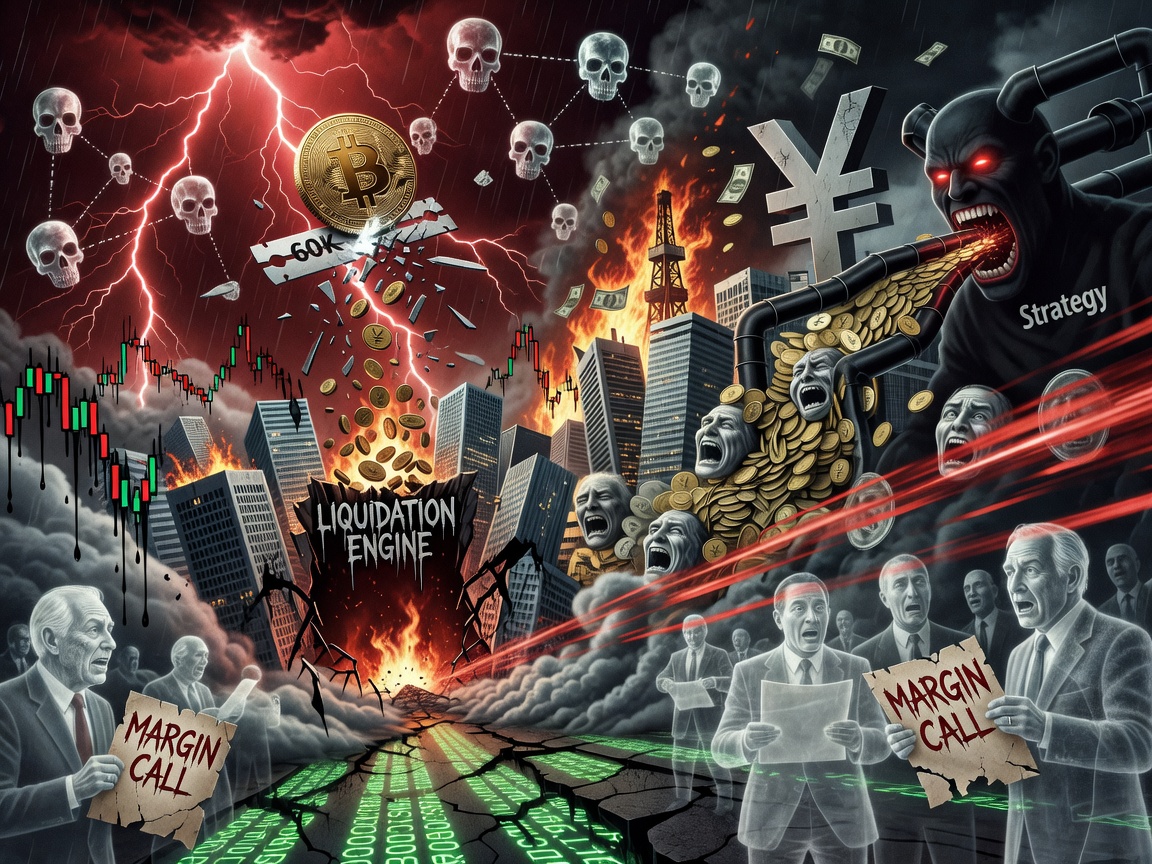

Bitcoin Dips Toward $60K as Oil Rally and Yen Woes Roil Markets

Wellermen Image

Bitcoin Slides Back to $60K as Oil Spikes and Japan Wobbles

Bitcoin is once again testing the $60,000 support line as a mix of macro shocks and fresh selling from Strategy combine to rattle sentiment. Oil prices are surging, Japan’s economy is flashing warning lights, and leveraged long positions are getting squeezed in rapid fashion. The move comes after weeks of fragile consolidation, leaving traders watching for a decisive break.

The immediate catalyst appears to be a double punch of energy costs and currency stress. Rising crude prices have re-ignited inflation fears, while the yen’s sudden strength has triggered margin calls on heavily leveraged carry trades. At the same time, Strategy’s renewed distribution—visible on-chain and through large-block exchange flows—has given sellers the liquidity they need to push prices lower without much resistance.

Short-term holders who bought above $65,000 are now underwater, and funding rates have flipped negative across major perpetual venues. Open interest has dropped by roughly eight percent in two days, suggesting that some of the speculative froth has already been flushed. Yet spot ETF inflows remain positive, hinting that longer-term capital is still accumulating while traders de-lever.

What This Means for Crypto

Oil-driven inflation raises the odds that the Federal Reserve will stay hawkish longer, which tightens financial conditions for risk assets. Meanwhile, yen-related liquidation is largely mechanical: when carry trades unwind, bitcoin often serves as a liquid proxy for fast exits. Neither factor changes bitcoin’s fixed-supply narrative, but both can compress prices until the macro picture stabilizes.

For traders, the key is whether $60,000 holds on a closing basis. A sustained break opens the door to the next liquidity pocket near $56,000; a quick reclaim keeps the broader uptrend intact. Long-term holders see this as another coupon-clipping opportunity, provided they have dry powder and aren’t forced to sell into the downdraft.

Market Impact and Next Moves

Sentiment is fragile and short-term bearish, with leverage flush-outs still possible if oil keeps climbing or Japan’s bond market lurches again. Exchange reserves are rising, a warning sign that coins are moving toward liquid venues rather than cold storage. Options markets price a 15 percent chance of a weekly close below $58,000, so tail-risk protection remains expensive.

Yet dips like these have historically preceded strong rebounds once macro uncertainty clears. On-chain metrics show accumulation addresses still adding coins, and hash-rate remains near all-time highs—both signs that conviction among miners and long-term holders is intact. The setup favors nimble traders who can handle volatility, while patient investors may view any breach of $60,000 as a higher-probability entry zone.

Watch the yen, watch the crude curve, and be ready for a fast repricing if either reverses.

Trevor Kitchen Wins: Court Rules CFTC Can’t Silence Whistleblower

Wellermen Image CFTC Loses Bid to Silence Whistleblower


Trevor Kitchen just beat the CFTC in court, and the agency’s attempt to gag its own former employee is now dead. The D.C. Circuit ruled that Kitchen’s public disclosures about CFTC enforcement failures are protected speech, not confidential leaks, and the Commission’s cease-and-desist order violated the First Amendment. For crypto traders watching every federal signal, the decision quietly rewires the risk calculus around what regulators can hide and what whistleblowers can say.

The case began when Kitchen, a former CFTC enforcement lawyer, published a whistleblower report alleging that senior staff buried evidence of misconduct by large trading platforms—some of which handled crypto derivatives. The Commission responded with an administrative order demanding he stop speaking and threatening penalties if he continued. Kitchen appealed, arguing that the order was a prior restraint on speech. The three-judge panel agreed, holding that the CFTC had no evidence Kitchen disclosed non-public investigative files and that its blanket gag order failed strict-scrutiny review.

In plain language, the court told the CFTC it cannot treat every former employee as a walking security risk. The ruling clarifies that internal agency deliberations are not automatically “confidential” just because the Commission stamps them so, and whistleblowers retain the right to criticize enforcement lapses once they leave. That narrows the agency’s power to police its own reputation and expands the public record on how crypto-market oversight actually works—or doesn’t.

The decision shifts leverage toward transparency at exactly the moment the CFTC is jockeying with the SEC for primary jurisdiction over digital assets. If Kitchen’s claims about buried cases hold any water, exchanges and DeFi protocols gain new talking points to push back against enforcement creep, while traders now have a precedent for demanding more disclosure before rules harden. Expect lawyers to cite this case the next time an agency tries to classify code, white papers, or liquidity data as secret.

One court just made it harder for regulators to bury inconvenient truths; markets price transparency, and this ruling just added a tick in that column.

Bitcoin Traders Face $75M Liquidations After Three Failed Breaks of $65,600

Bitcoin swung sharply on Monday but finished the session little changed after multiple failed attempts to break above the $65,500 resistance level. The choppy trade erased about $75 million in leveraged positions, even as easing tensions in the Middle East failed to provide a sustained boost.

Price Action Stalls Below $65,500

The largest cryptocurrency by market value saw repeated intraday rallies fade at roughly $65,500, a level that capped upside attempts and kept prices range-bound. Despite two swift moves during the session, spot prices were effectively flat by the close, underscoring persistent supply near the resistance area.

Leveraged Traders Face $75 Million in Liquidations

Volatility around the failed breakouts triggered liquidations totaling approximately $75 million across crypto derivatives venues. Liquidations occur when exchanges automatically close leveraged positions that no longer meet margin requirements, amplifying price swings during rapid moves.

Geopolitical Relief Fails to Spark Breakout

Market activity unfolded against a backdrop of cooling Middle East tensions, a development that typically supports risk appetite. However, the relief did not translate into a decisive upside move for bitcoin, with momentum stalling at the same technical barrier throughout the day.

Key Level to Watch

Traders continue to monitor $65,500 as near-term resistance. A clear move above this area would be seen as improving the short-term technical picture, while repeated rejections keep the market confined to its recent range.

Bitcoin Declared a Commodity: Ninth Circuit Expands CFTC Authority Over Crypto Fraud

Wellermen Image Court Slams “Digital Currency” Loophole, CFTC Wins Big

The Ninth Circuit just affirmed that the CFTC can police any commodity-based fraud—even when the underlying asset is Bitcoin. James Devlin Crombie’s appeal collapsed, and the agency’s authority over crypto spot-market scams is now rock-solid precedent across nine Western states.

Crombie ran a classic Ponzi scheme that promised 7 % weekly returns from Bitcoin arbitrage. Investors wired cash; Crombie paid early backers with fresh deposits and pocketed the rest. When the CFTC sued, Crombie argued the agency had no jurisdiction because Bitcoin isn’t a “commodity” under the Commodity Exchange Act. The district court disagreed, froze his assets, and ordered $2.8 million in restitution and penalties. Crombie appealed, claiming both lack of jurisdiction and excessive fines.

A three-judge panel brushed the jurisdictional claim aside in two paragraphs. The court held that the CEA’s definition of “commodity” covers “all services, rights, and interests in which contracts for future delivery are presently or in the future dealt in.” Because Bitcoin futures already traded on regulated exchanges, Bitcoin itself is a commodity. The judges also ruled that Crombie’s conduct met the fraud standard—material misrepresentations, scienter, and reliance—regardless of whether Bitcoin was a currency or a commodity. The panel rejected his Eighth-Amendment argument, finding the penalties neither grossly disproportionate nor punitive.

In plain English, the ruling tells every crypto operator in the Ninth Circuit: if you lie to investors about digital assets, the CFTC can come after you, freeze your wallets, and make you pay—even if no futures contract is involved.

The decision cements the CFTC’s civil authority over spot-market fraud nationwide, while leaving the SEC lane for securities untouched. Exchanges and DeFi protocols now face a clear enforcement risk: marketing “risk-free arbitrage” or guaranteed yields backed by crypto can trigger CFTC action without needing new legislation. Traders should expect tighter marketing copy, more rigorous KYC, and fewer fly-by-night yield schemes. Stablecoin issuers that promise steady returns may also fall under CFTC scrutiny if their pitch sounds like Crombie’s.

Bottom line: Bitcoin just became harder to weaponize in a lie, and the CFTC’s jurisdiction over crypto fraud is no longer up for debate.

SEC Wins Groundbreaking Crypto Forfeiture: Court Seizes $2.3 Million From Anonymous Wallets

Wellermen Image SEC Wins Crypto Seizure Case—Court Backs Broad Forfeiture


Federal prosecutors just seized $2.3 million in crypto from anonymous accounts tied to dark-web drug trafficking, marking the first time a U.S. court has granted civil forfeiture over cryptocurrency wallets without the owners ever appearing in court.

The government filed an in-rem action against twenty-four cryptocurrency addresses, alleging they were used to launder proceeds from fentanyl and methamphetamine sales on dark-web markets. Because no claimants came forward to contest the seizure, the court treated the funds as abandoned property and issued a default judgment of forfeiture under 21 U.S.C. § 881. The ruling hinged on two straightforward findings: the coins were traceable to narcotics trafficking, and no one asserted ownership within the statutory window.

With the accounts now forfeited to the U.S. Marshals Service, the funds move from blockchain obscurity to Treasury control, where they can be liquidated through regulated channels or held as evidence in larger cartel cases. Exchanges that froze related hot wallets in response to subpoenas receive legal cover, and the precedent signals that merely hosting—rather than controlling—crypto does not shield operators from federal seizure orders.

In plain terms, the decision tells crypto businesses that if law enforcement can map dirty coins to a wallet, the coins themselves become the defendant; anonymity is no defense once the blockchain trail is established, and platforms facilitating withdrawals of tainted funds risk being drawn into future forfeiture proceedings.

The case tightens the net around DeFi mixers and no-KYC services by proving that civil forfeiture can succeed even when beneficial owners stay silent, raising the compliance stakes for any platform that fails to screen inbound addresses or respond to IRS subpoenas. Exchanges may now face pressure to delist privacy coins or require on-chain forensics reports before honoring large withdrawals, while traders who route funds through mixers absorb a new layer of seizure risk.

For traders, the message is blunt: the blockchain is not a cloak—if coins are linked to crime, the government can still reach them, and the next knock may come from a liquidation order rather than an indictment.

Bailey Rejects Farage Crypto Lobby Claim, Reaffirms BoE’s Data-Driven CBDC Path

Wellermen Image

Bank of England Chief Rejects Farage Crypto Lobby Claim

The Bank of England governor Andrew Bailey has pushed back hard against claims that his meeting with Nigel Farage swayed the central bank’s thinking on digital currencies. Bailey insists that any discussion of crypto was incidental and that policy decisions remain firmly independent of political pressure.

The exchange happened during a private meeting that also touched on Brexit-era banking issues and Farage’s well-publicized difficulties accessing financial services. A report later suggested the conversation may have nudged the Bank toward a more cautious stance on stablecoins and a potential central bank digital currency, prompting Bailey’s swift denial.

Bailey’s rebuttal matters because the Bank of England is one of the most influential voices shaping global rules for digital money. Any hint that political lobbying could steer its thinking risks undermining confidence in both the regulatory process and the pound-backed assets that might eventually emerge from it.

What This Means for Crypto

When central bankers stress “independence,” they are telling markets that decisions on stablecoins or a digital pound will be driven by financial-stability data, not headlines or political donors. That framing keeps policy predictable, which traders and issuers need when they lock up capital in regulated tokens.

For everyday users, an independent Bank reduces the chance that a new digital pound would carry hidden political conditions or surveillance features that could later be weaponized. Builders gain clearer design parameters, while investors can price in regulatory timelines rather than guessing which politician might next bend the ear of Threadneedle Street.

Market Impact and Next Moves

Short-term sentiment is likely neutral to slightly bullish: the denial removes an overhang of political risk and signals that sterling CBDC plans will follow the same deliberate, technocratic path already mapped by the European Central Bank and the Federal Reserve. Liquidity in existing pound-pegged stablecoins should stay firm.

The main risk is not a sudden political U-turn but the slow grind of regulatory scrutiny itself. Issuers seeking Bank of England approval will still face capital, audit, and reserve-composition rules that could raise compliance costs and squeeze smaller entrants out of the market.

Opportunity lies with projects that treat regulatory rigor as a moat. Issuers able to demonstrate full reserves, independent audits, and clear redemption mechanics stand to capture the premium that institutions and fintech wallets will pay for pound-denominated tokens they can trust.

Bailey’s message is simple: the Bank’s crypto stance is data-led, not donor-led—price that certainty rather than the noise.

Partial Victory for Binance as Court Finds BNB Not Automatically a Security

Wellermen Image COURT HANDS BINANCE PARTIAL VICTORY, SEC LOSES GROUND


Federal judge Amy Berman Jackson just carved a narrow but telling hole in the SEC’s sweeping crypto crackdown. In a 93-page order she ruled that Binance’s BNB token does not automatically count as an investment contract when sold on the open market, while the unregistered-exchange and unregistered-broker claims against the exchange itself survive. The split decision shows how difficult it is for the Commission to stretch the Howey test across every token sale once coins have left the issuer’s hands.

The lawsuit began in June 2023 when the SEC accused Binance Holdings, its U.S. affiliate BAM Trading, and founder Changpeng Zhao of operating an unregistered exchange, offering unregistered securities, and commingling customer funds. Binance countered that the SEC lacked authority over secondary-market trades and that most tokens sold by the platform were commodities, not investment contracts. The court agreed with part of that defense: once BNB moved from Binance’s control to public trading venues, later purchasers could no longer be said to rely on Binance’s managerial efforts, breaking the Howey chain. Yet the judge let stand allegations that the exchange itself acted as an unregistered broker and that Binance.US misled users about trading controls.

The ruling trims the SEC’s case but does not end it. Binance still faces claims tied to its U.S. operations and the marketing of Simple Earn and BNB Vault products. Zhao, who already pleaded guilty to Bank Secrecy Act violations in a parallel criminal case, is not a defendant in this civil docket. The decision also leaves the SEC’s authority over unregistered exchanges intact, preserving leverage for future settlement talks or trial.

In plain English, the opinion signals that tokens freely trading on secondary markets are harder to brand as securities than tokens sold directly by promoters. It forces the Commission to prove specific promises of profit tied to each resale, not merely assert that every token is a security by default. That evidentiary burden may slow enforcement sweeps and push the agency toward narrower, better-documented complaints.

For crypto markets the ruling is a modest reprieve. Exchange tokens and large-cap assets now carry marginally less classification risk, easing some compliance pressure on trading platforms. DeFi protocols that merely list secondary pairs face lower legal overhang, while issuers contemplating direct sales still confront full regulatory exposure. Traders may interpret the decision as evidence that courts will police the SEC’s reach, trimming tail-risk of sudden delistings for mature tokens.

The case is far from closed, but the opinion underscores that enforcement power has limits and that secondary-market realities matter.

Stablecoins Drive $1.1T in TradFi Trading as On-Chain Settlement Goes Mainstream

Wellermen Image

Stablecoins Quietly Take Over $1.1 Trillion of TradFi Trading

Binance Research just dropped new numbers showing that stablecoin-settled perpetual trading in traditional finance has blown past $1.1 trillion. The report argues that stablecoins are no longer just crypto’s dollar substitute—they’re becoming the settlement rail for tokenized stocks, commodities, and other real-world assets.

What sparked the surge is simple: traders want instant settlement, 24/7 markets, and no custody headaches. Stablecoins deliver all three. Instead of waiting T+2 days for a stock trade to clear through banks and brokers, tokenized perpetuals on crypto platforms settle in seconds and collateral stays in stablecoins. The report highlights that this model now captures serious volume in equity indices, gold, oil, and even single stocks.

Who wins is obvious: crypto-native exchanges that already run on stablecoin rails, plus any TradFi firm willing to bridge assets on-chain. Who loses are the middlemen—prime brokers, clearing houses, and legacy custodians whose fees depend on slow, fragmented settlement. The change is structural: once institutions park collateral in USDT or USDC, they’re less likely to move it back to traditional banking rails.

What This Means for Crypto

Stablecoins are shifting from “crypto dollars” to “institutional dollars.” Their market cap and velocity now reflect real trading demand, not just DeFi leverage or offshore flows. For traders, this means tighter spreads and lower counterparty risk on tokenized products, but it also concentrates liquidity in a handful of dollar-pegged tokens.

Long-term investors should watch custody and regulatory risk. If stablecoins become the backbone of tokenized markets, any crackdown on issuers or reserves will ripple straight into equity and commodity exposure held on-chain. Builders, meanwhile, have a green light to issue more synthetic TradFi products—provided they can secure deep stablecoin liquidity and compliant on-ramps.

Market Impact and Next Moves

Sentiment is bullish for stablecoin issuers and exchanges that already dominate this flow. The data validates the “tokenization thesis” and could pull more institutional money into crypto venues. Short-term risk sits with regulatory scrutiny: if US or EU supervisors decide these products are unregistered securities or that stablecoin reserves are inadequate, volume could vanish overnight.

Opportunity lies in the gap between TradFi demand and on-chain supply. Projects offering compliant tokenized equities, yield-bearing stablecoins, or institutional-grade perpetual venues are still early. Liquidity is concentrated; new entrants that solve custody, compliance, and deep books could capture outsized share as the $1.1 trillion number keeps climbing.

Watch which stablecoin captures the next trillion—because whoever holds the settlement layer holds the leverage.

Circle Snaps Up 1,000 IBM Blockchain Patents to Fuel Digital Assets

Circle has acquired most of IBM’s blockchain patent business, adding nearly 1,000 issued patents grouped across 680 patent families. The company said the purchase positions it among the largest holders of blockchain-related intellectual property in the United States and globally, and is intended to accelerate adoption of onchain infrastructure.

Key Details of the Acquisition

  • Scope: Nearly 1,000 issued patents across 680 patent families included in the deal.
  • Coverage: Patents issued worldwide, spanning multiple jurisdictions.
  • Standing: Circle said the acquisition makes it one of the largest blockchain patent holders in the U.S. and internationally.

Strategic Rationale and Implications

Circle characterized intellectual property as critical to expanding the use of onchain infrastructure. By consolidating a large portfolio of blockchain patents, the company aims to strengthen its freedom to operate and support the development and deployment of products and services built on public blockchains. A broader IP footprint can also facilitate standards engagement and potential licensing opportunities while reducing legal uncertainty around core technologies.

Industry Context

IBM has been a prominent contributor to enterprise blockchain initiatives over the past decade, including work related to Hyperledger Fabric and use cases in supply chains and financial services. The consolidation of blockchain-focused IP under fintech and infrastructure providers reflects a maturing sector in which patents are used to protect foundational technologies and support commercialization.

Background on the Companies

Circle is a Boston-based fintech company best known as the issuer of USD Coin (USDC), a leading dollar-pegged stablecoin used across crypto markets and enterprise payments. IBM has historically invested in blockchain research and enterprise solutions, assembling a sizable patent portfolio as part of its broader technology business.

Delaware Court Dismisses Diamond Fortress Technologies’ Breach-of-Contract Claim Over Unfinalized Licensing Deal

Wellermen Image Court Slams Delaware Crypto Startup in Contract Fight


Delaware’s Superior Court just crushed a crypto-linked tech startup’s breach-of-contract case, ruling that Diamond Fortress Technologies and its founder Charles Hatcher II failed to show any enforceable agreement or lost profits. The decision is a sharp reminder that Delaware courts will not rewrite vague or incomplete deals just because blockchain promises were involved.

The lawsuit began when Hatcher claimed his company had a binding contract to license facial-recognition software to an unnamed party, only for the deal to collapse after months of back-and-forth emails. Hatcher argued the emails formed a valid agreement and that he lost millions in expected licensing fees. The defendants countered that no contract existed because key terms like price, duration, and deliverables were never finalized. The court agreed, granting summary judgment against the plaintiffs and rejecting every count of the complaint.

Judges focused on basic contract law: mutual assent and definite terms. They found that the email chain was filled with conditional language—“subject to final documentation,” “to be negotiated”—so no meeting of the minds occurred. Without a signed writing or clear offer and acceptance, the court refused to treat the discussions as a contract. Hatcher’s request for lost-profit damages was also dismissed because no enforceable deal meant no compensable loss.

In plain English, the ruling tells founders that Delaware courts will not rescue handshake deals dressed up as blockchain ventures. If you cannot prove price, scope, and acceptance with documents, you have no case. The decision also signals that crypto-adjacent companies receive no special treatment; they must clear the same contract hurdles as any other business.

For the broader crypto market, the case is a cautionary tale about how off-chain agreements are treated by traditional courts. Exchanges and DeFi teams that rely on informal term sheets or email memos now face added legal risk if disputes arise. The ruling does not expand SEC or CFTC reach, but it does reinforce that crypto firms cannot bypass state contract law by waving blockchain buzzwords.

The message is clear: in Delaware, a blockchain promise still needs ink on paper.

Bitcoin Dips to $60K as Oil Shock and Yen Fears Return

Wellermen Image

Bitcoin Retreats to $60K as Macro Fears Return

Bitcoin is once again testing the $60,000 level after a fresh wave of selling pressure, driven by surging oil prices, economic worries out of Japan, and renewed distribution from Strategy. The move comes as traders weigh the impact of broader macro shocks against crypto’s recent resilience.

Oil prices have spiked on escalating Middle East tensions, pushing traditional markets into defensive mode and amplifying risk-off sentiment across assets. At the same time, Japan’s economic contagion risks—sparked by concerns over its debt load and potential policy shifts—have added another layer of uncertainty for global investors. Meanwhile, Strategy’s latest selling activity has amplified the downward pressure on Bitcoin, catching some leveraged traders off guard.

Who wins and who loses is becoming clearer. Short-term traders holding leverage have taken the brunt of the hit, with liquidations accelerating as price dipped. Long-term holders and institutions with dry powder are watching closely, viewing this as a potential re-entry zone if macro conditions stabilize. Exchanges and market makers, meanwhile, face increased volatility and volume spikes that test their infrastructure but also boost trading fees.

What This Means for Crypto

Oil shocks and yen-related stress may seem far removed from digital assets, yet they directly influence how much risk investors are willing to take. When traditional markets wobble, crypto often follows—especially Bitcoin, which still serves as a high-beta risk asset in many portfolios.

For traders, this means tighter stop-losses and a greater emphasis on macro calendars. For long-term investors, the message is simpler: volatility is the toll you pay for asymmetric upside. Builders and developers remain largely insulated, as protocol usage and on-chain metrics continue unaffected by short-term price swings.

Market Impact and Next Moves

Short-term sentiment is clearly bearish, with momentum traders likely to test lower supports if $60K fails to hold. Key risks include further oil-driven inflation fears, yen carry trade unwinds, and the potential for cascading liquidations if open interest remains elevated.

Yet opportunity exists for those positioned defensively. If macro conditions ease and Strategy’s selling exhausts, Bitcoin could reclaim $65K quickly. On-chain data showing strong holder conviction and ETF inflows remain the fundamental backstop beneath the noise.

Watch the next 48 hours—if $60K holds with rising volume, bulls may have bought the dip; if it breaks, prepare for a deeper retrace before the next leg up.

Grayscale Wins Court Order, SEC Must Revisit Bitcoin Spot ETF

Wellermen Image Grayscale Beats SEC, Forces Bitcoin ETF Review

Grayscale just forced the SEC’s hand. In a unanimous ruling, the D.C. Circuit Court of Appeals told the agency it cannot treat Grayscale’s spot Bitcoin ETF proposal differently from futures-based ETFs without a coherent explanation. The decision is narrow but sharp: the Commission’s rejection of the product was arbitrary and capricious, and now must be reconsidered under tighter scrutiny.

The fight started in 2021 when Grayscale tried to convert its flagship Bitcoin trust into an exchange-traded fund. The SEC said no, citing concerns about fraud, manipulation, and a lack of surveillance-sharing agreements with the underlying bitcoin market. Grayscale sued, arguing that the agency had already approved nearly identical bitcoin futures ETFs and could not claim those products were safe while labeling the spot version dangerous. The three-judge panel agreed. Writing for the court, Judge Rao found that the SEC never explained why the futures market offered sufficient protection against manipulation while the spot market did not, despite both ultimately drawing price data from the same underlying bitcoin trading venues.

The ruling does not order the SEC to approve the ETF. It simply vacates the denial and sends the matter back for fresh consideration, this time with the agency required to treat like products alike or explain why it will not. Grayscale wins the procedural round; the SEC loses the ability to keep moving the goalposts without justification. For the broader industry, the message is that courts will police regulatory consistency even when they will not second-guess the agency’s underlying policy goals.

In plain terms, the SEC must now either approve Grayscale’s product or show—on the record—why bitcoin futures ETFs are meaningfully safer than a spot version. That raises the bar for future rejections and could embolden other asset managers waiting in line with similar applications.

For crypto markets, the decision tilts authority back toward the exchanges and product issuers, at least on questions of product structuring. The SEC retains power to demand investor protections, but it can no longer wave away spot products while blessing futures clones without a clear rationale. That narrows the agency’s discretion and may accelerate the timeline for a U.S. spot bitcoin ETF, easing a major overhang for both institutional allocators and traders who have watched Canada and Europe green-light comparable vehicles.

Watch the SEC’s next filing: if it offers only cosmetic edits rather than a substantive distinction, expect another court loss and a faster path to approval.

Seventh Circuit Rules Leveraged Crypto Bets Count as Futures, Expanding CFTC Oversight

Wellermen Image COURT SLAMS “PREDATORY” TRADER—AND MAY REWRITE HOW FUTURES COUNT AS COMMODITIES

The Seventh Circuit just handed the CFTC a decisive win, ruling that James Donelson’s unregistered futures-trading business was illegal even though it never touched traditional exchange contracts. The decision matters because it widens the agency’s reach over off-exchange crypto-linked derivatives, and it signals that courts are willing to treat novel instruments as futures when they mimic margin, leverage, and settlement mechanics.

Donelson ran an online platform that let retail customers bet on gold, oil, and bitcoin price moves using 10-to-1 leverage and daily mark-to-market settlements. The CFTC sued, claiming he operated an unregistered futures commission merchant and solicited orders without being an associated person. Donelson fired back that his contracts were “retail forex” or spot transactions outside the Commodity Exchange Act. A district judge disagreed, slapped him with a permanent injunction and a $1.7 million penalty, and the Seventh Circuit affirmed.

Writing for a unanimous panel, Chief Judge Sykes held that the economic realities—not the labels—determine what counts as a futures contract. The accounts featured standardized terms, margin calls, and automatic liquidation, all hallmarks of exchange-traded futures. The court rejected Donelson’s attempt to carve his bitcoin bets into a regulatory no-man’s-land, noting that the CEA covers “agreements” of sale for future delivery regardless of the underlying asset.

In plain English, the ruling means that if your platform offers leveraged, margined bets that look and act like futures—even if they’re crypto-denominated—you probably need CFTC registration. That lowers the odds that DeFi protocols can simply re-label margin trading as “spot” to dodge oversight, and it puts pressure on offshore exchanges that serve U.S. customers to register or restrict leverage.

Market-wise, expect tighter scrutiny of any protocol promising leveraged exposure without CFTC oversight; stablecoin issuers may face fresh questions about whether their tokens function as settlement assets in unregistered futures. Traders will see higher compliance costs passed on as fees, and liquidity could migrate toward registered offshore venues or fully decentralized, non-custodial platforms that regulators can’t easily reach.

Bottom line: the CFTC just got judicial cover to chase leveraged crypto products wherever they hide—register or relocate.

Coinbase Wins Round One: Third Circuit Demands Real Justification for SEC’s Crypto Rule Denial

Wellermen Image Coinbase Wins Round One, SEC’s Crypto Crackdown Stumbles

The Third Circuit just handed Coinbase a procedural lifeline and the SEC a warning: sweeping enforcement-by-denial may not survive judicial scrutiny. By granting the exchange’s petition to review the agency’s refusal to start rulemaking on digital assets, the court signaled that crypto markets deserve clearer rules, not perpetual limbo.

The fight began when Coinbase formally asked the SEC to write new regulations covering crypto trading, custody, and token classification. The agency said no, insisting existing securities laws already covered the space. Coinbase sued, arguing that the SEC’s refusal to clarify the rules was arbitrary and left exchanges guessing. The Third Circuit agreed to hear the case, finding that the agency’s blanket denial raised serious questions about whether the SEC had adequately explained its position or considered the unique features of blockchain markets.

Judges focused on whether the SEC had given Coinbase a meaningful response or simply waved the company away. They ruled the petition could proceed, rejecting the agency’s claim that courts lacked power to force regulatory clarity. While the court stopped short of ordering new rules, it refused to let the SEC hide behind process technicalities. The decision effectively puts the agency on notice that future refusals must come with real reasoning, not form letters.

In plain terms, the ruling means the SEC can no longer treat crypto as just another securities problem without explaining why. If the agency wants to keep denying Coinbase’s request, it must show it actually weighed the industry’s arguments and risks. That shifts the burden: regulators now face the possibility of judicial second-guessing if they keep stonewalling.

The immediate market read is relief for exchanges and DeFi protocols that have operated under enforcement uncertainty. A loss for the SEC could slow new enforcement actions and push the agency toward negotiated rulemaking, reducing the chance that tokens get retroactively labeled securities. Traders and platforms gain breathing room, though the ruling does not grant immunity from existing rules. Stablecoin issuers and large custodians may see lighter near-term regulatory risk, while smaller tokens remain exposed if the SEC doubles down elsewhere.

The SEC’s authority is intact but newly constrained; expect more petitions and slower enforcement momentum until the agency decides whether to fight or finally write the rules the market has demanded for years.

×