
Final Settlement Stands: Court Blocks Reopening 2018 Oil-Futures Case Over Crypto Claims

Wellermen Image Regal Commodities v Tauber

Regal Commodities won a decisive appellate ruling that blocks Tauber from reopening a 2018 commodity-futures dispute—sending a clear message that traders cannot relitigate old contracts simply because digital assets have gone mainstream. The New York court slammed the door on a second bite at the apple, holding that the earlier settlement was final and binding. For crypto traders and platforms watching from the sidelines, the decision tightens the legal screws on anyone hoping to rewrite old agreements under new regulatory narratives.

The fight began in 2018 when Regal sued Tauber over an alleged breach of margin rules in oil-futures accounts. The two sides settled, and the case was dismissed with prejudice. Years later, after Bitcoin’s 2021 boom, Tauber filed a new complaint claiming the original deal was void because the accounts secretly traded crypto derivatives—something he said violated public policy. Regal moved to dismiss, arguing the dispute had already been conclusively resolved. The lower court agreed, and the Appellate Division affirmed.

Judges ruled that once a claim is settled “with prejudice,” every theory that could have been raised at the time—crypto or otherwise—is extinguished. Tauber cannot now argue the contracts were illegal simply because the underlying assets later became fashionable. The court rejected his attempt to shoehorn new regulatory rhetoric into old facts, calling it an “impermissible collateral attack.” Regal keeps its money and its clean record; Tauber walks away empty-handed and barred from trying again.

In plain English, the decision tells traders and exchanges that final settlements stay final—even if the asset class mutates overnight. Courts will not let disappointed counterparties dress up buyer’s remorse as a brand-new legal theory.

The ruling shores up settlement certainty at a moment when the SEC and CFTC are still fighting over where digital commodities sit in the regulatory stack. It reduces the litigation overhang for platforms that resolved legacy disputes before crypto rules crystallized, but it also warns DeFi protocols that creative plaintiffs may still test novel public-policy angles in jurisdictions less friendly to preclusion doctrines. Exchanges and traders gain breathing room; opportunistic litigants lose a potential lever.

Bottom line: lock in your settlements now—courts will not reopen them just because the asset class got a new label.

Seventh Circuit Expands CFTC Powers, Forcing Early Document Disclosures in Commodities Probes (Crypto Included)

Wellermen Image Court Hands CFTC New Power Over Commodities

A federal appeals court just granted the Commodity Futures Trading Commission extraordinary new power to force companies to hand over internal documents in investigations, even when no enforcement action has been filed. The Seventh Circuit’s ruling in a Kraft Foods dispute expands the CFTC’s reach far beyond traditional futures markets and into the broader commodities space, including physical goods and potentially digital assets. For crypto traders and exchanges, this means regulators now have a faster, quieter way to collect evidence without the public scrutiny that comes with formal charges.

The case began when the CFTC demanded internal records from Kraft and its snack-food subsidiary Mondelēz during an investigation into alleged manipulation of wheat futures. Kraft refused, arguing the agency had not shown it was acting within its legal authority. The CFTC responded by asking the Seventh Circuit to issue a writ of mandamus—an extraordinary court order—compelling the companies to comply. In a terse, unanimous opinion, the appeals court sided with the regulator, holding that once the CFTC opens an investigation tied to its statutory mission, companies must turn over documents unless they can prove the request is clearly unreasonable or unrelated to any plausible violation.

The decision effectively lowers the bar for regulators seeking early-stage discovery. Previously, companies could stall or litigate broad subpoenas; now, the CFTC can shortcut that process with mandamus, a remedy historically reserved for extreme circumstances. Kraft and Mondelēz lose the ability to keep internal communications shielded during preliminary probes, while the agency gains a faster on-ramp to evidence that could support enforcement actions months or years later.

In plain terms, the court told companies: if the CFTC knocks with an investigation tied to commodities—even tangentially—you open the door or risk a judge ordering it open for you. The ruling removes a layer of procedural friction that once protected targets, shifting leverage toward the regulator at the earliest stages of scrutiny.

For crypto markets, the implications are immediate. The CFTC has long claimed jurisdiction over digital-asset derivatives and commodities like Bitcoin and Ether. This precedent makes it easier for the agency to demand trading records, wallet data, or internal communications from exchanges, DeFi protocols, or token issuers under the banner of a commodities investigation. Stablecoin issuers, miners, and OTC desks now face a lower threshold for compelled disclosure, increasing compliance costs and chilling informal communications that were once considered off-limits.

The decentralization-versus-regulation tension sharpens as well. While the ruling does not redefine what counts as a commodity, it strengthens the CFTC’s practical ability to gather evidence that could later support such classifications. Traders should expect more informal inquiries that feel like fishing expeditions; the upside is faster clarity on enforcement priorities, but the downside is less room to operate in gray areas without leaving a documentary trail.

Exchanges and protocols relying on jurisdictional ambiguity will find that ambiguity harder to maintain. Expect a wave of internal policy updates, data-retention changes, and quiet outreach to the CFTC from firms that previously treated informal document requests as optional.

Bitcoin News: Kalshi Drops Sports Markets as CFTC Opens Review

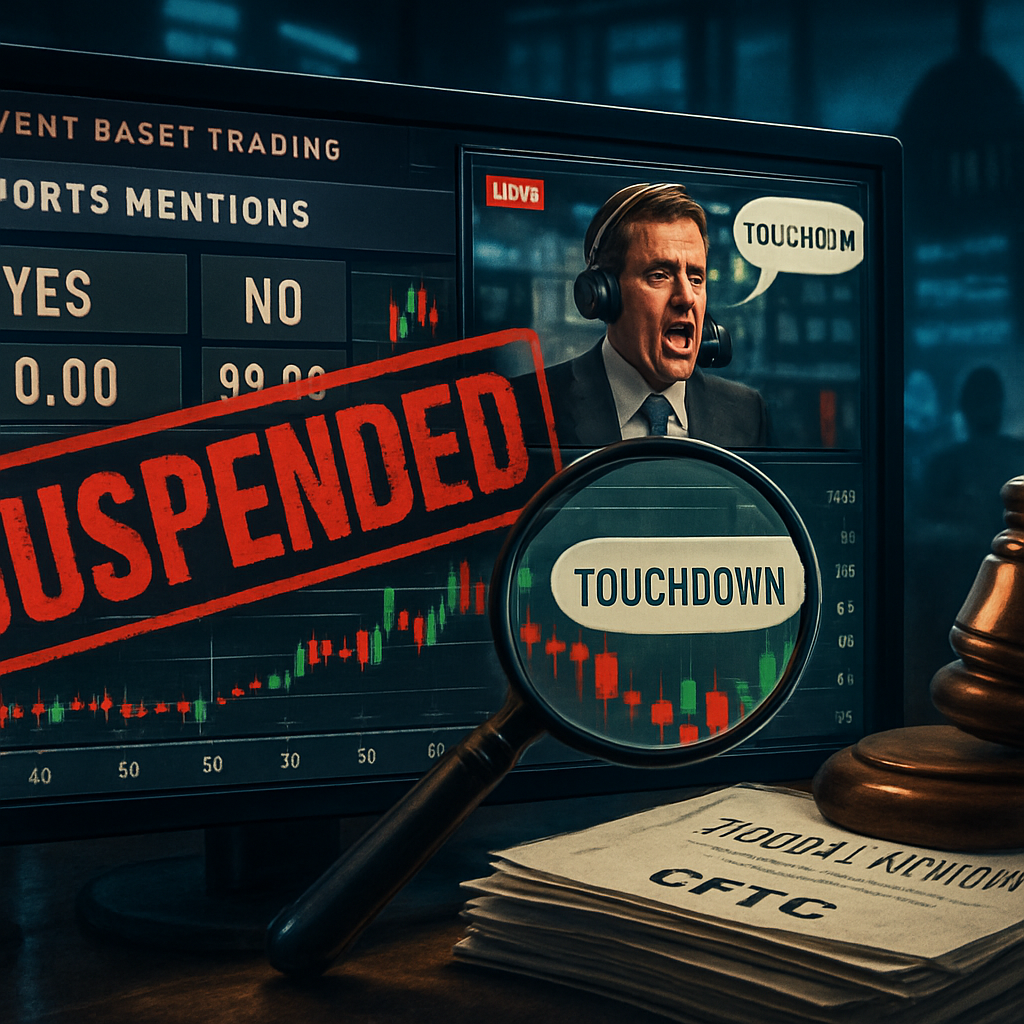
Kalshi has suspended all “sports-mention” markets while the U.S. Commodity Futures Trading Commission (CFTC) examines whether the category is vulnerable to manipulation, according to an NPR report citing anonymous sources. Markets tied to mentions on politics, corporate earnings calls, and news broadcasts remain available on the platform.

Regulatory Review Targets Sports-Mention Contracts

The review focuses on contracts that pay out based on whether a broadcaster says a specific word or phrase during a sports telecast. Regulators are assessing whether these markets are “readily susceptible to manipulation,” a core standard the CFTC applies when evaluating event contracts on designated contract markets.

Kalshi, a federally regulated exchange overseen by the CFTC, lists event contracts that allow users to trade on outcomes across economics, politics, and media. The sports-mention contracts have been pulled as the agency weighs whether the format could be influenced by a small number of participants or by actions unrelated to organic market forces.

What Are “Mention” Markets?

“Mention” markets are binary event contracts that resolve to “yes” or “no” depending on whether a named broadcaster or program utters a specified word within a defined time window. Because the outcome can hinge on real-time editorial decisions, the structure can raise questions about inducement or coordination and whether the event is sufficiently outside the control of traders.

According to the NPR report, Kalshi’s mention markets tied to political figures, earnings calls, and general news broadcasts continue to trade. Only the sports-specific mentions have been removed during the review.

Why It Matters for Event and Prediction Markets

The CFTC’s scrutiny underscores the agency’s broader mandate to prevent manipulation and protect market integrity as event contracts evolve. While Kalshi operates under existing derivatives regulations, the line between permissible event-based trading and impermissible or easily influenced outcomes remains an active area of oversight.

The outcome of the review could shape how exchanges structure future media-related markets—particularly those where a limited set of decision-makers or on-air talent can directly determine results. Any regulatory guidance or action may influence how platforms design contracts to mitigate manipulation risks and maintain compliance.

What’s Next

Neither Kalshi nor the CFTC’s staff comments were cited in the NPR report. It remains unclear whether the agency will require changes to existing market designs, impose new limitations on mention markets, or allow the paused contracts to return in their prior form. For now, trading continues in other mention categories as the regulated exchange awaits the outcome of the CFTC’s review.

Crypto Securities MDL: Will Three Token Suits Be Consolidated Into One Nationwide Case?

Wellermen Image Court slams brakes on crypto class-action merger.

Three separate suits accusing crypto exchanges of selling unregistered securities now face a single federal panel’s judgment: whether they will be fused into one nationwide litigation or left to fight in three different courtrooms. The panel’s decision will determine whether the plaintiffs can force a coordinated discovery war or whether the exchanges keep their battles fragmented and local.

The dispute erupted when Anthony Motto, lead plaintiff in the Northern District of Illinois case Greene v. Coinbase, asked the Judicial Panel on Multidistrict Litigation to yank two parallel suits—one in Los Angeles, the other in Philadelphia—into the same Chicago courtroom. Motto argued that the complaints all turn on the same core question: whether tokens traded on the exchanges are securities under the Howey test. The defendants countered that each platform has its own token listings, fee structures, and user agreements, so common facts are “largely superficial” and consolidation would create logistical chaos. The panel, chaired by Judge Sarah S. Vance, must now decide if the legal overlap outweighs those differences.

If the panel centralizes the cases, the exchanges will face a single judge overseeing nationwide discovery, expert reports, and, potentially, bellwether trials that could brand an entire swath of tokens as securities. A denial would let each district court set its own schedule, increasing defense costs but also giving the exchanges multiple bites at the dismissal apple. Either way, plaintiffs gain momentum: parallel litigation itself signals to the SEC that private plaintiffs are doing the Commission’s enforcement work for free.

In plain English, the ruling decides whether token litigation becomes a single, high-stakes front or a scattered skirmish line. A centralized MDL raises the odds that a judge—rather than Congress or the SEC—will draw the next bright line on what counts as a security token, forcing exchanges to adjust listings or face class-wide damages. Fragmented cases keep that line blurry and slow.

For markets, the stakes are immediate. A green light for consolidation signals to traders that more tokens could soon carry litigation risk premiums, pushing trading volume toward offshore venues or privacy coins. A denial might embolden exchanges to argue that the absence of unified rulings proves the Commission’s enforcement-by-lawsuit strategy is too fractured to matter. Either outcome keeps the decentralization-versus-regulation tension white-hot: plaintiffs want a nationwide rule; exchanges want fifty little ones.

Watch Chicago—if the panel pulls the cases together, the next twelve months of discovery will shape whether DeFi survives as code or merely as a memory of regulatory arbitrage.

Fifth Circuit Narrows SEC Power, Rejects Automatic Securities Label for Crypto

Wellermen Image SEC Loses Big on Crypto Classification Battle
A federal appeals court has delivered a major setback to the SEC’s broad regulatory push over crypto, ruling that certain digital assets cannot automatically be labeled “investment contracts” just because they are sold with marketing hype. The decision narrows the agency’s authority and could reshape how exchanges, DeFi protocols, and token issuers operate across the country.

The lawsuit originated when the SEC brought an enforcement action against a crypto firm, alleging unregistered securities offerings tied to its token sales. The company fought back, arguing that the tokens were utility assets—not investment contracts—and that the SEC’s theory stretched the Howey test beyond recognition. The Fifth Circuit agreed to hear the appeal after a lower court sided with the agency, setting up a showdown over how courts should classify digital assets sold to retail traders.

Judges ruled that the mere presence of profit-seeking language in marketing materials does not automatically convert a token into a security. The court emphasized that for an asset to qualify as an investment contract, buyers must reasonably expect profits derived primarily from the efforts of others. The panel found that the SEC failed to prove this expectation was central to the transaction, especially when tokens carried genuine utility or were traded on decentralized platforms. As a result, the enforcement action was significantly curtailed, handing the company a partial but meaningful victory.

The ruling shifts the burden onto the SEC to demonstrate clear investor reliance on promoter efforts rather than assuming it from general marketing language. This raises the bar for future enforcement actions and could force the agency to refine its approach when pursuing token issuers and exchanges.

Crypto markets are likely to interpret this as a regulatory green light for broader product launches and exchange listings, at least in the short term. The decision weakens the SEC’s leverage in settlement negotiations and may embolden DeFi protocols to resist compliance demands that rest on shaky legal footing. Stablecoin issuers and token projects previously wary of U.S. exposure may accelerate product rollouts, while exchanges gain negotiating room on listing standards and custody arrangements.

Traders should watch for a wave of new token filings and exchange announcements testing the limits of this precedent—opportunity exists, but aggressive issuers could still trigger fresh enforcement if facts differ sharply from this case.

CFTC Wins Monex Appeal, Expands Reach Over Leveraged Crypto Margin Trades

Wellermen Image CFTC WINS ON MONEX APPEAL, MARKETS ON EDGE

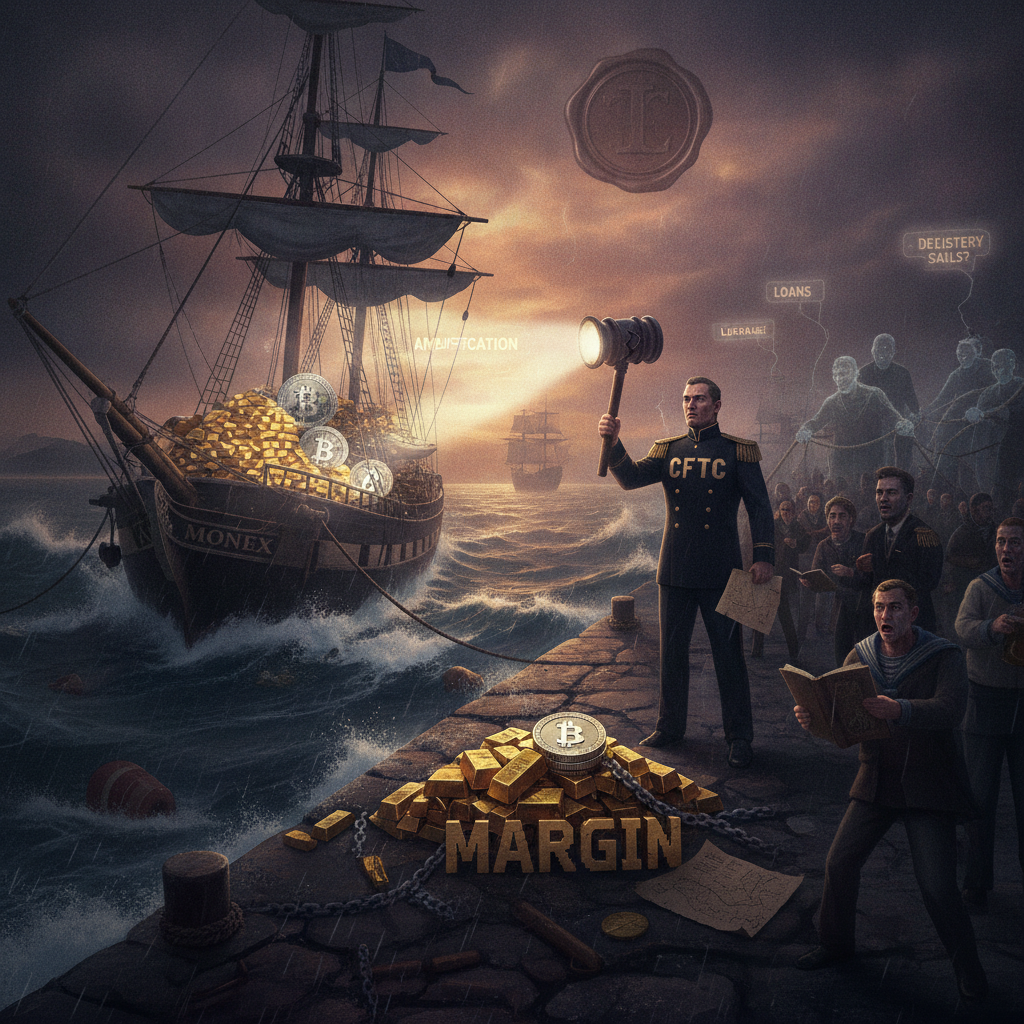
The Ninth Circuit just handed the CFTC a major enforcement victory in the long-running Monex fraud case, reversing a lower court’s dismissal and reopening the door to civil penalties against the precious-metals dealer. At stake is whether leveraged retail metals contracts sold through a financing subsidiary count as “leveraged transactions” under the Commodity Exchange Act, a question that could ripple through every crypto margin product on U.S. shores.

The case began when the CFTC accused Monex of running a $290 million retail metals Ponzi that relied on undisclosed “margin” loans to let customers trade with ten-to-one leverage. The district judge threw the suit out in 2018, ruling that Monex’s arrangements fell outside the statute because title to the metals technically passed to the customer. On appeal, the Ninth Circuit disagreed, holding that the economic reality of the financing—where Monex retained possession and the customer could never take delivery without paying off the loan—meant these were leveraged retail commodity transactions squarely inside the CFTC’s jurisdiction. The panel also reinstated the antifraud counts, finding that allegations of hidden fees and undisclosed counterparty risk were enough to survive a motion to dismiss.

Monex loses the motion, the CFTC gains momentum, and every U.S. platform offering financed crypto trades now faces renewed regulatory risk. The decision widens the CFTC’s net to cover any margin, leverage, or financing scheme that lets retail customers speculate on commodities—including digital ones—without taking actual possession.

In plain English, the court said regulators can look past paper title to the economics of the deal. If a platform keeps the asset and the customer is betting on price moves with borrowed money, the transaction is likely a regulated, leveraged commodity contract.

For crypto, the ruling tilts authority toward the CFTC on margin products, raises the compliance bar for DeFi protocols that embed leverage, and forces exchanges to decide whether they want to register as futures commission merchants or redesign products to avoid the label. Stablecoin issuers who allow financed trading face the same fork in the road.

Expect platforms to tighten margin rules or add “delivery” mechanics to dodge CFTC oversight, while traders should price in higher compliance costs and potential product shutdowns if they stay on U.S.-facing venues.

DC Circuit Narrows CFTC’s Crypto Authority Over Offshore Trades

Wellermen Image CFTC Loses Key Appeal on Crypto Jurisdiction

The D.C. Circuit just handed the CFTC a clear setback, ruling that the agency overreached when it tried to punish a crypto trader for conduct that happened before any clear rules existed. The decision narrows the CFTC’s authority to chase violations retroactively and signals that courts are willing to push back when regulators stretch old statutes to cover new technology.

Trevor Kitchen was accused of running a fraudulent crypto scheme and manipulating the price of a digital asset that traded on an offshore platform. The CFTC claimed the trades affected U.S. markets and therefore fell under its watch. Kitchen argued that the CFTC had no authority because the underlying asset wasn’t a futures contract and the platform wasn’t registered with the agency. The Commission rejected those arguments, fined him, and barred him from trading. Kitchen appealed.

On review, the three-judge panel sided with Kitchen. The court held that the CFTC could not apply its anti-fraud rules to transactions that were not executed on a registered exchange and did not involve traditional commodity derivatives. Judges emphasized that the agency must show a concrete link to U.S. futures markets before it can bring enforcement actions. Without that link, the Commission’s reach stops at the water’s edge.

In plain English, the ruling tells the CFTC it cannot use its broad enforcement powers to police every crypto trade that might ripple into the United States. If the asset is not a futures contract and the venue is offshore, the agency must prove a direct connection to domestic markets or stay out. The decision does not strip the CFTC of power over actual U.S.-listed crypto futures, but it raises the bar for proving jurisdiction when trades occur abroad.

For exchanges and traders, the case lowers the risk of surprise enforcement when they operate outside CFTC-registered venues. DeFi protocols and offshore platforms gain breathing room, while the agency faces higher evidentiary hurdles if it wants to claim cross-border impact. Stablecoin issuers and spot-market venues also benefit indirectly, because the court refused to treat every digital asset as a commodity under CFTC purview.

Expect regulators to test new statutory language or push for clearer legislation rather than rely on expansive readings of existing rules.

– Payward (Kraken) Revenue Rises 17% as Q2 Volume Falls – Kraken Parent Payward Revenue Up 17%, Q2 Volume Drops – Payward (Kraken) Revenue Up 17% as Q2 Trading Falls

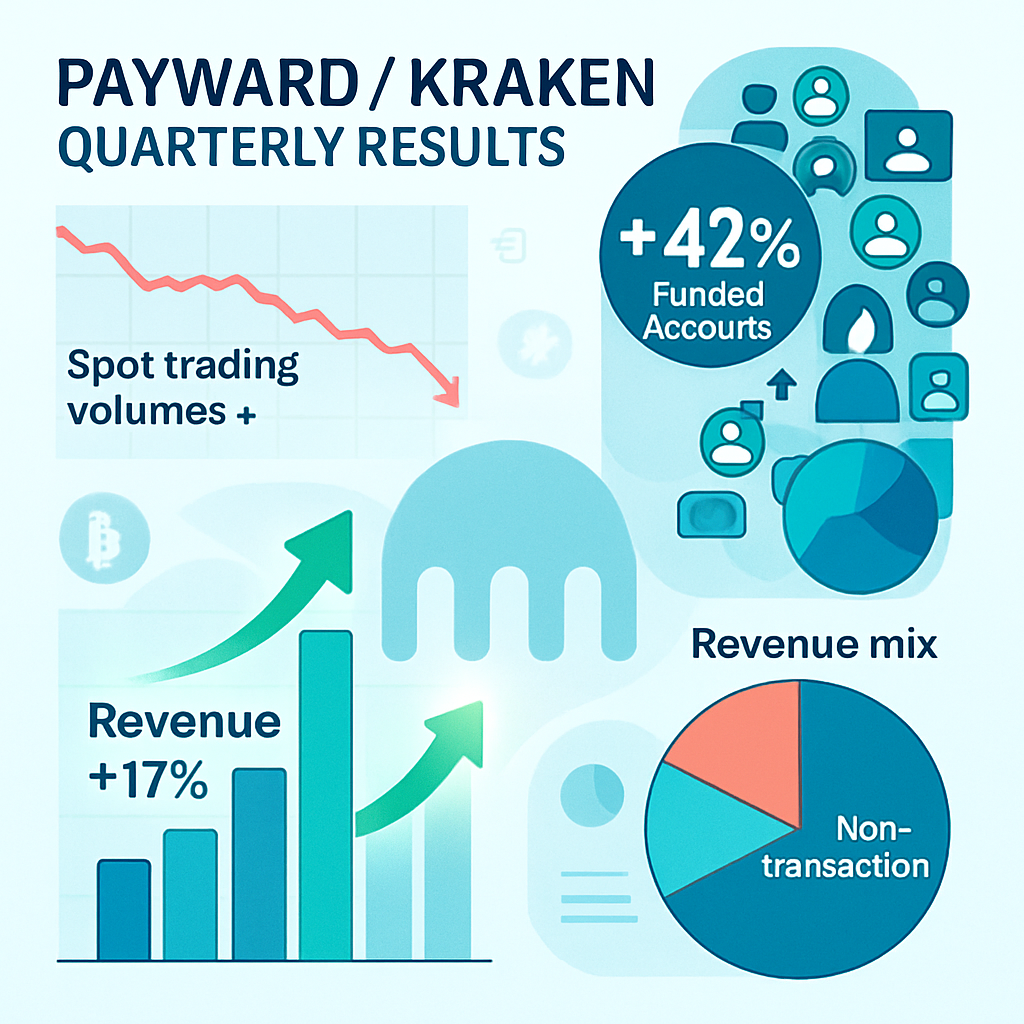
Payward, the parent company of cryptocurrency exchange Kraken, reported a 17% increase in second-quarter revenue despite a decline in spot trading volumes. The company said funded accounts rose 42%, and a larger share of revenue came from non-transaction activities.

Revenue Growth Amid Softer Trading

The second quarter saw weaker spot trading activity, yet Payward expanded overall revenue by 17%. The performance suggests the company is less reliant on trading fees than in prior periods, helping offset the impact of subdued market volumes.

User Base Expansion

Payward reported a 42% increase in funded accounts, indicating stronger customer acquisition and engagement. A larger active user base typically supports recurring platform activity and can provide a buffer when trading conditions are less favorable.

Diversification Beyond Transaction Fees

A growing portion of Payward’s revenue came from non-transaction sources, reflecting efforts across the crypto exchange sector to diversify income beyond spot trading. Expanding into services outside pure trading can help stabilize results through varying market cycles.

CFTC Wins Major Crypto-Fraud Appeal: Crombie Ordered to Pay $2.8M for Bitcoin Futures Scheme

Wellermen Image CFTC WINS APPEAL — CROMBIE’S CRYPTO FRAUD STANDS

The Ninth Circuit just handed the CFTC a clean victory in its first major crypto-fraud case, affirming that a California man who ran a Ponzi scheme in Bitcoin futures must pay $2.8 million in restitution and penalties. The ruling matters because it locks in the agency’s power to police deceptive conduct even when the underlying instruments are novel digital assets.

James Devlin Crombie posed as a Bitcoin-trading wizard, promising 250 percent annual returns and 100 percent capital protection to draw in more than two hundred investors. Instead of trading futures contracts as advertised, he used new deposits to pay earlier victims and diverted the rest to his personal expenses. After a bench trial, the district court found that Crombie had violated the Commodity Exchange Act’s antifraud provisions and ordered him to disgorge his ill-gotten gains.

On appeal, Crombie argued that Bitcoin futures were outside the CFTC’s reach and that the agency had failed to prove the existence of actual futures contracts. The three-judge panel rejected both claims in a terse, unanimous opinion. It held that the CFTC has statutory authority over any futures contract tied to a commodity—including digital assets—and that Crombie’s marketing materials alone were enough to establish that he solicited trades in Bitcoin futures. Because the fraud finding rested on uncontested evidence of misrepresentations and client harm, the court saw no reason to disturb the judgment.

The decision is straightforward: the CFTC can bring enforcement actions against anyone who lies about crypto-related derivatives, regardless of whether the underlying asset itself is classified as a commodity. That precedent removes any lingering doubt about the agency’s jurisdiction in digital-asset futures markets and signals that future defendants will not escape liability by hiding behind technological novelty.

For traders and exchanges, the ruling tightens the margin of safety around marketing claims. Promises of outsized returns or guaranteed principal now carry clear legal risk, even in decentralized or offshore environments, because the CFTC can follow the money wherever U.S. investors are solicited. DeFi protocols that offer leveraged products should expect heightened scrutiny of their sales language, while centralized platforms gain a compliance roadmap they can cite to justify stricter marketing reviews.

The case also underscores that restitution orders travel with the fraudster: once liability is established, collecting the judgment becomes a game of asset tracing rather than legal argument. Market participants who view regulatory gray areas as moats should recalibrate—courts are now telling them those moats are filling in fast.

Judge Tosses Bulk IRS Crypto Seizures, Orders Return of Millions in Digital Assets

Wellermen Image JUDGE TOSSES IRS CRYPTO ACCOUNT SEIZURE, FORCING NEW RULES

A federal judge has ordered the IRS to return millions in crypto after ruling that bulk warrants targeting 24 anonymous wallets violated the Fourth Amendment. The decision marks the first time a court has suppressed digital-asset seizures on grounds that investigators failed to show probable cause for each account, sending an immediate chill through enforcement circles and a surge of relief through exchanges and traders who store value in self-custody wallets.

The case began when IRS agents traced ransomware payments to a cluster of cryptocurrency addresses and asked a magistrate judge for a single warrant covering every wallet that touched tainted funds. Defense lawyers argued that the sweep amounted to a digital dragnet, grabbing clean coins alongside dirty ones. Judge Dabney L. Friedrich agreed, holding that the government had not demonstrated individualized suspicion for each account and that the ensuing seizures were therefore unconstitutional.

Because the wallets contained both tainted and untainted assets, the court suppressed the entire seizure and ordered the government to relinquish control. Prosecutors had hoped to use the forfeited crypto to compensate victims; instead, those assets now return to unknown owners, some of whom may never surface.

In plain terms, the ruling says investigators can no longer lump dozens of blockchain addresses into one warrant without proving each one is probably linked to crime. That standard raises the bar for future crypto seizures and could force agencies to rely on narrower warrants or on civil forfeiture actions that carry their own due-process hurdles.

For markets, the decision tilts power away from bulk enforcement and toward privacy-preserving self-custody. Exchanges that already flag high-risk deposits may now face pressure to tighten compliance, while DeFi protocols and mixers could see renewed volume as users seek to avoid address-level surveillance. Stablecoin issuers, however, remain exposed: their off-chain reserve accounts are still reachable by traditional subpoenas, so any compliance savings won here will not extend to tokens that live inside regulated banking rails.

Traders now have a precedent to cite when the government comes knocking with a master wallet list; whether that precedent survives appeal will determine if the next bear market also features another round of headline-grabbing seizures.

Court Dashes SEC’s BNB-as-Security Theory, Binance Wins Narrow Victory

Wellermen Image Court Slaps Brakes on SEC’s Binance Assault


Federal judge Amy Berman Jackson just shredded the SEC’s sweeping lawsuit against Binance, tossing out the agency’s headline claim that Binance’s BNB token is a security. The ruling guts the SEC’s theory that almost every crypto token automatically falls under its jurisdiction, handing the industry its clearest legal win in years and instantly shifting the balance of power between Washington and digital-asset markets.

The case began in June 2023 when the SEC accused Binance and its U.S. affiliate of operating an unregistered exchange and offering unregistered securities. Binance fought back, arguing the agency was stretching the 1933 Securities Act beyond recognition. Judge Jackson agreed on the critical point: BNB, sold to the public in 2017, was never marketed as a profit-sharing investment in Binance’s business and therefore does not meet the Howey test for an “investment contract.” She left open the possibility that later sales or staking programs could still be securities, but the core token classification that terrified the entire sector is now in doubt.

The decision leaves the SEC bruised but not beaten. Claims tied to Binance’s staking product and unregistered exchange activities survive, so the case moves forward on narrower grounds. Still, the judge’s refusal to label BNB a security sets precedent other courts are likely to cite, and it signals that judges are no longer willing to rubber-stamp the agency’s “everything is a security” narrative.

In plain English, the court told the SEC it cannot simply declare a token a security because the issuer once raised money; regulators must prove investors were led to expect profits derived solely from the promoter’s efforts. That evidentiary bar just got higher for the agency and lower for token issuers.

The ruling chips away at the SEC’s de-facto authority over token classification and pushes oversight pressure toward Congress and the CFTC. Decentralized projects that never promise enterprise profits gain breathing room, while exchanges and DeFi protocols that offer staking or yield products still face compliance risk. Traders now see reduced headline risk for major exchange tokens, but the decision also highlights that staking services could still trigger registration—meaning platforms may quietly dial back such offerings until clearer rules emerge.

Bottom line: the SEC just lost its blanket leverage over token issuers, and markets will price that relief until the next enforcement headline hits.

Bitcoin Hashrate Drops 17% From Record as Miners Chase AI

Bitcoin’s network hashrate has slipped as much as 17% below its all-time high, according to CryptoQuant data, as several publicly listed miners redirect power and capital toward artificial intelligence (AI) and high-performance computing (HPC) data centers rather than expanding new bitcoin mining capacity.

Hashrate Pulls Back From Record Levels

Hashrate measures the aggregate computing power securing the Bitcoin blockchain, typically expressed in exahashes per second (EH/s). A retreat from peak levels indicates fewer machines are actively hashing or that miners are curtailing operations. While the network remains near historically elevated ranges, the pullback marks a notable shift after a prolonged climb to record highs earlier this year.

Short-term hashrate fluctuations are common and can be driven by miner economics, energy market conditions, infrastructure maintenance, or regional curtailments. The latest decline aligns with reports that some operators are reallocating resources to alternative compute workloads.

Miners Pivot to AI and HPC

Publicly traded mining firms have increasingly outlined AI and HPC strategies over the past two years, citing strong demand for data center capacity. These initiatives can involve repurposing existing sites, power contracts, and operational expertise to support GPU-intensive workloads that may offer different revenue profiles than bitcoin mining.

The shift does not necessarily imply a permanent exit from mining, but it reflects changing capital allocation priorities amid competitive pressures, hardware upgrade cycles, and post-halving revenue compression for miners.

Difficulty and Security Considerations

Bitcoin’s mining difficulty adjusts roughly every two weeks to target a 10-minute block interval. If lower hashrate persists, upcoming difficulty adjustments could ease, partially offsetting margin pressures for remaining miners. Despite the recent decline, the network’s security model remains anchored in large-scale, globally distributed hashrate and automatic difficulty recalibration.

What to Watch

  • Future hashrate trends and difficulty adjustments in response to miner behavior.
  • Capital expenditure and hosting announcements from major mining operators.
  • Energy market dynamics and data center build-outs that could influence miner resource allocation.
  • Deployment timelines for next-generation ASICs and potential impacts on fleet efficiency.

Delaware Court Rejects Contract Shield for Crypto Token Claims, Signals Stricter Securities Scrutiny

Wellermen Image Court Nixes Crypto Firm’s Contract Claim, Signals Tighter Scrutiny for Token Deals

Delaware’s Superior Court just gutted a crypto startup’s lawsuit, refusing to let a token-distribution contract serve as a shield against fraud claims. The ruling matters because it tells founders and exchanges that Delaware judges will not rubber-stamp private agreements that try to bury securities-law risk in code or fine print.

Diamond Fortress Technologies and its CEO Charles Hatcher sued their former partner over a deal that called for the creation and distribution of a proprietary token. The contract contained broad release clauses and a Delaware choice-of-law provision. Plaintiffs argued those clauses blocked the partner from bringing fraud or securities claims in another forum. The partner countered that the token had the hallmarks of an unregistered security and that the contract could not erase federal or state investor-protection rules.

The court agreed. It held that contractual releases cannot immunize parties from liability under the securities laws, even if the agreement is governed by Delaware law. Because the token’s economic realities looked more like an investment contract than a simple utility, the judge refused to dismiss the fraud counts. The plaintiffs therefore lose their procedural advantage and must now litigate the substance of whether the token sale violated registration and anti-fraud provisions.

In plain English, Delaware just reminded the industry that calling a token a “utility” or burying liability waivers in smart-contract code will not automatically defeat securities claims. The ruling narrows the protective zone that sophisticated parties thought they could draft around federal and state regulators.

For markets, the decision tilts power toward the SEC and plaintiff bar. Exchanges listing similar tokens face elevated due-diligence costs and potential secondary-liability theories. DeFi protocols that rely on click-wrap or on-chain disclaimers lose a layer of insulation. Traders holding such tokens should price in higher litigation risk and possible rescission claims.

Founders who still believe Delaware paperwork can outrun federal securities rules are betting against a precedent that now carries the state’s most business-friendly court’s seal.

DC Circuit Slams SEC on Bitcoin ETF Double Standard; Grayscale Wins Rehearing

Wellermen Image Court Rejects SEC’s Bitcoin ETF Double Standard

The D.C. Circuit just handed Grayscale a decisive win and the SEC a public rebuke. The three-judge panel ruled that the Commission’s refusal to convert the Grayscale Bitcoin Trust into an exchange-traded product was arbitrary and capricious, because the agency had already green-lit nearly identical bitcoin futures ETFs. Markets are already pricing in a higher probability of spot-bitcoin approval before year-end.

The case began when Grayscale asked the SEC to convert its existing trust—already holding more than $20 billion in actual bitcoin—into an ETF that would trade on NYSE Arca. The Commission turned the application down last year, arguing that the trust’s structure created fraud and manipulation risks that futures-based ETFs somehow avoided. Grayscale sued, saying the SEC was applying two different standards to products that both ultimately track the same underlying asset. On August 29, the appeals court agreed, holding that the SEC had failed to explain why one product’s safeguards were adequate while the other’s were not. The judges sent the matter back to the agency with instructions to reconsider the application under a consistent standard.

Grayscale wins the right to another hearing; the SEC loses the ability to treat spot and futures products as legally distinct without fresh justification. Existing spot-bitcoin ETP filings from BlackRock, Fidelity, and Invesco now carry fresh momentum, while the Commission must either approve them or craft a new rationale that can survive judicial review. For traders, the ruling lowers the perceived regulatory barrier to owning bitcoin through mainstream brokerage accounts.

The decision narrows the SEC’s discretion to reject spot products solely on manipulation concerns when comparable futures vehicles already trade. That shift matters for token classification fights, because the same logic could apply to ether or other commodities whose futures already clear on CFTC-regulated venues. Exchanges and market-makers are already modeling tighter spreads and deeper liquidity once a spot ETF launches, while DeFi protocols may face incremental competition as traditional capital gains easier on-ramps.

The ruling doesn’t guarantee approvals, but it makes outright denial far harder to defend.

CFTC Triumph in Donelson Appeal Signals Wider Crypto Derivative Oversight

Wellermen Image CFTC Wins Key Ruling in Donelson Appeal, Crypto Markets Brace for Wider Reach

The Seventh Circuit just handed the Commodity Futures Trading Commission a sweeping victory, affirming that James Donelson’s unregistered trading advice operation violated federal commodities law. For crypto traders and DeFi operators, the decision sharpens the agency’s power to pursue unregistered advisors who touch digital-asset derivatives—even when those assets sit in gray regulatory zones. The ruling lands just as markets price in fresh enforcement risk.

Donelson ran an online service promising futures-trading signals and automated strategies, collecting fees from retail clients without registering as a commodity trading advisor. The CFTC sued, arguing he needed registration and had to follow disclosure rules. Donelson countered that his signals were “educational,” not advisory, and that the underlying crypto products fell outside the CFTC’s reach. A district court sided with the agency; Donelson appealed.

Writing for a unanimous Seventh Circuit panel, the judges held that once a person offers trading advice on futures or swaps for compensation, registration is mandatory—even if the advice is delivered through software and even if the underlying tokens are also securities. The court rejected Donelson’s attempt to carve crypto out of the statute, ruling that the CFTC’s jurisdiction over derivatives survives regardless of whether the spot tokens themselves are commodities. The panel also refused to narrow the agency’s definition of “advice,” making it harder for signal-sellers to dodge oversight.

In plain English, the decision tells anyone peddling trading bots, paid newsletters, or algorithmic signals tied to futures or swaps that they must register with the CFTC or risk civil penalties, disgorgement, and injunctions. Registration brings disclosure duties, capital requirements, and direct regulatory supervision—costs many small operators cannot meet.

For crypto markets, the ruling broadens the CFTC’s footprint at the exact moment the agency is already sparring with the SEC over token classification. Expect heightened compliance costs for exchanges that list derivatives and for DeFi protocols offering leveraged products. Stablecoin issuers that embed derivatives-like mechanics could now face advisor-registration questions. Traders relying on third-party signals may see fewer options and higher fees, while well-capitalized firms gain a moat as barriers to entry rise.

Bottom line: unregistered crypto signal services just became a lot riskier, and the CFTC just secured another precedent that could stretch its authority over decentralized derivatives.

×