Grayscale: 3 Drivers Boosting Long-Term Bitcoin Adoption

Grayscale Investments says bitcoin adoption is likely to keep expanding despite recent market weakness, citing persistent government deficits, broader blockchain use, and shifting investor portfolio preferences. The firm expects these forces to deepen bitcoin’s integration with traditional finance over time, even as short‑term prices remain volatile.

Macro Factors and Fiscal Pressures

According to Grayscale, ongoing government budget deficits are a structural backdrop that can support long-term demand for non-sovereign digital assets such as bitcoin. While price swings may persist, the firm argues that macroeconomic pressures can encourage continued interest from both retail and institutional investors.

Broader Blockchain Adoption and TradFi Linkages

Grayscale points to growing use of blockchain technology across industries as a catalyst for further integration between digital assets and traditional finance. As infrastructure, custody, and market access improve, the firm believes bitcoin’s role within mainstream financial systems will likely strengthen over time.

Shifting Portfolio Preferences

The asset manager also highlights changes in portfolio construction, with some investors exploring alternative assets and new allocation frameworks. These evolving preferences, Grayscale says, can support sustained bitcoin adoption across market cycles, independent of near-term price action.

Outlook

Grayscale concludes that bitcoin adoption can continue to rise even if markets remain unsettled in the short run. The pace of that adoption, however, will depend on factors including market infrastructure development and the regulatory environment.

Kalshi Wins in D.C. Circuit, CFTC Emergency Stay Denied on Election Contracts

Wellermen Image Kalshi Beats CFTC in Federal Appeals Court

The D.C. Circuit just handed prediction-market platform Kalshi a decisive win over the Commodity Futures Trading Commission, refusing the agency’s emergency bid to halt trading in election contracts. The ruling keeps Kalshi’s high-stakes political markets live and sends a clear signal that regulators cannot simply wave away exchange-listed contracts they dislike.

The dispute traces back to Kalshi’s 2022 filing to list contracts that would pay out on which party controls Congress or wins the White House. The CFTC blocked the products, arguing that election gambling would be “contrary to the public interest.” Kalshi sued, claiming the agency overstepped its statutory authority. A district judge agreed, ordering the CFTC to let the contracts trade. The agency rushed to the appeals court seeking an emergency stay, insisting that allowing the markets to open would cause “irreparable harm” to federal elections. In a terse two-page order, the three-judge panel rejected that plea, finding the CFTC had failed to show any immediate injury serious enough to justify blocking trading while the full appeal proceeds.

The judges did not decide the underlying legal question of whether election contracts belong in the derivatives markets. Instead, they concluded that the CFTC had not met the high bar required for emergency relief—an indication that the agency’s legal footing looks shaky. For now, Kalshi can keep the contracts live, exposing the CFTC to a world where traders bet billions on election outcomes under regulated oversight rather than offshore.

In plain English, a federal court told the CFTC it cannot hit pause on markets it finds politically uncomfortable simply because it says so. The decision chips away at the agency’s discretion to green-light or kill products on vague “public interest” grounds and tilts power toward exchanges and clearinghouses that can show they meet the Commodity Exchange Act’s technical requirements.

For crypto traders, the ruling widens the aperture on what counts as a tradable event contract. If Kalshi’s election markets survive full appeal, expect copy-cat offerings on everything from Supreme Court vacancies to regulatory decisions, tightening the link between prediction markets and on-chain event contracts. That raises fresh questions about whether the SEC can still brand similar tokens as unregistered securities when a CFTC-regulated exchange is already hosting the same bets. It also complicates the agency’s long-running attempt to police DeFi protocols that mirror Kalshi’s offerings without licenses.

The CFTC’s loss hands exchanges and DeFi builders a roadmap: clear statutory language beats regulatory intuition every time.

Texas Court Forces Blockchain Firm to Hand Over Records in Discovery Fight

Wellermen Image JUDGE ORDERS BLOCKCHAIN FIRM TO TURN OVER RECORDS

A Texas appellate court has ordered a blockchain company to comply with discovery demands in an ongoing civil dispute, rejecting its claim that the requests were overly broad and unduly burdensome. The ruling matters because it signals that courts will treat crypto businesses like any other commercial enterprise when it comes to litigation exposure and document production.

The underlying case stems from a contract dispute involving Envy Blockchain, NV Landco 1 LLC, and Stephen Decani. The real-estate and energy partners who sued them sought emails, financial records, and internal communications to prove allegations of mismanagement and possible self-dealing. Envy and its co-relators asked the trial court to quash the discovery requests, arguing the scope was oppressive and would reveal sensitive proprietary data. When the trial judge refused to narrow the requests, the defendants petitioned the Eighth Court of Appeals in El Paso for a writ of mandamus—an extraordinary remedy that would have stopped the discovery cold.

Writing for a three-judge panel, Justice Rodriguez held that the trial court did not abuse its discretion. The opinion notes that the requested documents are “reasonably tailored” to the claims at issue and that the defendants failed to show specific evidence of undue burden beyond generalized assertions. The court emphasized that parties asserting privilege or confidentiality must produce a privilege log rather than blanket refusals, and it declined to micro-manage discovery timelines. In short, the blockchain entities must hand over the records or face sanctions.

The decision strips away any notion that crypto ventures enjoy special insulation from civil procedure rules. Mandamus relief remains rare, and the panel’s refusal to intervene underscores that judges expect the same transparency from blockchain firms that they demand from traditional corporations. For exchanges, wallet providers, and token projects already navigating SEC subpoenas or CFTC inquiries, the ruling is a reminder that state-court litigation can force rapid disclosure of wallet keys, treasury flows, and governance chats.

Plainly put, discovery fights in Texas just became harder to win for crypto defendants. Companies cannot hide behind the complexity of blockchain ledgers or claim “too technical to produce” without hard evidence of oppression. The practical takeaway: build a document-retention policy now, because judges will not pause litigation while code is still being written.

In an industry where one sloppy email or unlogged wallet transfer can trigger multimillion-dollar liability, the safest hedge is to assume every record is discoverable—and to structure internal communications accordingly.

Seventh Circuit Halts CFTC Follow-On Subpoenas After Kraft/Mondelēz Settlement

Wellermen Image Court Slams CFTC, Orders Halt on Kraft Subpoenas

The Seventh Circuit just handed Kraft Foods and its snack-food sibling Mondelēz a stunning procedural win—ordering the CFTC to stop fishing for documents it already has. The ruling tightens the leash on how aggressively the agency can use subpoenas during enforcement actions, and it sends a clear signal that regulators can’t simply keep asking the same questions in different wrappers.

The case began when the CFTC tried to revive a long-dormant probe into whether Kraft manipulated wheat futures prices back in 2011. After years of litigation, the agency lost on the merits, paid a settlement, and agreed to close the file. Then it issued a fresh subpoena seeking virtually identical trading records. Kraft refused. When a district judge sided with the CFTC, the company asked the appeals court for an extraordinary writ of mandamus—an order telling a lower court to correct an obvious legal error. A three-judge panel granted it in a terse, unpublished order, effectively slamming the door on the agency’s second bite at the apple.

At the heart of the dispute was whether the CFTC’s new subpoena was truly “related” to a still-open investigation or simply an attempt to re-litigate a closed case. The Seventh Circuit ruled that once the enforcement action ended, the agency lost its statutory power to demand documents under the same investigative umbrella. That single sentence effectively rewrites the playbook: regulators cannot use open-ended or follow-on subpoenas to keep targets on the hook after the music stops.

In plain English, the decision tells the CFTC—and by extension the SEC—that enforcement power has hard stop signs. If an investigation concludes with a settlement or dismissal, agencies cannot pretend the matter is still “open” just to keep demanding data. Companies gain leverage to push back on duplicative requests, and judges now have clearer precedent to quash subpoenas that smell like do-overs.

For crypto markets, the ruling lands at the exact moment both the CFTC and SEC are racing to define oversight of digital-asset exchanges, stablecoin issuers, and DeFi protocols. If courts start treating closed enforcement actions as truly closed, agencies lose a favorite lever: the perpetual subpoena that never quite goes away. That reduces compliance drag for exchanges and token projects, but it also raises the stakes—regulators may accelerate enforcement while cases are still technically open, pushing traders and platforms to settle early or face endless scrutiny.

The message to both regulators and the crypto industry is blunt: once the file is stamped “closed,” it stays closed—unless the agency can show an entirely new violation, not just better questions about the old one.

Bitcoin News: OCC Approves Trump-Linked World Liberty Financial

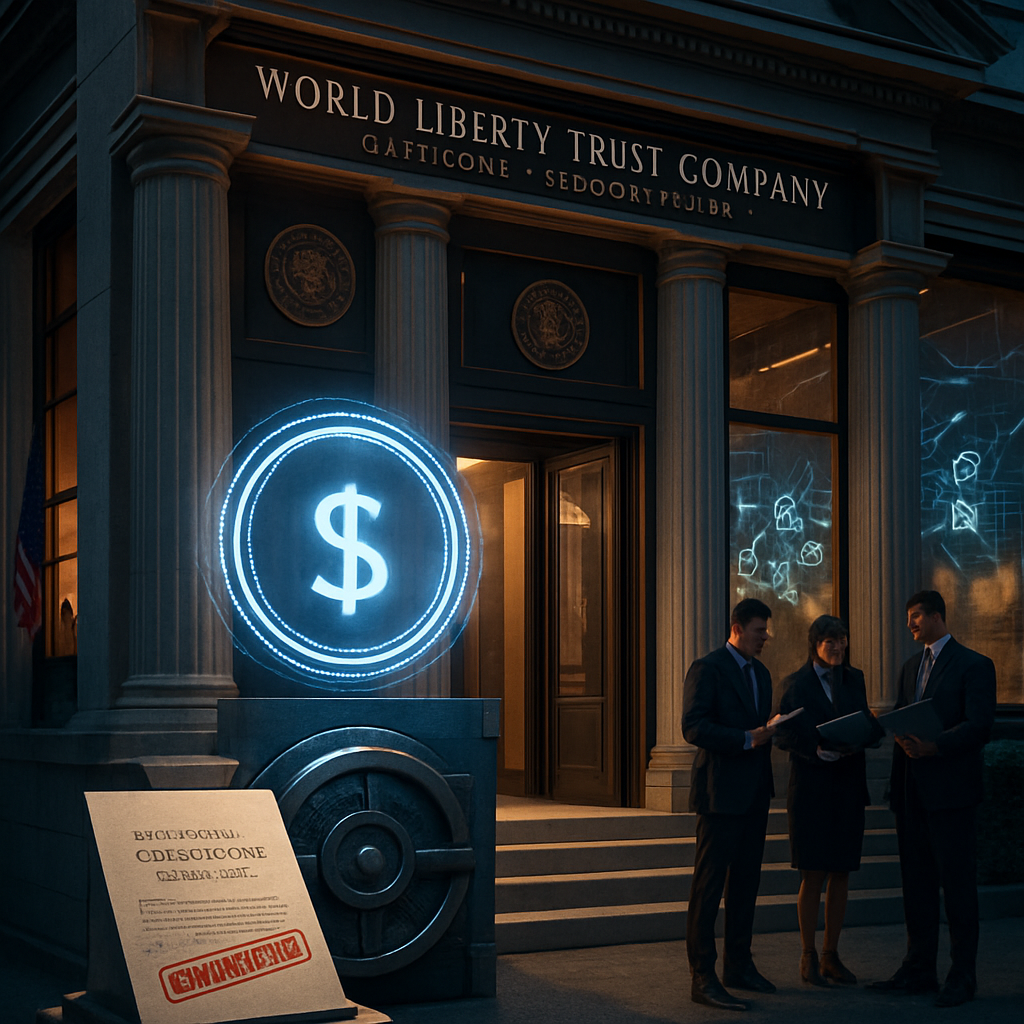
World Liberty Financial, a decentralized finance firm linked to the Trump family, has received preliminary conditional approval from the U.S. Office of the Comptroller of the Currency (OCC) to establish a national trust bank. The Aug. 14 decision clears an initial regulatory hurdle for the company’s proposed World Liberty Trust Company, National Association, and provides a pathway to bring its USD1 stablecoin issuance into a federally supervised framework.

OCC Grants Preliminary Nod for National Trust Bank

The OCC’s preliminary conditional approval allows an applicant to proceed with organization and work toward meeting pre-opening requirements. It is not final approval to commence banking operations. Before opening, the proposed trust bank must satisfy the OCC’s conditions, which typically include governance, risk management, capital, compliance, and operational readiness benchmarks.

A national trust bank charter can enable firms to offer fiduciary and custody services and to operate under federal oversight. For crypto-focused companies, this structure is often pursued to support institutional-grade digital asset services within recognized banking standards.

USD1 Stablecoin Plans

The approval outlines a route for World Liberty Financial to align USD1 issuance with a national trust bank framework. Stablecoins are digital tokens designed to maintain a one-to-one peg with a reference currency, typically the U.S. dollar. Bringing issuance under a regulated trust structure would subject related activities to federal supervisory expectations, including risk controls, compliance, and consumer protection requirements.

Company Background and Next Steps

World Liberty Financial describes itself as a DeFi-focused firm and has been publicly linked to members of the Trump family. With the OCC’s initial green light, the company must now complete organizational milestones and secure final approval before launching the national trust bank.

The OCC, a bureau of the U.S. Treasury, charters and supervises national banks and federal savings associations. Its conditional approvals for digital asset-focused trust banks have marked important steps for firms seeking to bridge crypto services with the U.S. banking system. World Liberty Financial’s progress will depend on fulfilling the OCC’s conditions ahead of any operational launch.

SEC Revives 35-Year-Old Ban to Block Bilzerian’s Crypto Venture

Wellermen Image SEC Revives 1989 Bilzerian Ban to Block New Crypto Venture

The SEC just dusted off a 2001 injunction to stop Paul Bilzerian from launching a crypto-related enterprise. The move shows the agency is willing to use old judgments as living weapons against repeat offenders who migrate into digital assets.

Bilzerian, convicted in the late 1980s for securities fraud and later barred from the securities industry, filed papers in 2022 to form a new company whose marketing materials promised token-based real-estate financing. The SEC returned to Judge Royce Lamberth arguing that any “commencement” of a securities business—traditional or tokenized—breached the permanent injunction entered after Bilzerian’s criminal case. The court agreed, holding that the 2001 order sweeps in blockchain securities because the underlying fraud statute makes no distinction between paper certificates and digital tokens. The ruling lets the SEC enforce the injunction without proving fresh violations, effectively extending a 35-year-old sanction into the crypto era.

For Bilzerian the loss is total: the court not only blocked the proposed venture but warned that future crypto projects would trigger contempt proceedings. The agency scores a precedent that revives dormant decrees whenever an enjoined defendant pivots to digital assets. Traders and issuers who once assumed that old-court orders fade with time now face a reminder that SEC injunctions can function like indelible tattoos on capital-raising plans.

The decision underscores that the Commission’s authority travels with the person, not the asset class, lowering the bar for future enforcement against anyone already under historical sanctions who tries to issue tokens or run a DeFi protocol. Exchanges and liquidity venues that list instruments connected to such individuals now carry added gate-keeping risk, while decentralized projects must vet team wallets against decades-old judgments. Stablecoin issuers and real-estate platforms experimenting with tokenized securities receive a clear signal that regulatory ghosts from the 1980s can still haunt 2024 fundraising.

In short, yesterday’s fraud injunction is today’s crypto compliance checklist.

SCOTUS Rules Some Digital Assets Aren’t Securities, Narrowing SEC Crypto Powers

Wellermen Image SEC Loses Key Crypto Classification Battle

The Supreme Court just handed the SEC a painful defeat, ruling that certain digital assets lack the hallmarks of an investment contract and therefore fall outside the agency’s traditional securities jurisdiction. The decision, issued this morning, dramatically narrows the SEC’s ability to treat every token sale as a securities offering and forces regulators to prove that buyers relied on the efforts of others rather than on the asset’s inherent utility or scarcity. Markets reacted instantly: Bitcoin futures jumped 6 percent, ether climbed 8 percent, and several mid-cap tokens that had been under investigation spiked 15–20 percent on relief buying.

The case began when the SEC sued a decentralized protocol alleging its presale tokens were unregistered securities. Lower courts split on whether the tokens satisfied the Howey test’s “efforts of others” prong, prompting the justices to grant certiorari. Writing for a 6–3 majority, Chief Justice Harlan held that where purchasers receive tokens that confer governance rights, access rights, or consumptive utility—and where the protocol’s code, not promoter marketing, drives value—the economic reality is not an investment contract. The Court rejected the SEC’s argument that marketing materials alone could convert every token into a security, insisting the agency must demonstrate buyers expected profits derived predominantly from the managerial efforts of identifiable promoters.

The ruling immediately shifts the enforcement landscape. The SEC will need stronger facts and clearer evidence before bringing enforcement actions, raising the bar for proving that a token is a security. Commodity regulators, meanwhile, gain ground: the CFTC can now assert oversight over tokens the Court deems non-securities, setting up a clearer—if still overlapping—bifurcation between securities-like and commodity-like digital assets. Centralized exchanges gain breathing room for listings, while DeFi protocols that distribute governance tokens face lower litigation risk, provided their tokens deliver real utility or voting power.

For traders and issuers the opinion signals that utility and decentralization are now judicially recognized defenses, not mere marketing slogans. Stablecoin issuers, however, remain in a gray zone; the Court left open whether fiat-pegged tokens sold with yield promises could still trigger securities analysis. Exchanges and protocols should expect renewed CFTC scrutiny as that agency moves to fill the vacuum the SEC just created.

The decision is less a green light than a yellow one: issuers win clarity, traders win optionality, but both still operate under two competing federal watchdogs and a patchwork of state rules that have yet to adapt.

Seventh Circuit Expands CFTC Reach to Offshore Bitcoin Futures

Wellermen Image Court hands CFTC new reach over futures-style crypto trades

The Seventh Circuit just told the Commodity Futures Trading Commission it can police a family trust that traded bitcoin futures on unregistered platforms, even though the trust never touched an exchange the CFTC directly oversees. The ruling matters because it hands the agency a precedent to chase traders and venues that slip through cracks in the old rulebook, and it arrives just as crypto firms are lobbying Washington to draw clearer lines between commodities, securities, and DeFi.

The Conway Family Trust lost money trading bitcoin futures on two offshore platforms that never registered with the CFTC. After the CFTC brought an enforcement action, the trust fought back, arguing the agency lacked jurisdiction because the contracts were offered overseas and the trust itself wasn’t a registered futures participant. The Seventh Circuit disagreed. Judges ruled that once a U.S. person uses an instrument that meets the statutory definition of a futures contract, the CFTC can enforce its anti-fraud rules regardless of where the platform is domiciled. The trust’s petition for review was denied.

The decision widens the agency’s net without expanding the statute. By focusing on the trader’s location and the product’s economic function rather than the platform’s registration status, the court effectively lets the CFTC treat unregistered crypto venues as the functional equivalent of illegal bucket shops when U.S. customers are involved.

For markets, the ruling tilts authority toward the CFTC at the precise moment the SEC is trying to claim overlapping turf on token offerings. Traders who assumed that routing orders through foreign servers would shield them from U.S. oversight now face real legal risk. DeFi protocols that offer futures-like exposure will have to decide whether to geoblock U.S. wallets or accept that they, too, could be swept into enforcement sweeps. Exchanges that have danced around registration may feel pressure to either register or exit U.S. flows entirely, tightening liquidity for retail participants.

Expect more CFTC enforcement against offshore crypto derivatives desks and a slow migration of U.S. volume onto compliant onshore venues.

Bitcoin News: Bitwise Eyes Solana Staking ETF, Tokenized Shares

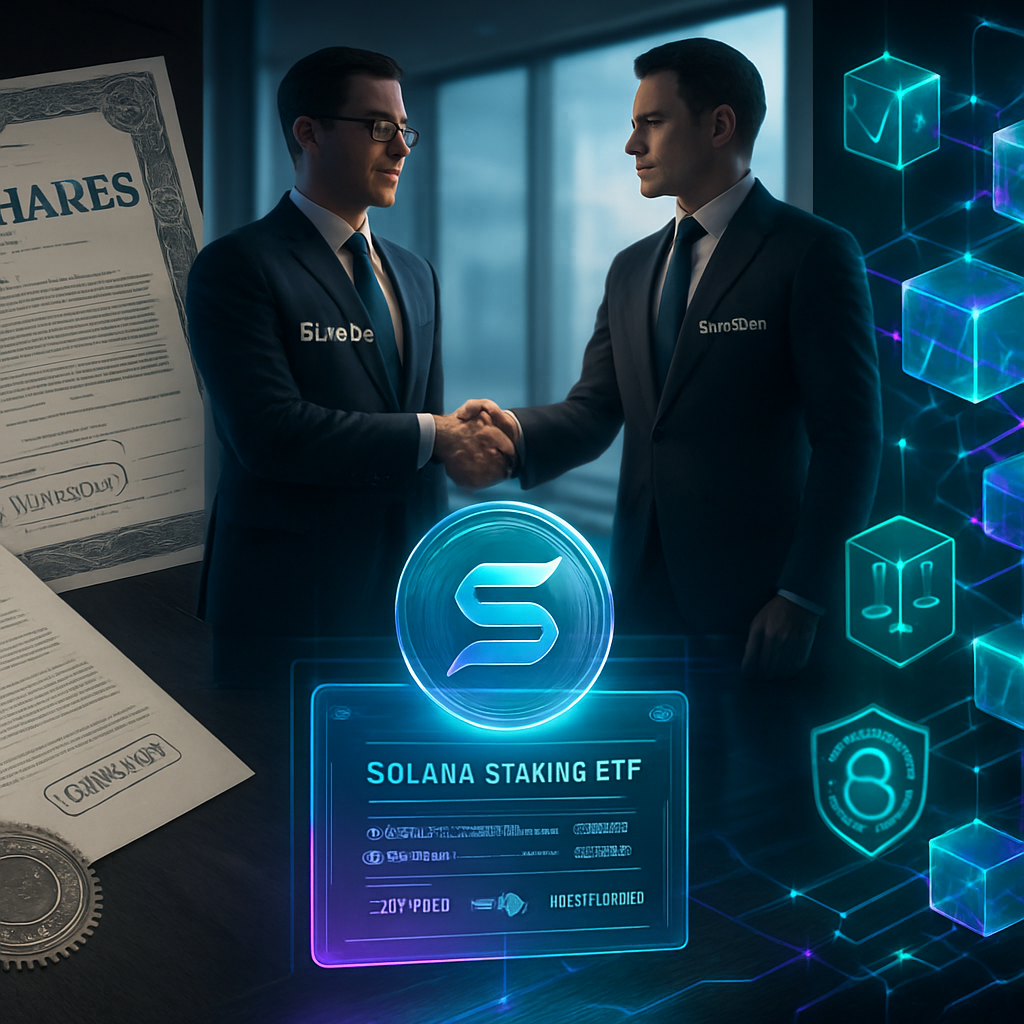
Bitwise Asset Management is partnering with Superstate to enable investors to hold tokenized shares of select funds while maintaining the same legal and economic rights as traditional shares. The firm’s proposed Solana staking exchange-traded fund (ETF) is expected to be the first product considered for the blockchain-based structure.

Bitwise Partners With Superstate on Onchain Fund Shares

Bitwise said it is working with Superstate to bring fund share ownership onchain, allowing investors to hold tokenized representations of shares that mirror the rights and protections of their conventional counterparts. The initiative is designed to preserve existing regulatory and investor safeguards while leveraging blockchain rails for record-keeping and transfer.

Solana Staking ETF Eyed as Pilot

The company indicated that its Solana staking ETF is expected to be the first product evaluated for the tokenized share model. If implemented, the structure would place shares on a blockchain while keeping the fund’s governance, economic entitlements, and investor protections consistent with standard share classes.

Why Tokenizing ETF Shares Matters

  • Operational efficiency: Representing shares on a blockchain may enable faster settlement and streamlined transfer processes compared with traditional registries.
  • Transparency: Onchain records can provide verifiable, tamper-resistant ownership logs and auditability.
  • Programmability: Tokenized shares can be integrated with compliant, automated workflows for corporate actions and transfers.
  • Continuity of rights: The tokenized format is intended to maintain the same legal and economic rights as conventional shares.

Market and Regulatory Context

Tokenization of traditional assets has gained momentum as asset managers and technology firms explore blockchain for more efficient market infrastructure. Any rollout of tokenized share classes typically depends on operational readiness and compliance with applicable regulations and fund documentation.

Bitwise’s collaboration with Superstate underscores growing interest in bringing regulated investment products onchain, with the Solana staking ETF positioned as the initial test case for the structure.

Crypto Wins: Fifth Circuit Blocks SEC’s Broad ‘Dealer’ Rule

Wellermen Image Court Slaps Down SEC on Crypto “Dealer” Rule

The Fifth Circuit just blocked a sweeping SEC rule that would have forced crypto trading platforms and large holders to register as dealers, ruling that the agency exceeded its statutory authority and failed to justify the massive compliance burden. The decision hands crypto exchanges and DeFi protocols a major victory while exposing the SEC’s aggressive expansion into digital-asset markets as legally shaky.

The fight began when the Commission adopted a 2022 rule redefining who counts as a “dealer” under the Securities Exchange Act, sweeping in any entity that regularly buys and sells securities—even if those trades were for its own account and not on behalf of customers. Major platforms and DeFi projects argued the change would force them into broker-dealer registration, capital, and custody rules never designed for decentralized markets. The Fifth Circuit agreed, finding the SEC lacked explicit congressional permission to stretch the dealer definition that far and that the agency’s cost-benefit analysis was “arbitrary and capricious.”

Judges ruled the new definition was both overbroad and under-justified, vacating the rule in its entirety. Crypto platforms and large traders avoid a regulatory hammer that would have required broker-dealer licenses, net-capital reserves, and customer-protection rules. The SEC loses its clearest lever yet to force exchange-like registration on non-intermediary actors; smaller trading desks and liquidity providers gain breathing room. The ruling also signals that future SEC attempts to stretch old statutes to cover new technology will face skeptical review in the Fifth Circuit’s jurisdiction.

In plain English, the court told the SEC it cannot simply rename market participants “dealers” to bring them under its roof without a clear green light from Congress. The decision narrows the agency’s toolkit for policing crypto trading venues, pushes the regulatory fight back to lawmakers, and keeps decentralized protocols outside traditional broker rules for now.

The ruling lands as another constraint on SEC reach, tilting authority questions toward the CFTC on spot commodities and reinforcing the view that most tokens are not securities when traded for personal accounts. Stablecoin issuers and automated-market-maker protocols dodge immediate registration risk, while exchanges gain leverage in ongoing enforcement negotiations. Traders see lower compliance overhead and reduced chance of forced KYC on large self-directed wallets, but they also read the opinion as a flashing warning that Congress—not courts—will decide the endgame.

This is a tactical win for crypto markets, not a strategic shield; without legislation, the SEC will keep probing other statutory angles and state regulators could step into the gap.

Final Settlement Stands: Court Blocks Reopening 2018 Oil-Futures Case Over Crypto Claims

Wellermen Image Regal Commodities v Tauber

Regal Commodities won a decisive appellate ruling that blocks Tauber from reopening a 2018 commodity-futures dispute—sending a clear message that traders cannot relitigate old contracts simply because digital assets have gone mainstream. The New York court slammed the door on a second bite at the apple, holding that the earlier settlement was final and binding. For crypto traders and platforms watching from the sidelines, the decision tightens the legal screws on anyone hoping to rewrite old agreements under new regulatory narratives.

The fight began in 2018 when Regal sued Tauber over an alleged breach of margin rules in oil-futures accounts. The two sides settled, and the case was dismissed with prejudice. Years later, after Bitcoin’s 2021 boom, Tauber filed a new complaint claiming the original deal was void because the accounts secretly traded crypto derivatives—something he said violated public policy. Regal moved to dismiss, arguing the dispute had already been conclusively resolved. The lower court agreed, and the Appellate Division affirmed.

Judges ruled that once a claim is settled “with prejudice,” every theory that could have been raised at the time—crypto or otherwise—is extinguished. Tauber cannot now argue the contracts were illegal simply because the underlying assets later became fashionable. The court rejected his attempt to shoehorn new regulatory rhetoric into old facts, calling it an “impermissible collateral attack.” Regal keeps its money and its clean record; Tauber walks away empty-handed and barred from trying again.

In plain English, the decision tells traders and exchanges that final settlements stay final—even if the asset class mutates overnight. Courts will not let disappointed counterparties dress up buyer’s remorse as a brand-new legal theory.

The ruling shores up settlement certainty at a moment when the SEC and CFTC are still fighting over where digital commodities sit in the regulatory stack. It reduces the litigation overhang for platforms that resolved legacy disputes before crypto rules crystallized, but it also warns DeFi protocols that creative plaintiffs may still test novel public-policy angles in jurisdictions less friendly to preclusion doctrines. Exchanges and traders gain breathing room; opportunistic litigants lose a potential lever.

Bottom line: lock in your settlements now—courts will not reopen them just because the asset class got a new label.

Seventh Circuit Expands CFTC Powers, Forcing Early Document Disclosures in Commodities Probes (Crypto Included)

Wellermen Image Court Hands CFTC New Power Over Commodities

A federal appeals court just granted the Commodity Futures Trading Commission extraordinary new power to force companies to hand over internal documents in investigations, even when no enforcement action has been filed. The Seventh Circuit’s ruling in a Kraft Foods dispute expands the CFTC’s reach far beyond traditional futures markets and into the broader commodities space, including physical goods and potentially digital assets. For crypto traders and exchanges, this means regulators now have a faster, quieter way to collect evidence without the public scrutiny that comes with formal charges.

The case began when the CFTC demanded internal records from Kraft and its snack-food subsidiary Mondelēz during an investigation into alleged manipulation of wheat futures. Kraft refused, arguing the agency had not shown it was acting within its legal authority. The CFTC responded by asking the Seventh Circuit to issue a writ of mandamus—an extraordinary court order—compelling the companies to comply. In a terse, unanimous opinion, the appeals court sided with the regulator, holding that once the CFTC opens an investigation tied to its statutory mission, companies must turn over documents unless they can prove the request is clearly unreasonable or unrelated to any plausible violation.

The decision effectively lowers the bar for regulators seeking early-stage discovery. Previously, companies could stall or litigate broad subpoenas; now, the CFTC can shortcut that process with mandamus, a remedy historically reserved for extreme circumstances. Kraft and Mondelēz lose the ability to keep internal communications shielded during preliminary probes, while the agency gains a faster on-ramp to evidence that could support enforcement actions months or years later.

In plain terms, the court told companies: if the CFTC knocks with an investigation tied to commodities—even tangentially—you open the door or risk a judge ordering it open for you. The ruling removes a layer of procedural friction that once protected targets, shifting leverage toward the regulator at the earliest stages of scrutiny.

For crypto markets, the implications are immediate. The CFTC has long claimed jurisdiction over digital-asset derivatives and commodities like Bitcoin and Ether. This precedent makes it easier for the agency to demand trading records, wallet data, or internal communications from exchanges, DeFi protocols, or token issuers under the banner of a commodities investigation. Stablecoin issuers, miners, and OTC desks now face a lower threshold for compelled disclosure, increasing compliance costs and chilling informal communications that were once considered off-limits.

The decentralization-versus-regulation tension sharpens as well. While the ruling does not redefine what counts as a commodity, it strengthens the CFTC’s practical ability to gather evidence that could later support such classifications. Traders should expect more informal inquiries that feel like fishing expeditions; the upside is faster clarity on enforcement priorities, but the downside is less room to operate in gray areas without leaving a documentary trail.

Exchanges and protocols relying on jurisdictional ambiguity will find that ambiguity harder to maintain. Expect a wave of internal policy updates, data-retention changes, and quiet outreach to the CFTC from firms that previously treated informal document requests as optional.


Bitcoin News: Kalshi Drops Sports Markets as CFTC Opens Review

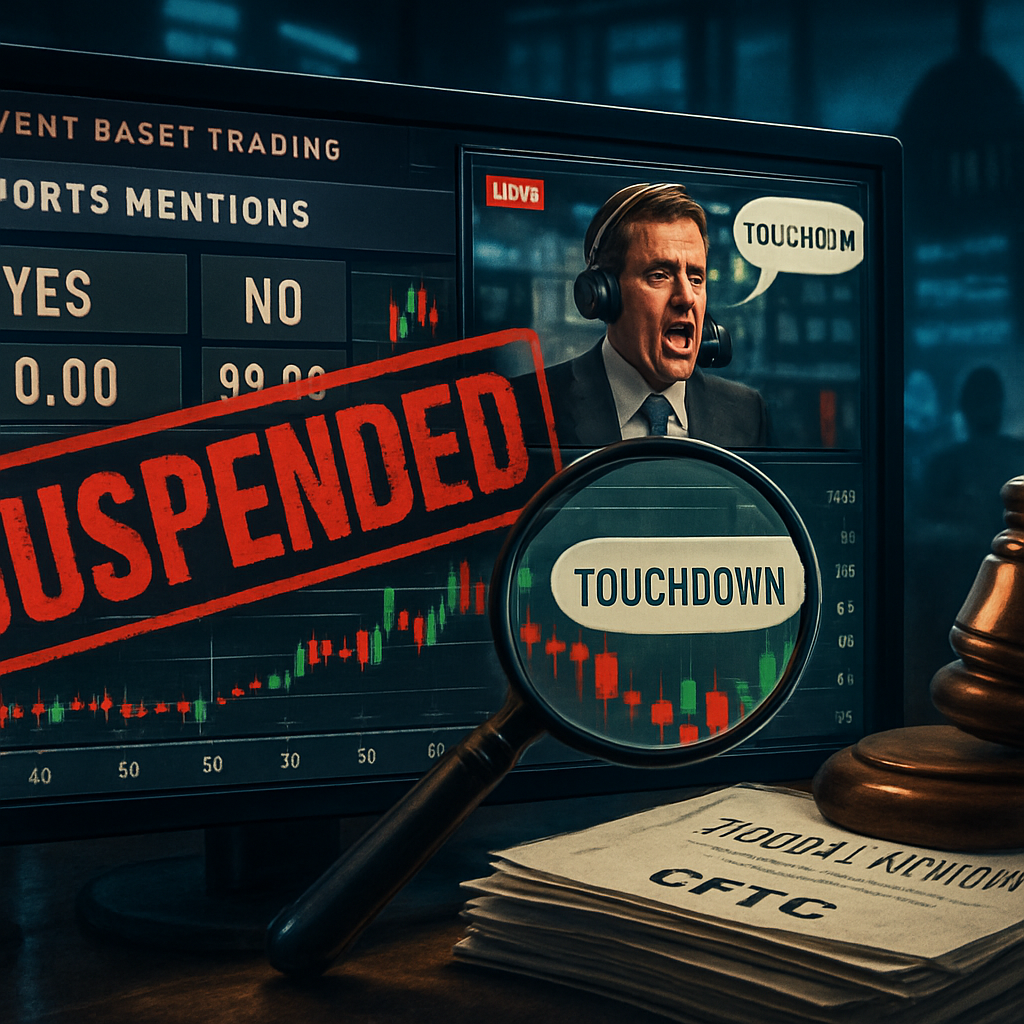
Kalshi has suspended all “sports-mention” markets while the U.S. Commodity Futures Trading Commission (CFTC) examines whether the category is vulnerable to manipulation, according to an NPR report citing anonymous sources. Markets tied to mentions on politics, corporate earnings calls, and news broadcasts remain available on the platform.

Regulatory Review Targets Sports-Mention Contracts

The review focuses on contracts that pay out based on whether a broadcaster says a specific word or phrase during a sports telecast. Regulators are assessing whether these markets are “readily susceptible to manipulation,” a core standard the CFTC applies when evaluating event contracts on designated contract markets.

Kalshi, a federally regulated exchange overseen by the CFTC, lists event contracts that allow users to trade on outcomes across economics, politics, and media. The sports-mention contracts have been pulled as the agency weighs whether the format could be influenced by a small number of participants or by actions unrelated to organic market forces.

What Are “Mention” Markets?

“Mention” markets are binary event contracts that resolve to “yes” or “no” depending on whether a named broadcaster or program utters a specified word within a defined time window. Because the outcome can hinge on real-time editorial decisions, the structure can raise questions about inducement or coordination and whether the event is sufficiently outside the control of traders.

According to the NPR report, Kalshi’s mention markets tied to political figures, earnings calls, and general news broadcasts continue to trade. Only the sports-specific mentions have been removed during the review.

Why It Matters for Event and Prediction Markets

The CFTC’s scrutiny underscores the agency’s broader mandate to prevent manipulation and protect market integrity as event contracts evolve. While Kalshi operates under existing derivatives regulations, the line between permissible event-based trading and impermissible or easily influenced outcomes remains an active area of oversight.

The outcome of the review could shape how exchanges structure future media-related markets—particularly those where a limited set of decision-makers or on-air talent can directly determine results. Any regulatory guidance or action may influence how platforms design contracts to mitigate manipulation risks and maintain compliance.

What’s Next

Neither Kalshi nor the CFTC’s staff comments were cited in the NPR report. It remains unclear whether the agency will require changes to existing market designs, impose new limitations on mention markets, or allow the paused contracts to return in their prior form. For now, trading continues in other mention categories as the regulated exchange awaits the outcome of the CFTC’s review.

Crypto Securities MDL: Will Three Token Suits Be Consolidated Into One Nationwide Case?

Wellermen Image Court slams brakes on crypto class-action merger.

Three separate suits accusing crypto exchanges of selling unregistered securities now face a single federal panel’s judgment: whether they will be fused into one nationwide litigation or left to fight in three different courtrooms. The panel’s decision will determine whether the plaintiffs can force a coordinated discovery war or whether the exchanges keep their battles fragmented and local.

The dispute erupted when Anthony Motto, lead plaintiff in the Northern District of Illinois case Greene v. Coinbase, asked the Judicial Panel on Multidistrict Litigation to yank two parallel suits—one in Los Angeles, the other in Philadelphia—into the same Chicago courtroom. Motto argued that the complaints all turn on the same core question: whether tokens traded on the exchanges are securities under the Howey test. The defendants countered that each platform has its own token listings, fee structures, and user agreements, so common facts are “largely superficial” and consolidation would create logistical chaos. The panel, chaired by Judge Sarah S. Vance, must now decide if the legal overlap outweighs those differences.

If the panel centralizes the cases, the exchanges will face a single judge overseeing nationwide discovery, expert reports, and, potentially, bellwether trials that could brand an entire swath of tokens as securities. A denial would let each district court set its own schedule, increasing defense costs but also giving the exchanges multiple bites at the dismissal apple. Either way, plaintiffs gain momentum: parallel litigation itself signals to the SEC that private plaintiffs are doing the Commission’s enforcement work for free.

In plain English, the ruling decides whether token litigation becomes a single, high-stakes front or a scattered skirmish line. A centralized MDL raises the odds that a judge—rather than Congress or the SEC—will draw the next bright line on what counts as a security token, forcing exchanges to adjust listings or face class-wide damages. Fragmented cases keep that line blurry and slow.

For markets, the stakes are immediate. A green light for consolidation signals to traders that more tokens could soon carry litigation risk premiums, pushing trading volume toward offshore venues or privacy coins. A denial might embolden exchanges to argue that the absence of unified rulings proves the Commission’s enforcement-by-lawsuit strategy is too fractured to matter. Either outcome keeps the decentralization-versus-regulation tension white-hot: plaintiffs want a nationwide rule; exchanges want fifty little ones.

Watch Chicago—if the panel pulls the cases together, the next twelve months of discovery will shape whether DeFi survives as code or merely as a memory of regulatory arbitrage.

Fifth Circuit Narrows SEC Power, Rejects Automatic Securities Label for Crypto

Wellermen Image SEC Loses Big on Crypto Classification Battle

A federal appeals court has delivered a major setback to the SEC’s broad regulatory push over crypto, ruling that certain digital assets cannot automatically be labeled “investment contracts” just because they are sold with marketing hype. The decision narrows the agency’s authority and could reshape how exchanges, DeFi protocols, and token issuers operate across the country.

The lawsuit originated when the SEC brought an enforcement action against a crypto firm, alleging unregistered securities offerings tied to its token sales. The company fought back, arguing that the tokens were utility assets—not investment contracts—and that the SEC’s theory stretched the Howey test beyond recognition. The Fifth Circuit agreed to hear the appeal after a lower court sided with the agency, setting up a showdown over how courts should classify digital assets sold to retail traders.

Judges ruled that the mere presence of profit-seeking language in marketing materials does not automatically convert a token into a security. The court emphasized that for an asset to qualify as an investment contract, buyers must reasonably expect profits derived primarily from the efforts of others. The panel found that the SEC failed to prove this expectation was central to the transaction, especially when tokens carried genuine utility or were traded on decentralized platforms. As a result, the enforcement action was significantly curtailed, handing the company a partial but meaningful victory.

The ruling shifts the burden onto the SEC to demonstrate clear investor reliance on promoter efforts rather than assuming it from general marketing language. This raises the bar for future enforcement actions and could force the agency to refine its approach when pursuing token issuers and exchanges.

Crypto markets are likely to interpret this as a regulatory green light for broader product launches and exchange listings, at least in the short term. The decision weakens the SEC’s leverage in settlement negotiations and may embolden DeFi protocols to resist compliance demands that rest on shaky legal footing. Stablecoin issuers and token projects previously wary of U.S. exposure may accelerate product rollouts, while exchanges gain negotiating room on listing standards and custody arrangements.

Traders should watch for a wave of new token filings and exchange announcements testing the limits of this precedent—opportunity exists, but aggressive issuers could still trigger fresh enforcement if facts differ sharply from this case.

×